







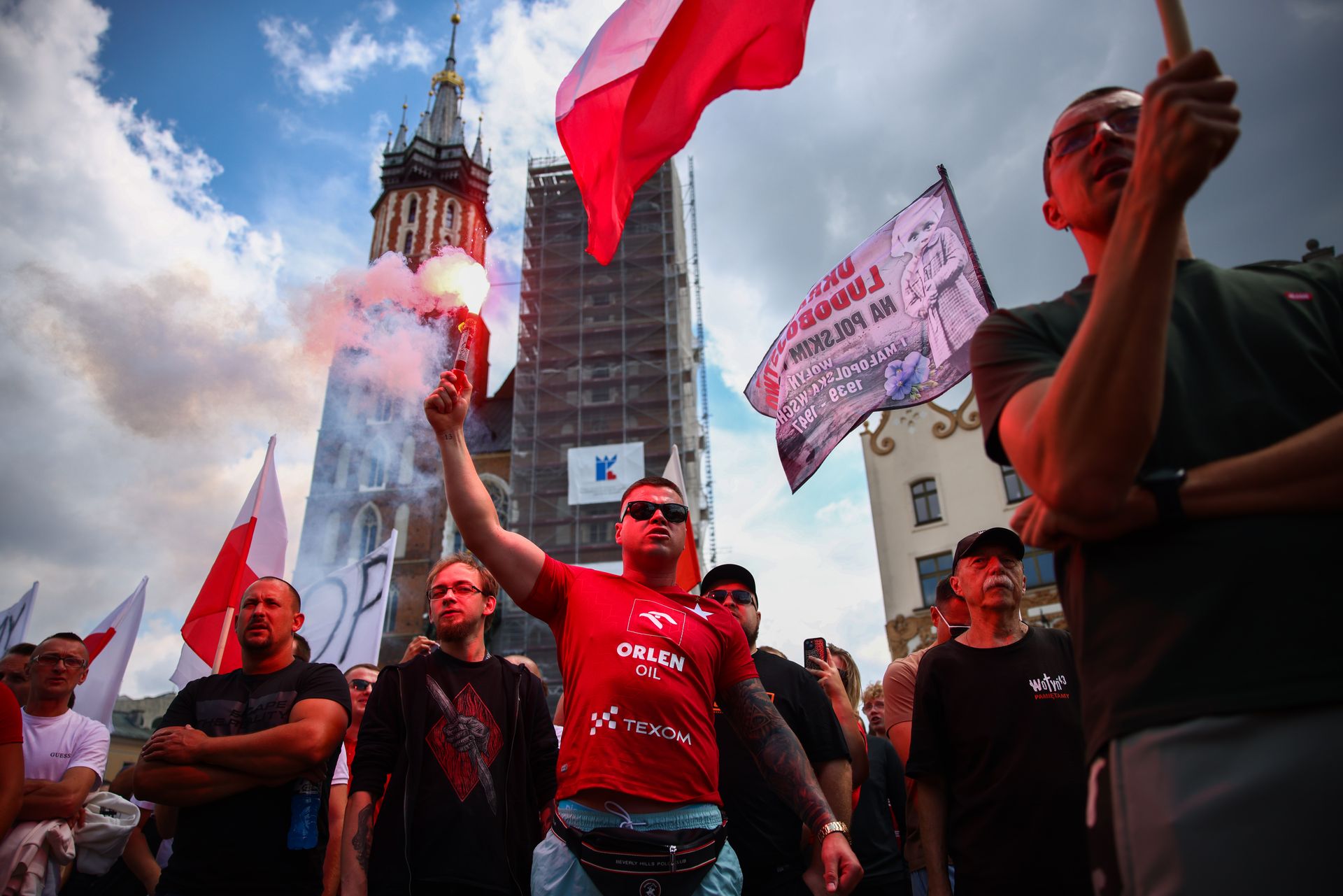
Tensions between Poland and Ukraine have reached a dangerous inflection point, as the initial wave of solidarity that defined 2022 has soured into resentment and hostility. Reflecting this shift, Polish police reported 180 hate crimes against Ukrainians in the first half of 2026—a 30% increase over the previous year. Incidents range from verbal harassment of children to organized physical assaults, signaling that Ukrainian refugees are increasingly viewed through a lens of animosity rather than as allies in the face of Russian aggression.
The friction is deeply rooted in a collision of modern politics and historical trauma. Relations plummeted following a decision by Kyiv to name a military unit after the Ukrainian Insurgent Army (UPA), a group remembered in Poland for the wartime Volyn massacres. This move prompted Polish President Karol Nawrocki to strip Ukrainian President Volodymyr Zelensky of a high state honor, fueling a public backlash. Polls now indicate that for the first time since 2014, a majority of Poles oppose hosting Ukrainian refugees, transforming their largest ethnic minority into a target of growing domestic frustration.
Russian intelligence is actively weaponizing these grievances to destabilize the Polish-Ukrainian partnership. Disinformation campaigns, often traced to content farms or Kremlin-linked Telegram channels, frequently manufacture or distort news to depict Ukrainians as violent criminals. These efforts seek to amplify genuine incidents or stage provocations—such as the burning of flags—specifically designed to incite outrage and turn public sentiment against the Ukrainian population.
However, experts caution that pinning the blame solely on Moscow ignores the critical role of domestic Polish actors. Anti-Ukrainian sentiment has become a potent, albeit cynical, tool in Polish electoral politics. Right-wing figures and nationalist groups have increasingly used xenophobic rhetoric to mobilize voters, effectively sanctioning public aggression. Analysts note that when politicians and social media influencers normalize hostility, it lowers the barrier for everyday citizens to engage in discrimination, creating a climate where being “brutal” toward migrants is increasingly seen as acceptable.
This systemic hostility has had a profound impact on the 900,000 Ukrainians currently residing in Poland, who now find themselves caught in the crossfire of diplomatic disputes and political opportunism. According to a recent report by the Instytut Krytyki Politycznej, many refugees identified the 2025 presidential election cycle as a turning point that shifted societal attitudes. What was once a sanctuary has increasingly become a space of state-level diplomatic friction and street-level xenophobia, leaving marginalized communities vulnerable to both state and private harassment.
While the Kremlin continues its systematic efforts to drive a wedge between the two neighbors, the ease with which these narratives gain traction suggests a deeper societal shift within Poland. As the country approaches next year’s parliamentary elections, observers fear that Ukrainian refugees will remain a primary target of populist rhetoric. The situation highlights a complex, two-front struggle for the Ukrainian exile community: defending themselves against a foreign adversary’s propaganda machine while simultaneously navigating the hardening hearts of a once-welcoming neighbor.


