






GCC chief urges unified Gulf media framework to counter misinformation and project one clear voice
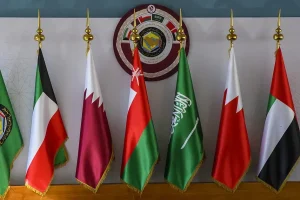
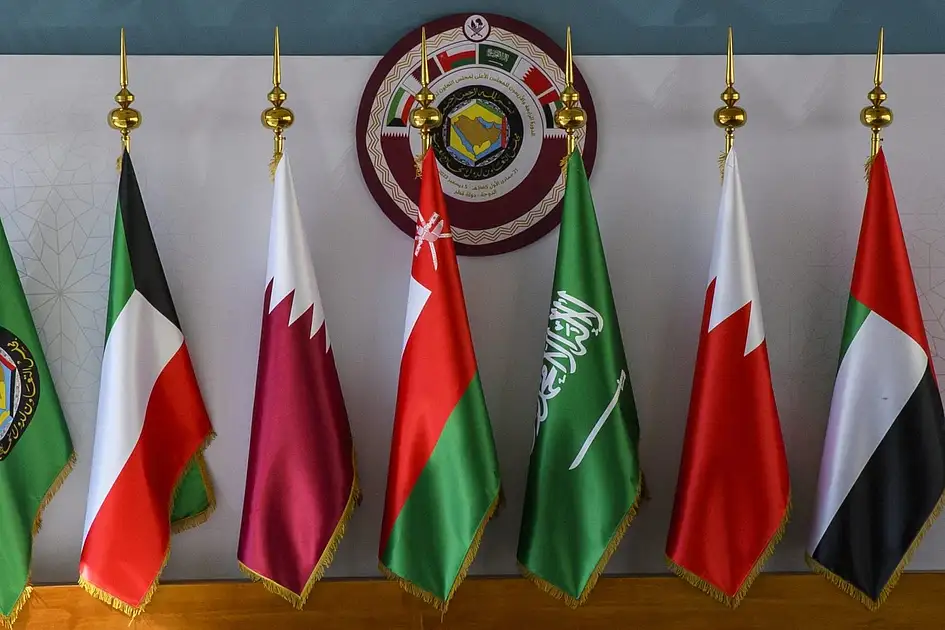
DUBAI — Gulf Cooperation Council Secretary General Jasem Mohamed Albudaiwi has called for the creation of a unified Gulf media framework capable of responding rapidly to misinformation and communicating the region’s position with one clear voice. Speaking at the Arab Media Summit 2026 in Dubai, Albudaiwi said recent regional developments had demonstrated the need for closer coordination among media institutions across the GCC states. He called for a shared Gulf media vision, supported by practical mechanisms, to address misleading campaigns, counter rumours and ensure that accurate information reaches audiences quickly through both traditional and digital platforms. His remarks arrived at a time when Gulf governments are increasingly concerned about the speed with which false narratives can move through global news networks, social media, messaging applications and even artificial intelligence-generated content. The GCC, a six-nation bloc comprising Saudi Arabia, the United Arab Emirates, Qatar, Bahrain, Kuwait and Oman, has long coordinated policy on economics, security and diplomacy. But media cooperation has remained largely national in structure, with each member state running its own broadcasters, news agencies, digital platforms and official communication channels. Albudaiwi’s speech made clear that the bloc sees this fragmented approach as insufficient for the challenges of the modern information environment.
Albudaiwi said that recent regional developments — from diplomatic tensions to media-driven crises — had proven that coordination could no longer be reactive or limited to moments of emergency. Instead, he argued, the GCC needs a permanent, predictable and practical framework that allows all member states to act together when misleading campaigns are launched against the region. The Secretary General’s proposal was not simply a call for messaging alignment. It was a recognition that Gulf states now operate in an arena where events, rumours and official statements are judged within minutes, not days. A delay in responding to false information can allow a damaging narrative to become established in the minds of international audiences and domestic populations alike. Albudaiwi’s emphasis on “one clear voice” reflected the belief that when Gulf countries speak separately, their messages can be distorted, contradicted or exploited. A unified approach, in his view, would not erase the diversity of national perspectives but would ensure that on matters of shared Gulf interest, the region is heard accurately and consistently. He also stressed that this coordination should not be merely technical, but should be built on a shared understanding of the values, interests and objectives of the Gulf states.
At the centre of Albudaiwi’s proposal was the demand for practical mechanisms. He was careful not to present the unified media vision as an abstract aspiration. Rather, he called for systems that could be activated in real time when a false report appears, when a coordinated smear campaign is detected, or when a major event requires a single regional response. In practical terms, a unified Gulf media framework could include a joint monitoring centre tasked with tracking false coverage and harmful narratives across international and social media platforms. It could also involve rapid response protocols, through which official statements from GCC institutions and member states are issued within a matter of hours, rather than after the news cycle has moved on. The creation of shared fact-checking resources, a common pool of spokespersons and Arabic and English-language media professionals, and closer lines of communication between national media regulators are among the measures that such a framework might include. Albudaiwi’s remarks suggested that these mechanisms must be tested in advance, not improvised during a crisis. That would require regular joint exercises, the exchange of media staff, and agreement on basic procedures for verifying information before it is released publicly.
Albudaiwi’s reference to both traditional and digital platforms was particularly significant. Traditional media — state television, radio, newspapers and news agencies — remain central to public communications in the Gulf, especially among domestic audiences and in formal institutional settings. But the majority of Gulf residents, and almost all international observers, now receive news through digital platforms. Social media networks, messaging applications, satellite news channels and streaming services are the primary channels through which both accurate reports and false rumours travel. The Secretary General’s call for a unified framework recognises that Gulf media institutions must be present and credible in both arenas. Digital platforms, however, present special challenges. Algorithms can amplify falsehoods before official correction is available. Anonymous accounts can spread rumours without accountability. AI tools can generate realistic fake audio, images and video that are difficult for ordinary readers to identify. In this environment, a unified Gulf media strategy must include partnerships with technology companies, clear procedures for flagging misinformation, investment in digital verification tools, and a broader effort to improve media literacy among the public. Without such measures, even the most sophisticated official communications can be undermined by a single viral falsehood.
Beyond the immediate question of crisis communication, Albudaiwi’s call carries broader strategic significance. The Gulf states have invested heavily in recent years in international broadcasting, cultural diplomacy, global events and digital presence. They have built brand new cities, museums, universities, sports facilities and financial centres, and they have sought to present themselves as open, modern and dynamic economies. Yet their image abroad remains vulnerable to political attacks, one-sided reporting and historical misunderstandings. A unified Gulf media framework would allow the bloc to pool its considerable resources and respond collectively to reputational threats, rather than leaving each member state to defend itself alone. It would also give the GCC as an institution a stronger voice in global media. Until now, the GCC Secretariat has often been overlooked compared with national media giants, despite its central role in regional decision-making. Albudaiwi’s remarks suggested that this should change. The GCC should not only coordinate policy, but also play a visible role in explaining that policy to the world. The ability to speak clearly, quickly and convincingly about trade, security, energy and humanitarian issues is increasingly viewed as a strategic asset, as vital in its own way as military preparedness or economic diversification. The Secretary General’s speech at the Arab Media Summit 2026 was therefore not merely a proposal for better public relations; it was a statement about the future position of the Gulf in the global order.
The next steps remain to be seen, but Albudaiwi’s address is likely to become a reference point for GCC media discussions in the coming period. It may be followed by consultations among information ministers, national media authorities and state broadcasters to identify what can be built based on existing infrastructure and where new institutions are needed. There are significant challenges. Member states have different media landscapes, legal systems, political traditions and levels of media freedom. Coordinating official messages while maintaining public trust will not be easy. There is also the risk that audiences will view a unified media framework with suspicion if it is perceived as state-dominated or controlling. But Albudaiwi was explicit: in a region where rumour and disinformation have often been used as tools of pressure, the ability to respond with one clear voice is not a luxury but a necessity. His message at the Arab Media Summit 2026 was that Gulf media institutions must be ready to protect the region’s interests, explain its positions and correct falsehoods with speed, credibility and unity. Whether that vision becomes reality will depend on the practical mechanisms that follow this speech, and on the determination of GCC leaders to turn a shared idea into a permanent institution.


