









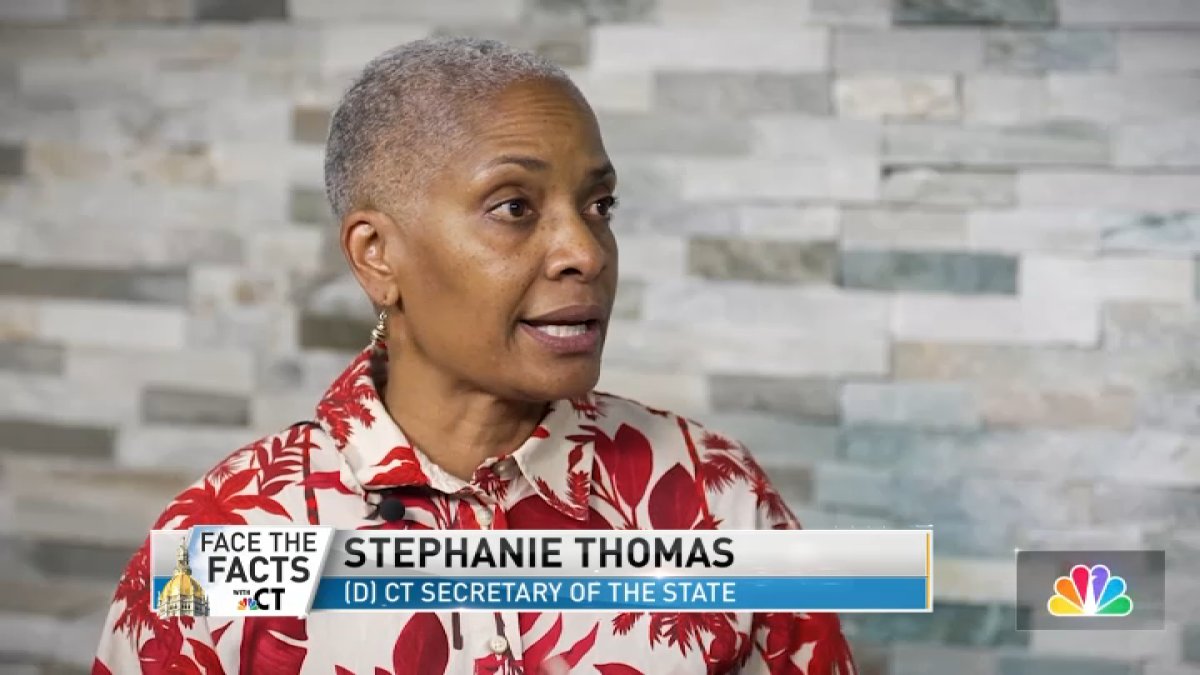
As Connecticut gears up for the primary election on Tuesday, August 11, Secretary of the State Stephanie Thomas is emphasizing the importance of voter preparedness and media literacy. With significant contests on the ballot—including a rare primary challenge for a sitting governor and competitive races in the first congressional district—the state is bracing for a high-stakes election season. Secretary Thomas urged citizens to move past the noise of social media and utilize official government resources, specifically the website “myvote.ct.gov,” to confirm essential details such as polling locations and deadlines.
A central theme of the upcoming election is the expansion of voting accessibility through early in-person options. Early voting is scheduled to run from Monday, August 3, through Sunday, August 9. Unlike general elections where voters head to their usual neighborhood precinct, early voting takes place at designated sites, typically located at town halls. To accommodate varying schedules, these locations will operate from 10 a.m. to 6 p.m. on most days, with extended hours from 8 a.m. to 8 p.m. on the Tuesday and Thursday of that window.
Furthermore, Connecticut has implemented “no-excuse” absentee voting, a shift from previous requirements that limited such ballots to those who were ill or serving in the military abroad. Secretary Thomas stressed that this is a two-step administrative process: voters must first apply for a ballot through their town clerk, wait for approval, and then cast and return their ballot. She advised voters not to wait until the last minute, noting that completed ballots can be returned via mail, secure drop boxes, or in person at the town clerk’s office.
Addressing the national climate of skepticism, Secretary Thomas defended the integrity of Connecticut’s election infrastructure against growing concerns regarding voter fraud and misinformation. She specifically addressed recent reports of non-citizen voting, urging the public to exercise caution when consuming headlines on social media. According to Thomas, investigations into recent claims—such as those in New Jersey, West Hartford, and New Britain—have often revealed clerical errors or premature conclusions rather than systemic fraud. She noted that Connecticut’s established legal safeguards are functioning exactly as intended to identify and correct anomalies.
When pressed on the ongoing partisan debate regarding voter identification, Secretary Thomas drew a distinction between photo ID requirements and documentary proof of citizenship. She pointed out that while some advocate for stricter state-issued ID mandates, approximately 87% of Connecticut voters already present a driver’s license at the polls, rendering such measures largely redundant. She argued that the state would be better served by focusing on systemic issues such as the under-resourcing of election offices and the need for more robust voter education programs.
As the primary approaches, the Secretary of the State’s office remains confident in the operational readiness of the state’s poll workers and town clerks. By prioritizing official verification over viral social media claims, officials hope to ensure a smooth transition through this historic election cycle. With clear guidelines on early voting and established procedures for secure balloting, the state aims to maintain public trust while encouraging high voter participation in the upcoming democratic process.


