








PM Urges Journalists to Remain Independent Amid AI and Misinformation
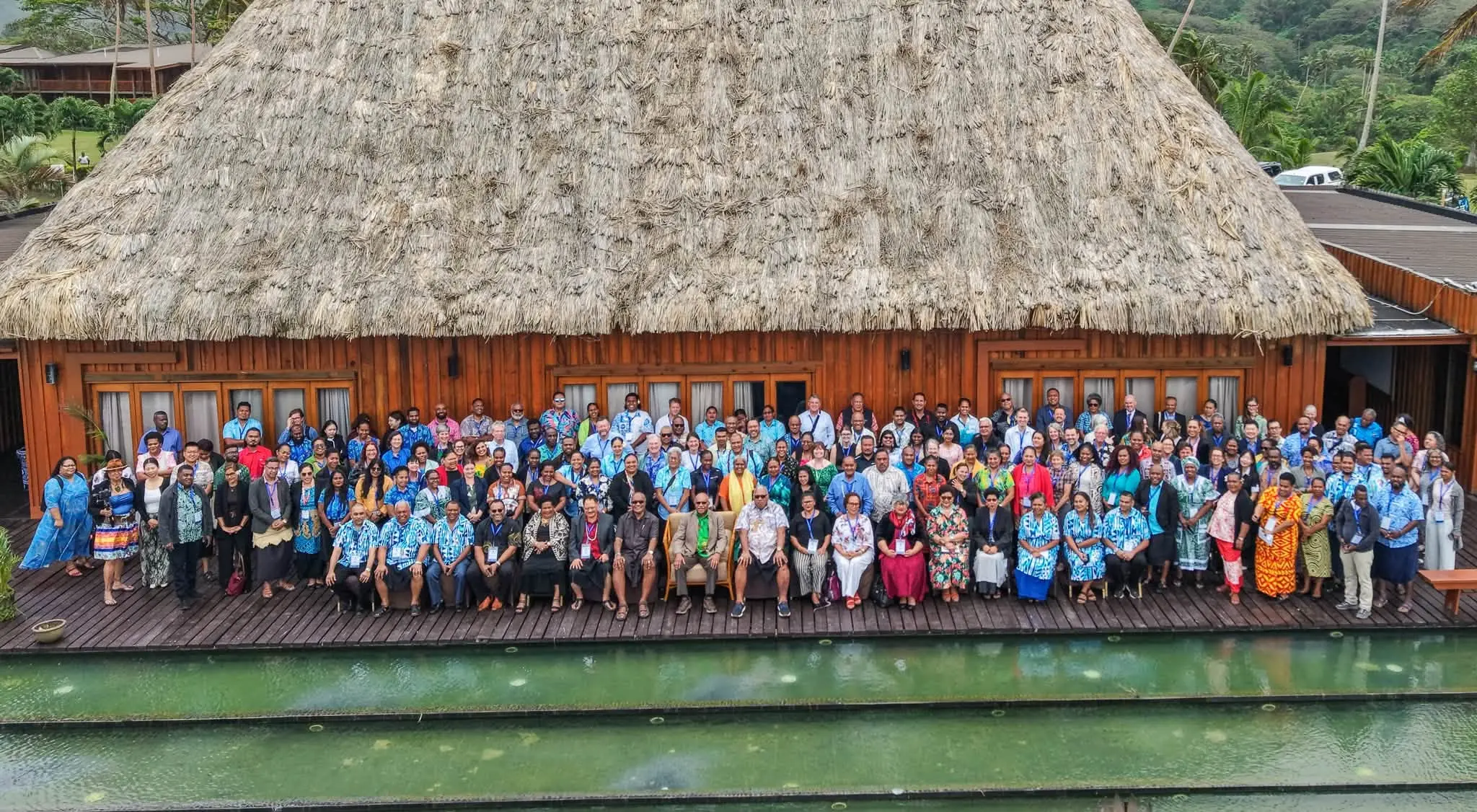
Opening the eighth Pacific Islands News Association (PINA) Pacific Media Summit in Savusavu, Fiji, Prime Minister Sitiveni Rabuka delivered a forceful call for journalists across the region to remain independent, rigorous and responsible in the face of growing misinformation, disinformation and rapidly evolving technologies. The prime minister’s address set the tone for a summit that has become one of the most important gatherings for media professionals in the Pacific, bringing together reporters, editors, broadcasters and media executives from across the region’s vast and diverse island nations. Against a backdrop of global concerns over declining public trust in media and the rise of synthetic content, Rabuka’s remarks resonated deeply with an industry that has been forced to adapt to unprecedented challenges while still fulfilling its core democratic functions. He warned that the speed at which false information could spread made professional journalism more important than ever, and that the traditional, disciplined methods of verification and accountability could not be abandoned in the rush to adopt new technologies or chase audience engagement. His call for a strong, independent press was framed not as a criticism of government, but as a recognition that democracy itself depends on reliable information and fearless reporting.
Rabuka’s central message was that journalists must be willing to do the difficult and unglamorous work of checking facts, questioning assumptions and challenging authority. “We need professional journalists. We need strong newsrooms. We need media-literate citizens,” he said, laying out a three-part vision for a healthy media ecosystem. He stressed that journalists needed to verify information, question what they saw and heard, investigate issues and hold institutions to account. In an age when a single unverified post can be amplified across social media within minutes, the role of a trained journalist as a gatekeeper of truth has never been more critical. Strong newsrooms, in particular, are essential because they provide the institutional structure, editorial oversight, legal support and financial resources needed for reporting that extends beyond surface-level coverage. Without strong newsrooms, individual journalists are left vulnerable to intimidation, burnout and the pressures of producing content in increasingly precarious work environments. The prime minister’s emphasis on media-literate citizens also highlighted the shared responsibility of the public, suggesting that people must be equipped to distinguish reliable information from falsehoods, and that resilience to misinformation must be built at the community level, not only within media organisations.
The prime minister specifically pointed to artificial intelligence, synthetic content and digital manipulation as new challenges that had created greater complexity for journalists and the public alike. Deepfakes, AI-generated audio, doctored images and automated propaganda are no longer futuristic possibilities; they are already being used to deceive audiences and destabilise democratic processes. For Pacific Island nations, many of which have small populations and limited digital infrastructure, the threat of AI-driven manipulation is especially acute because false information can move quickly through social media platforms and closed messaging applications, where traditional fact-checking is often overwhelmed. Rabuka made clear that responsible journalism was essential not only to maintaining public trust in the media, but also to strengthening democracy as a whole. When citizens can no longer be sure of the authenticity of what they see or hear, the basis for informed public debate collapses. The media, therefore, must act as a line of defence against the erosion of truth. This does not mean that journalists should fear technology; rather, they must master it, adapting their reporting techniques to account for the possibility that images, videos and audio recordings can be manipulated. Verification, source-checking and digital literacy are no longer optional skills for Pacific journalists; they are central to survival in a complex information environment.
Rabuka also addressed the delicate balance between press freedom and responsibility, reminding the audience that “freedom comes with responsibility.” The media, he said, had an important role in reporting corruption, abuse of power and failures in public administration. These functions are fundamental to allowing citizens to make informed decisions and to ensuring that governments act with transparency and accountability. Yet the prime minister underscored that Fiji needed a media sector that was free to question, investigate and challenge while maintaining professional standards. His words appeared to reject the idea that press freedom and professional responsibility are contradictory; instead, he suggested that they are mutually reinforcing. A free press cannot function responsibly without professional discipline, and professional discipline is meaningless without the freedom to pursue uncomfortable truths. In many parts of the Pacific, media outlets operate under legal, political and economic pressures, and the relationship between governments and the press has sometimes been tense. Rabuka’s statement may therefore be seen as a signal that mature democracies should welcome critical reporting as a contribution to governance rather than a threat to it. The challenge for journalists, however, is to ensure that their independence is not confused with partisanship, and their criticism is based on evidence, not personal opinion or unchecked speculation.
Another significant theme of the address was the importance of reaching remote communities, a matter of particular relevance across the Pacific where populations are scattered across thousands of islands. Rabuka emphasised that reliable information could save lives during cyclones and other natural disasters and ensure that isolated communities remained connected to national discussions. In a region that is increasingly vulnerable to the impacts of climate change, from rising sea levels to more intense storms, accurate and timely information is literally a matter of life and death. Radio, in particular, remains a vital medium for many rural and outer-island communities, where internet connectivity may be unreliable or non-existent. Journalists, broadcasters and media organisations in the Pacific must therefore develop practical strategies for ensuring that those communities are not left behind as the industry undergoes digital transformation. This includes supporting vernacular language broadcasting, investing in disaster preparedness within media organisations, and building relationships of trust with local leaders and communities. The prime minister’s focus on remote audiences served as a reminder that journalism is not only about covering the affairs of capitals and major cities; it is also about serving people who are most often overlooked by national media, and who depend on reliable information to make decisions about their safety, livelihoods and participation in civic life.
In closing, the prime minister called for stronger cooperation between governments, media groups, civil society and development partners such as the Pacific Centre for Communications and Journalism. He described the centre as a platform for professional training, research and developing the next generation of Pacific media leaders. This call for regional cooperation reflects a broader recognition that no single country, newsroom or institution can address the challenges facing Pacific media alone. The information ecosystem is regional and global, and so too must be the response to misinformation and AI-driven threats. Collaborative journalism across borders, shared fact-checking resources, regional training programmes, and peer support networks are all essential to building a more resilient and independent media sector in the Pacific. The Pacific Islands News Association and its associated institutions play a crucial role in bringing these actors together, helping to foster a shared professional identity and a collective commitment to the values of truth, accuracy and accountability. Rabuka’s speech ended with a clear message that the future of Pacific democracy depends, at least in part, on the strength of its newsrooms and the courage of its journalists. His remarks were not merely a ceremonial opening address; they were a call to action for an industry under strain, a reminder that in an age of misinformation and synthetic deception, the public’s trust must be earned every day through honest, independent and rigorous journalism.


