








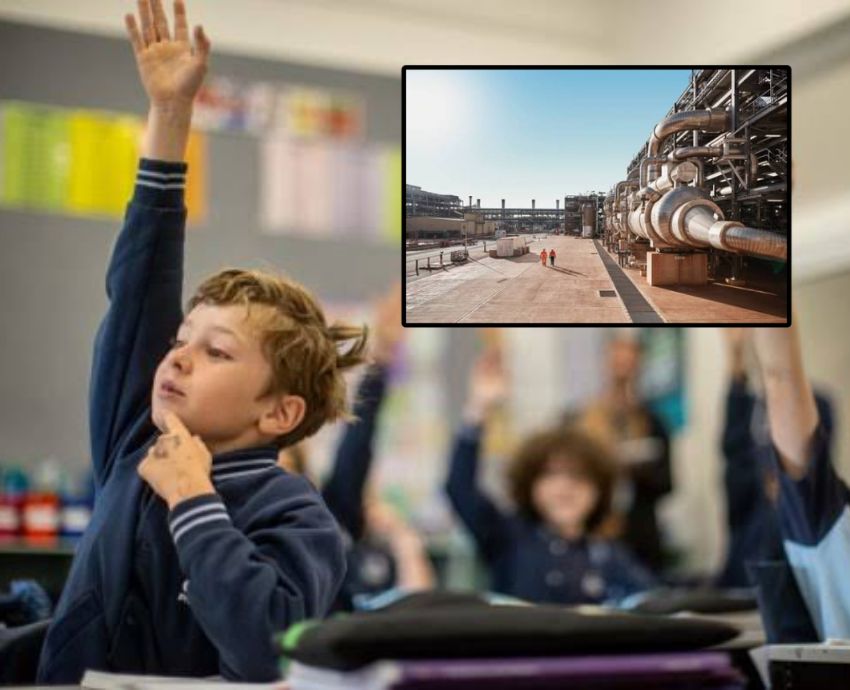
A damning new report titled From Cradle to Career: Fossil Fuel Industry Presence in Australian Childhood Settings has exposed a widespread campaign by fossil fuel corporations to infiltrate educational and community spheres. By embedding themselves in schools, museums, and youth sports, these companies are effectively distributing propaganda to Australia’s youngest generations. The investigation, conducted by Comms Declare, identified at least 260 fossil fuel-linked programs nationwide, though the report warns that the true scale is likely far larger due to the lack of transparency surrounding private sponsorship deals and the specific content of educational partnerships.
The research reveals that fossil fuel giants are investing heavily—exceeding $54.5 million across just six major initiatives—to sanitize their public image and influence classroom discourse. For instance, Shell QGC has poured over $10 million into museum programs that provide teachers with resources that omit the primary cause of climate change: the burning of fossil fuels. Instead, these materials frequently promote unproven “false solutions” like carbon capture and storage (CCS). By guiding students to design their own CCS technology, corporations aim to shift the narrative from phasing out fossil fuels to relying on speculative, industry-friendly technical fixes that justify continued production.
Central to this strategy is the systematic downplaying of the industry’s role as the primary driver of the climate crisis. Educational materials funded by companies like Woodside often equate industrial emissions with individual consumer choices, tasking students with personal behavioral changes—such as commuting habits—rather than addressing the urgent need for systemic industrial reform. This serves to normalize the presence of these corporations in the classroom, even as the companies simultaneously lobby for massive projects like the North West Shelf gas extension, which will generate emissions equivalent to 35 million petrol cars annually.
Beyond classroom theory, the industry’s reach extends into practical STEM education and teacher training, where corporate volunteers lead activities that frame oil and gas extraction as benign scientific exploration. Organizations like the Teacher Earth Science Education Programme (TESEP) have partnered with major coal and energy firms to deliver professional development to thousands of educators. By distributing materials that advocate for concepts like “greening coal,” these entities ensure that corporate-sanctioned talking points are filtered through teachers and delivered to millions of students, bypassing standard critical oversight.
The industry’s influence is further solidified through high-visibility sports sponsorships, such as the rebranding of the iconic Nippers surf lifesaving program to the “Woodside Nippers.” By turning thousands of children into “walking billboards” for fossil fuel companies, the industry secures a “social licence” to operate, banking on the idea that early, positive associations will shield them from future public scrutiny. Corporate funding agreements, such as those from Santos, explicitly demand that recipients generate “goodwill” and “reputational benefit,” proving that these partnerships are calculated marketing investments rather than altruistic community support.
Ultimately, the report highlights that the chronic underfunding of Australia’s public education system has left schools vulnerable to corporate exploitation. With governments continuing to provide billions in fossil fuel subsidies, critics argue that these funds should instead be redirected to ensure schools remain independent, science-based environments. Comparing the industry’s tactics to the historical predatory practices of “Big Tobacco,” campaigners are now calling for a parliamentary inquiry and a total ban on fossil fuel presence in classrooms, arguing that industry-led climate education is a fundamental conflict of interest.


