









At the heart of the current sociopolitical discourse lies a fundamental friction regarding the core tenets of gender-critical feminism, a movement often subjected to intense scrutiny and systemic misrepresentation. Proponents, such as author Jenny Lindsay, ground their philosophy in the material reality of sex, asserting that women form a distinct class of human beings with unique, immutable needs and the right to advocate for their interests without being silenced. These beliefs, which emphasize the legislative and political importance of the female sex, are far from radical; yet, they are frequently framed by critics as exclusionary or hateful, a distortion that obscures the movement’s actual objectives.
The Government Office for Science recently released a comprehensive report aimed at addressing the societal and organizational harms fueled by the spread of fake news and misinformation. While the document purports to provide a neutral framework for understanding how false information compromises public discourse, it is conspicuously silent on the widespread, systematic misrepresentation of gender-critical feminists. By ignoring the deliberate fabrication and bad-faith characterizations directed at those defending sex-based rights, the report suggests a selective application of its principles, raising questions about whether such institutional analyses are being weaponized to protect specific progressive ideologies from legitimate debate.
Rather than offering an objective assessment, the report characterizes critiques regarding gender identity in schools and the inclusion of trans-identified athletes in women’s sports as potentially problematic “misinformation.” This conflation of rigorous social criticism with dangerous falsehoods is deeply concerning. The document effectively treats the challenging of “gender ideology” as a source of harm itself, rather than recognizing that for many, these questions are rooted in legitimate concerns regarding fairness, safety, and the protection of biological categories in public institutions. This bias suggests that the report is less interested in the truth and more focused on silencing ideological opposition.
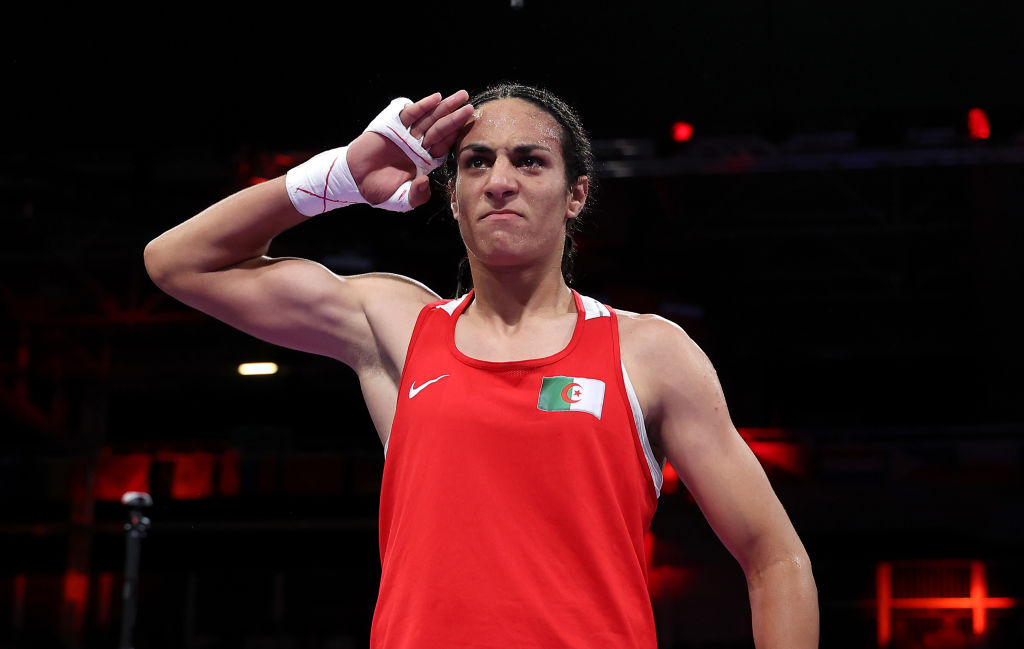
The report’s bias is further illuminated by its handling of the controversy surrounding the 2024 Paris Olympics and boxer Imane Khelif. Despite the fact that many critics were motivated specifically by concerns over biological fairness in sports, their arguments were routinely misrepresented as transphobia, elitist beauty standards, or even racism. The authors of the report failed to acknowledge the “misinformation” used to delegitimize these critics, choosing instead to align with the dominant narrative that paints gender-critical concerns as inherently bigoted. By ignoring the actual substance of these arguments, the report essentially validates the smears that have made it increasingly difficult for female athletes and their supporters to advocate for their own protection.
Ultimately, this report serves as a case study in the dangers of “misinformation debunkers” who are blind to their own political prejudices. By framing disagreement as “false information,” the authors discourage genuine critical engagement and encourage the public to dismiss any perspectives that are inconvenient or challenging to their own worldview. When state-sponsored reports favor specific political groups while labeling their opponents as purveyors of lies, they do not combat disinformation; they merely contribute to the erosion of objective truth. This creates a feedback loop where “media literacy” becomes a euphemism for adopting a predefined ideological stance.
The solution is not to demand that this specific report be updated to reflect the grievances of gender-critical feminists, but rather to advocate for a radical shift in how we approach intellectual discourse. We must move away from the current climate of weaponized terminology and toward a model that encourages individuals to read primary sources and listen to what people are actually saying, rather than relying on curated labels and moral panic. True progress in media literacy will only occur when institutions stop conflating unpleasant truths with “untruth” and begin to engage with the reality of differing viewpoints with intellectual honesty and neutrality.


