









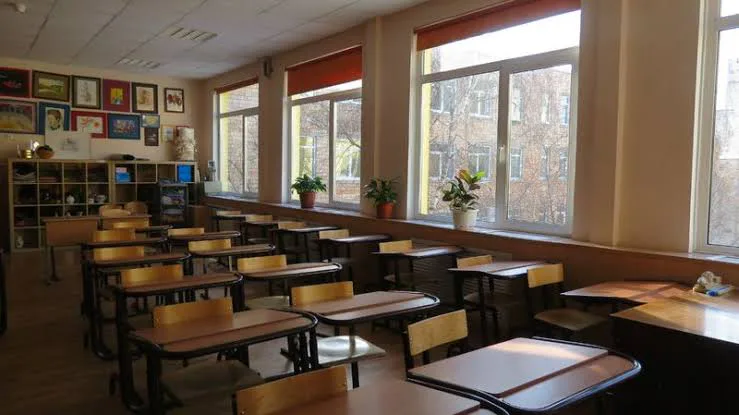
In the occupied territories of the Donetsk region, a growing crisis in the education sector has come to light, revealing a stark contrast between official propaganda and the reality on the ground. According to reports from the Center for Countering Disinformation (CCD) under the National Security and Defense Council of Ukraine, the occupation authorities are overseeing a systematic dismantling of schools and kindergartens. While Moscow-backed officials frequently tout the “restoration” of infrastructure and the “digitalization” of classrooms in their public messaging, the actual policy being implemented is one of mass closures and forced consolidation.
This wave of “reorganization,” as it is officially labeled, has resulted in the swift shuttering of 12 schools and 24 kindergartens to date, with an additional 69 institutions currently slated for merger or closure. Local residents report that these actions are leaving numerous populated areas entirely devoid of educational facilities. By consolidating these institutions under the guise of administrative optimization, the occupation authorities are effectively severing the community’s access to fundamental services, forcing students to travel further—or forego formal schooling altogether—in a region already plagued by the instability of active conflict.
The economic motivations behind this restructuring have become increasingly clear to those living under the occupation. For the authorities, the primary objective of these closures is the aggressive reduction of state expenditures, specifically regarding teacher salaries. As educational hubs are merged or eliminated, hundreds of educators are being pushed out of the workforce. These displaced teachers are now facing a grim reality, finding themselves without employment and with virtually no viable prospects for finding new work within the restricted and stagnant economy of the occupied zone.
This policy has sparked significant concern regarding the long-term prospects of the Donetsk region. Observers note that the destruction of the educational network is not merely an administrative shift, but a move that condemns entire towns and villages to further social and economic degradation. By removing the pillars of local development—schools and preschools—the occupiers are stripping these communities of their future viability, making it nearly impossible for families to sustain a normal life in the region.
The CCD has characterized this “reform” as a quintessential example of the Russian Federation’s true intentions in the temporarily occupied territories. While the Kremlin continues to frame its presence as a “concern for the people of Donbas,” the dismantling of schools suggests a policy of intentional neglect. Critics argue that the gap between the rosy imagery broadcast by state media and the bleak conditions experienced by local residents highlights a strategy aimed at pacifying the population while simultaneously eroding the institutional structures that foster growth and independent thought.
As these closures continue, the overall landscape of the occupied Donetsk region becomes increasingly precarious. The systematic removal of educational opportunities, coupled with the mass displacement of skilled professionals, points to a broader trajectory of decline. With the occupation authorities prioritizing financial savings over the educational needs of children, the region faces a future of deepening isolation, with the loss of its educational infrastructure serving as a major obstacle to any potential recovery in the years to come.


