


A wave of dangerous misinformation has swept across Japan, fueled by a series of viral social media campaigns that falsely blame the Muslim community for accidental fires at pig farms and temples. A comprehensive investigation by NHK, broadcast on June 27, revealed that these fabricated narratives have reached over 80 million views, significantly deepening xenophobic sentiment and hostility toward foreign residents. Despite the inflammatory rhetoric circulating online, rigorous investigations by local police and the Fire and Disaster Management Agency have confirmed that these incidents were purely accidental, resulting from electrical failures in aging infrastructure rather than criminal activity.
The data provided by official agencies serves as a stark refutation of the viral claims. The Fire and Disaster Management Agency noted that among the 101 pig farm fires reported since 2019, none were linked to arson; similarly, fires at temples and shrines occur at a consistent, historical rate of 40 to 60 incidents per year, largely due to the vulnerability of older wooden structures. NHK’s analysis of 200 high-engagement posts revealed that 70 percent contained verifiable falsehoods, proving that the uptick in public anxiety is a product of digital manipulation rather than any observable change in real-world security trends.
The investigation identified a coordinated network of approximately 30 accounts on X and 113 accounts on Threads as the primary drivers of this misinformation. These actors—ranging from influencers and summary account operators to certain political figures—often utilize sophisticated AI tools to capitalize on trending topics and amplify public fear for financial gain or social clout. By exploiting societal prejudices, these networks create a feedback loop that distorts public perception, making extremist views appear as the majority consensus while successfully bypassing platform-level hate speech policies.
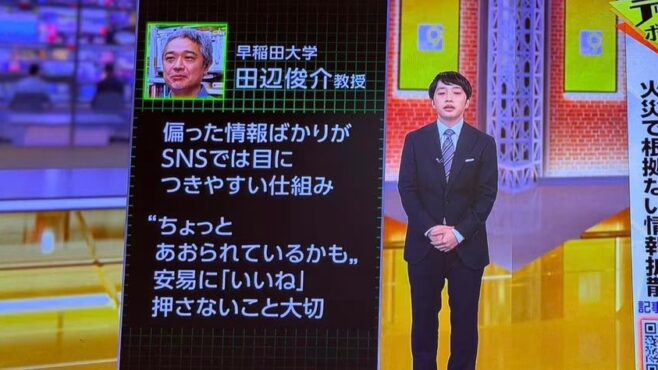
The real-world consequences of this digital campaign are profound and alarming. Research by Professor Tanabe of Waseda University highlights a clear correlation between frequent social media usage and the belief that foreign residents negatively impact public safety. This environment of suspicion has caused tangible harm, with many foreign residents in Japan reporting an increase in targeted xenophobic harassment and bullying. The failure of social media platforms to address reported hate speech has left many victims feeling isolated and vulnerable, further eroding the social cohesion necessary for a safe and inclusive society.
To combat this phenomenon, Professor Tanabe advocates for a shift toward heightened digital literacy and intellectual caution. He urges users to be wary of content that specifically targets cultural differences or uses inflammatory language to trigger emotional responses, labeling these as classic manipulation tactics. He recommends that the public verify viral claims against reputable news sources and government reports, while actively diversifying their media consumption—engaging with art, literature, and film—to broaden their understanding of diverse cultures beyond the binary stereotypes often reinforced by algorithms.
Ultimately, the foreign residents affected by these campaigns are calling for a return to mutual respect and a reliance on empirical fact. They assert their dedication to contributing positively to the Japanese community and express a hope for a future where they are no longer scapegoated for accidents beyond their control. By fostering a more critical approach to information and rejecting the normalization of discriminatory discourse, the Japanese public can better protect the integrity of their social fabric against those who seek to profit from division.