


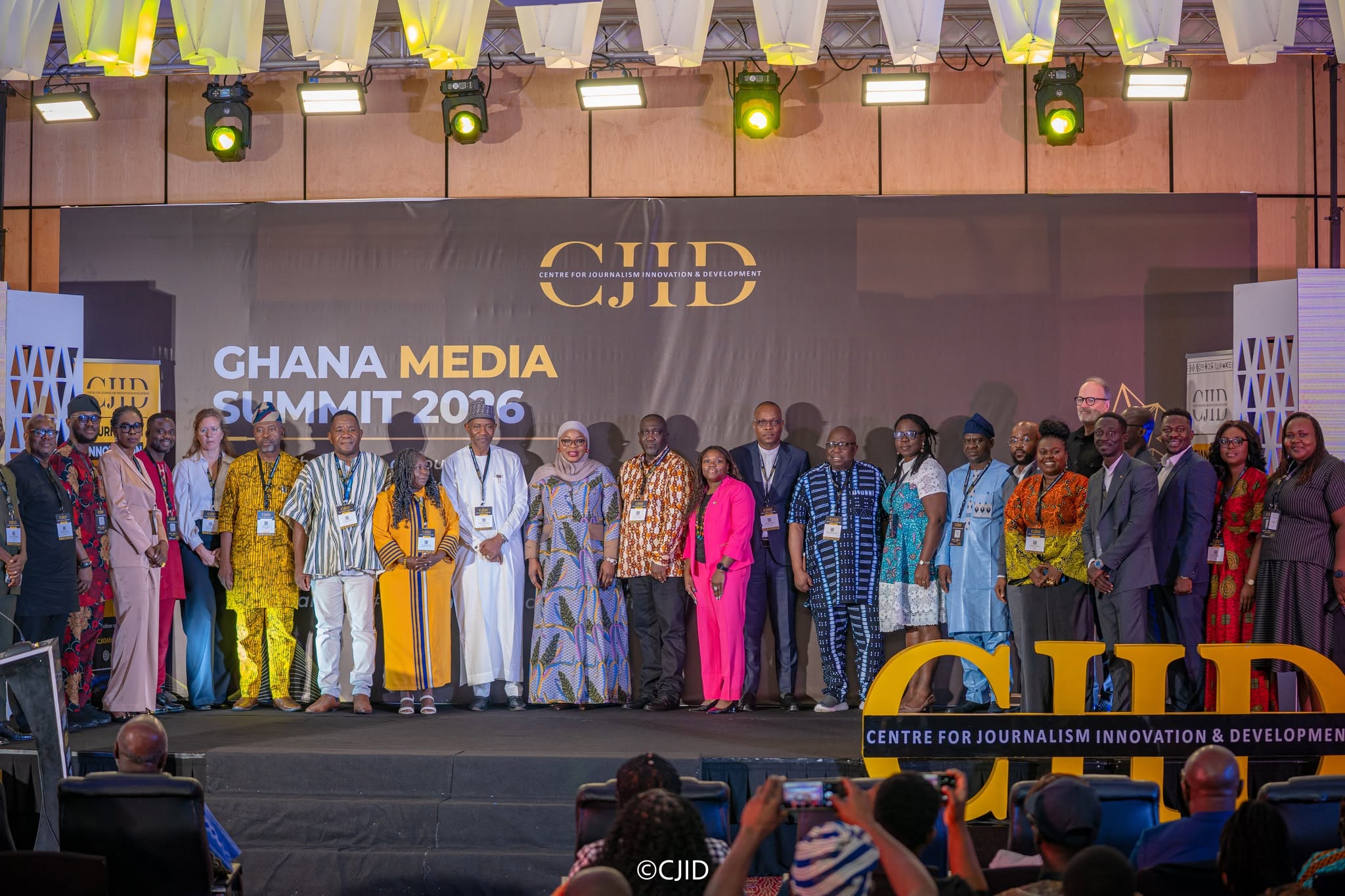
The inaugural Centre for Journalism Innovation and Development (CJID) Ghana Media Summit, held on July 9 to mark seven years of DUBAWA Ghana, served as a critical platform for addressing the shifting landscape of West African democracy. Bringing together policymakers, journalists, and civil society leaders, the event underscored that the primary threats to regional stability have evolved beyond traditional authoritarianism. Experts warned that the “weaponisation of information”—facilitated by artificial intelligence, synthetic media, and coordinated digital campaigns—has created a volatile environment where misinformation and disinformation undermine public trust and the democratic process itself.
Government spokesperson Shamima Muslim, speaking on behalf of President John Mahama, framed journalism as a vital piece of “democratic infrastructure” as essential as physical roads or hospitals. Referencing global data indicating that 73 percent of Africans struggle to distinguish truth from falsehood online, Muslim urged a national transition toward robust digital literacy. She advocated for journalists to master modern tools like open-source intelligence and data journalism, while simultaneously highlighting Ghana’s recent climb in the World Press Freedom Index as evidence of the government’s commitment to balancing the protection of free speech with the necessity of combatting dangerous disinformation through legislative consultations.
Representing the regulatory perspective, George Sarpong, Executive Secretary of the National Media Commission, declared that West Africa has entered an “Age of Disinformation.” He cautioned that while the region faces economic and security challenges, the collapse of public confidence in objective truth remains the most systemic danger. Sarpong emphasized that current digital algorithms prioritize sensationalism over accuracy, creating a landscape where truth is the first casualty. He advocated for a multi-stakeholder regulatory approach that includes tech firms and civil society, firmly warning against governments positioning themselves as the sole arbiters of truth.
The summit also highlighted the practical challenges facing contemporary newsrooms. CJID Executive Director Akintunde Babatunde and CEO Dapo Olorunyomi both stressed that journalism cannot operate in isolation from technological advancement. Olorunyomi, in particular, called for a systemic overhaul of journalism education in West Africa, urging schools to integrate computational journalism and AI into their curricula. By shifting the focus from individual newsroom survival to the creation of resilient information ecosystems, speakers argued that the profession could better navigate the complexities of platform dominance and cross-border disinformation campaigns.
Structural concerns regarding the definition of media were raised by Kojo Asante of CDD-Ghana and Sulemana Braimah of the Media Foundation for West Africa. Braimah noted a critical distinction between public-interest journalism and the burgeoning digital content economy, arguing that many online creators are driven by economic survival rather than journalistic ethics. Both experts warned that failure to distinguish between these sectors deepens the crisis of trust. They suggested that because the current digital environment operates under incentives that prioritize engagement over verification, the profession must find new ways to incentivize and value professional, evidence-based reporting.
Concluding the summit, investigative journalist Manasseh Azure Awuni offered a sobering reminder that in a world of instantaneous, unverified publishing, a publication’s credibility is its most valuable—yet vulnerable—asset. The consensus among participants was clear: as West African nations look toward future elections, the region must prioritize regional cooperation, stronger investment in fact-checking, and a unified front in navigating the influence of global tech giants. By fostering innovation and collective regional policy, stakeholders hope to protect the future of West African democracy against the escalating pressures of the digital age.