


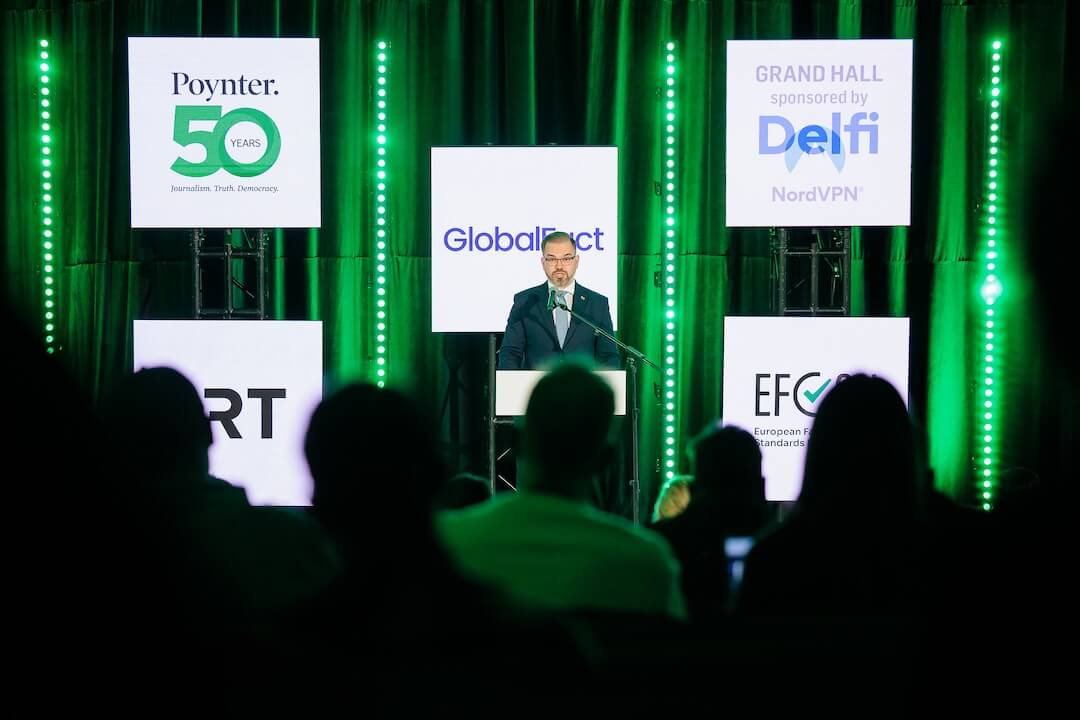
At the annual GlobalFact conference held in Vilnius, Lithuania, top national security officials outlined a robust “whole-of-society” strategy to combat an escalating wave of state-sponsored disinformation. Defense Minister Robertas Kaunas declared that Lithuania now officially classifies “cognitive warfare” as a distinct domain of conflict—standing alongside traditional arenas like land, sea, air, space, and cyber. According to Kaunas, the objective of modern adversaries is not merely to plant a single falsehood, but to paralyze decision-making, foment societal panic, and erode the shared sense of truth that serves as the foundation for democratic stability.
The scope of this digital frontline is substantial, with the Lithuanian Radio and Television Commission reporting the blockage of over 1,000 internet domains and 8,000 IP addresses linked to violations of EU sanctions. Vice Minister of Foreign Affairs Vidmantas Verbickas emphasized that authoritarian regimes are systematically exploiting algorithms and deploying sophisticated botnets to hijack public discourse. By leveraging artificial intelligence to expedite the creation and diffusion of propaganda, these hostile actors aim to transform the digital landscape into a tool of absolute narrative control, challenging the core principles of open societies.
Defense Minister Kaunas highlighted that the integration of AI has rendered disinformation campaigns both faster and significantly cheaper to execute. To counter this, Lithuania is prioritizing “cognitive resilience,” which entails training the populace to maintain clarity under pressure and recover swiftly from information attacks without losing faith in state institutions. Recent Russian-backed operations have included deceptive claims regarding drone incursions and inflammatory revisionist rhetoric surrounding the city of Klaipeda. Such narratives are often amplified by expansive networks of fraudulent accounts—frequently originating in Asia and Africa—designed to bypass local scrutiny and flood the digital environment with Kremlin-aligned talking points.
During a conference panel, Ieva Gajauskaitė of the Lithuanian Defense Ministry described these operations as a deliberate “weaponization of critical thinking.” The goal, she noted, is to foster a pervasive environment of skepticism where citizens begin to question everything, eventually leading to a state of apathy where they cease to believe in anything at all. To combat this erosion of trust, the Lithuanian government has proactively integrated national defense and resistance education into school curricula, teaching students to identify the common patterns and tactics employed by information operations from Russia, Belarus, and China.
The burden of this defense is shared at a supranational level, with European Commission representative Marius Vaščega pointing to the Digital Services Act as a crucial regulatory framework for mitigating the influence of harmful online content. By demanding greater accountability from major platforms, the EU hopes to stem the tide of malicious narratives before they can take root. Officials emphasized that this systematic approach to information hygiene is not a peripheral concern; rather, it is viewed as an essential pillar