









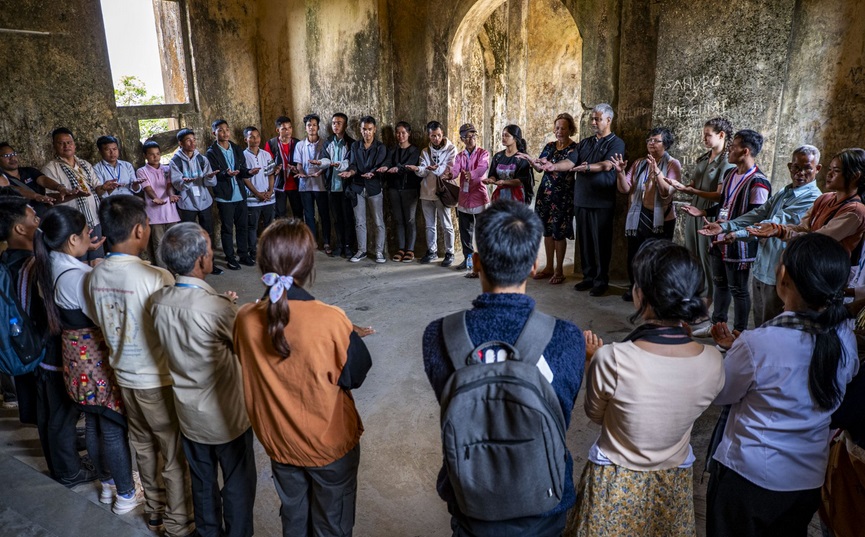
A landmark regional study published by the Asia Centre has exposed a disturbing trend across the continent: the strategic weaponization of climate disinformation to marginalize Indigenous Peoples. Examining conditions in Cambodia, India, Indonesia, Malaysia, Pakistan, the Philippines, and Thailand, the report details how governments and powerful corporate entities are manipulating climate narratives to justify the dispossession of ancestral lands. By framing controversial development, extraction, and conservation projects as essential “climate actions,” these powerful actors are systematically undermining the rights of Indigenous communities and shielding themselves from public accountability.
The report highlights that this disinformation is not merely a byproduct of political discourse but a deliberate mechanism designed to reinforce systemic power imbalances. Representing over 260 million people and 2,000 distinct cultures, Asia’s Indigenous populations are uniquely vulnerable to climate change due to their deep reliance on natural ecosystems. However, rather than protecting these communities, state and corporate interests are using misleading narratives to circumvent the principles of Free, Prior, and Informed Consent (FPIC). The findings suggest that these parties often treat environmental compliance as a mere administrative hurdle, facilitating the monopolization of resources while excluding Indigenous peoples from the governance of their own territories.
A central tactic identified by researchers is the deceptive “greenwashing” of land appropriation. Under the guise of environmental conservation or economic development, Indigenous communities are frequently forced from their homes under the pretense that these relocations are necessary for the greater good of the planet. By presenting eviction and land seizure as “development-oriented,” authorities effectively silence opposition and streamline the extraction of natural resources. This framing allows states to manipulate public perception, ensuring that policies that disregard Indigenous rights are viewed as essential pillars of a nation’s climate contribution.
The report also sheds light on the dangerous trend of criminalizing Indigenous activists and environmental defenders. By casting those who protect their ancestral lands as “backwards,” “environmental threats,” or even “extremists,” governments and corporations successfully delegitimize their resistance. This rhetorical strategy serves to isolate Indigenous groups from potential allies and fosters an environment where their leaders can be framed as obstacles to progress. By painting these defenders as enemies of development, aggressive state actions are reframed as necessary measures for national stability, creating a chilling effect on democratic participation.
Researchers argue that this crisis must be recognized as a fundamental issue of governance and human rights rather than just a struggle against misinformation. The study warns that the unchecked power of digital platforms is further accelerating these harmful narratives, with the looming rise of artificial intelligence likely to exacerbate the spread of anti-Indigenous propaganda in the coming years. Unless these digital information landscapes are addressed, the erosion of democratic, rights-based environmental policies will continue to disproportionately harm the region’s most vulnerable inhabitants.
Ultimately, the Asia Centre’s report concludes that true climate justice will remain elusive without a structural shift in how development and land management are handled in Asia. The authors emphasize that meaningful climate action must be rooted in the protection of Indigenous self-determination, the formal securing of land rights, and the integration of pluralistic knowledge systems. By shifting the focus toward rights-based policies, the region can move away from manipulative narratives and toward a sustainable future that genuinely respects the sovereignty and ecological expertise of its Indigenous populations.


