


Here is a summary of the provided content:
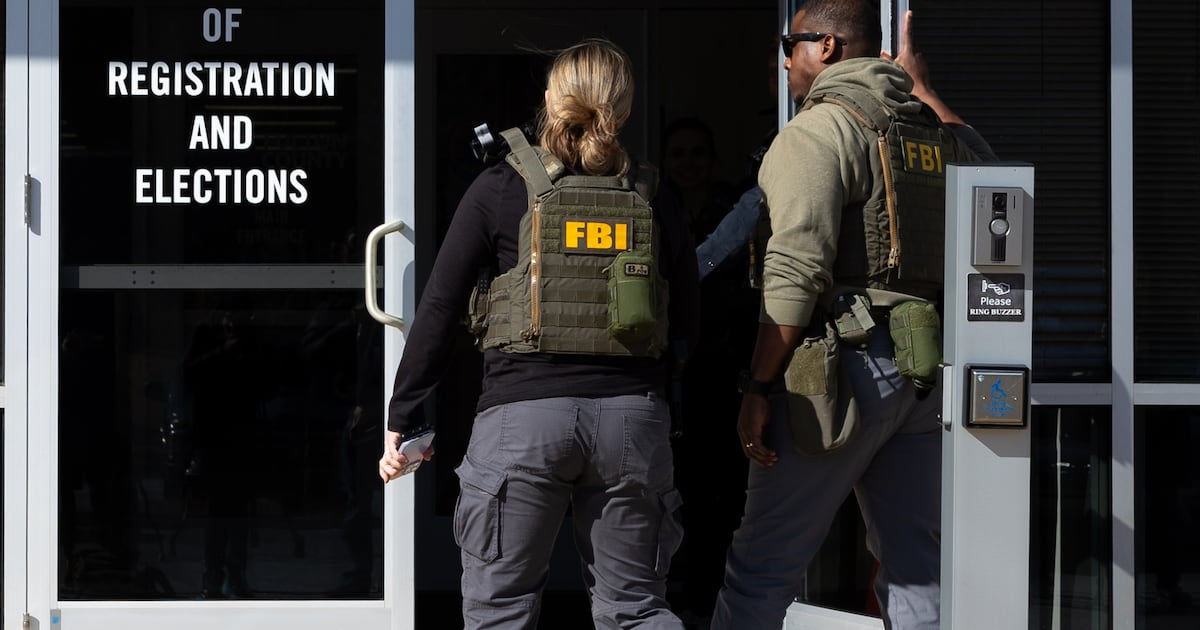
The Trump administration is engaged in an aggressive and unprecedented effort to undermine local control of elections, signaling a shift toward federalizing the administration of the vote. Recent actions, including an FBI raid on a Fulton County election facility that resulted in the seizure of 2020 ballots and demands for the personal information of election workers, reflect a strategic move to bypass state authorities. President Trump has explicitly argued that states serve merely as “agents” of the federal government, implying that his executive authority should supersede local oversight in counting and tabulating ballots.
Constitutional experts and legal observers warn that these assertions are fundamentally at odds with the U.S. Constitution, which grants states the primary responsibility for conducting elections. By framing local election processes as fraudulent or suspect, the administration is attempting to justify federal intervention through executive orders. Critics argue that these efforts are not about election integrity, but are instead calculated maneuvers to consolidate political power and preemptively influence the outcomes of future election cycles in key battleground states like Georgia, Arizona, and Michigan.
The administration’s strategy appears to involve intimidating local officials and election volunteers, effectively creating a chilling effect on the democratic process. By demanding sensitive personal data from those involved in the 2020 election, the administration risks driving away essential workers and creating chaos that could be used as a pretext for further federal “emergency” measures. These tactics are viewed by legal advocates as an attempt to erode the public’s trust in local governance and prepare the ground for the federal government to intervene in, or potentially overturn, future voting results.
Furthermore, the administration is actively backing restrictive measures, such as stringent national identification requirements, which could disenfranchise millions of eligible American voters. These proposals often mirror controversial legislative efforts that target the ability of marginalized groups to access the ballot box. While proponents of these measures claim they are necessary to prevent fraud, there is little empirical evidence to support the existence of widespread voter fraud, and the actual impact of such policies is the reduction of participation among vulnerable populations.
The potential long-term consequences of this federal power grab are significant, as they threaten to permanently disrupt the traditional balance of power between federal and state governments. If the President successfully establishes a precedent where the federal government can dictate the mechanics of state elections, it could lead to a systemic dismantling of local autonomy. This shift is particularly dangerous because it centralizes control, making the entire electoral system susceptible to the political whims of a single national leader rather than the checks and balances of local administration.
Ultimately, the argument against this federal encroachment rests on the protection of the right to vote as a fundamental pillar of American democracy. Observers emphasize that the integrity of elections relies on the independence of local officials who are accountable to their communities. By challenging this model, the current administration is accused of abandoning the principles of the rule of law in favor of a strategy designed to ensure political survival, a move that critics contend will leave the American electoral process more vulnerable and less representative of the people’s will.