


The Latin American political landscape has been rocked by the emergence of a explosive set of leaked recordings dubbed “Honduras Gate,” which allege the existence of an orchestrated regional disinformation network funded by high-profile international figures. Released in late April by left-leaning Spanish media outlets, including Diario Red and Canal Red, the collection consists of 37 private digital communications allegedly exchanged between January and April 2026. The leaks have triggered a fierce debate regarding political ethics, sovereignty, and the role of covert influence in democratic elections, centering on claims that Argentine President Javier Milei provided significant financial support to clandestine media operations.
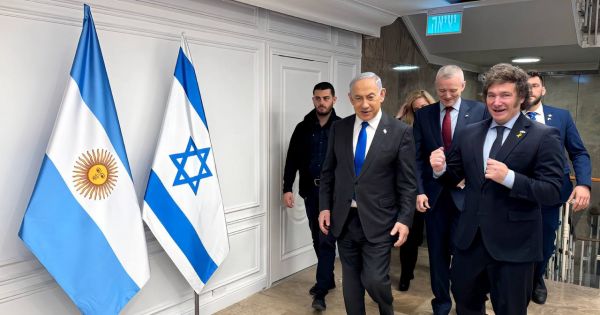
At the heart of the scandal is an audio recording featuring a voice attributed to former Honduran President Juan Orlando Hernández. In the recording, the speaker claims that Milei funneled $350,000 into a project specifically designed to bypass scrutiny and avoid detection. According to the audios, the objective of this project was the creation of a U.S.-based news site tasked with compiling “dossiers” and generating negative content against specific regional leaders, including Mexican President Claudia Sheinbaum, Colombian President Gustavo Petro, and the influential Zelaya family in Honduras. The recordings also provocatively name Israeli Prime Minister Benjamin Netanyahu, suggesting a complex global web of political interests.
Despite the gravity of the allegations, the authenticity of the material remains the subject of intense skepticism and debate. The former Honduran president has publicly dismissed the recordings on the social media platform X, categorizing them as entirely false. Furthermore, even Pablo Iglesias, a key figure behind the media outlets that published the leaks, has admitted that there is no corroborating evidence beyond the recordings themselves, acknowledging that any broader conclusions drawn from the tapes currently fall into the realm of speculation. While a voice analysis service confirmed that the recordings feature human speech, it fell short of verifying the identity of the speakers or the integrity of the information contained within.
The response from the Argentine government has been noticeably guarded. The Casa Rosada has neither confirmed nor denied the existence of any financing arrangements, nor have they clarified whether President Milei maintained direct communication with Hernández during the period in question. Public records offer no evidence of the alleged fund transfers, leaving a significant gap between the claims made in the audios and verifiable financial data. Nevertheless, the scandal has moved beyond mere hearsay, sparking formal parliamentary inquiries in Argentina regarding whether the administration has engaged in illicit political interference within neighboring sovereign nations.
The figure of Juan Orlando Hernández adds a layer of surreal complexity to the narrative. Having been sentenced to 45 years in a U.S. prison for drug trafficking, Hernández received a controversial pardon from President Donald Trump in December 2025, just days before the Honduran national elections. He is positioned in these reports not merely as an associate, but as a central operator of the disinformation scheme. The timing of these events has fueled intense suspicion among political factions, with Honduran leaders like Rixi Moncada denouncing the alleged scheme as a direct assault on the integrity of their electoral process, further complicating international diplomatic relations.
As the situation develops, the broader political fallout continues to intensify. President Claudia Sheinbaum has publicly challenged the Argentine leadership to address the allegations, bringing international pressure to bear on the Milei administration. Meanwhile, the Honduran National Congress has taken steps to seek independent verification, announcing plans to submit the audio files to forensic laboratories within the United States for an objective audit. With major international news agencies unable to independently corroborate the contents of the tapes, “Honduras Gate” remains a pivotal, albeit unproven, flashpoint that highlights the rising anxieties over the weaponization of digital media in modern statecraft.