



Shapiro Accuses RFK Jr. of Vaccine Misinformation as Pennsylvania Records First Measles Deaths in Decades
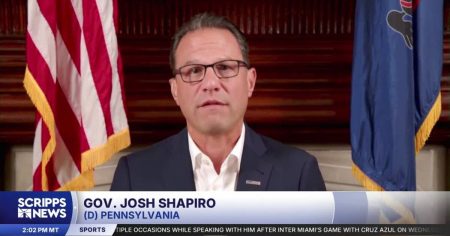
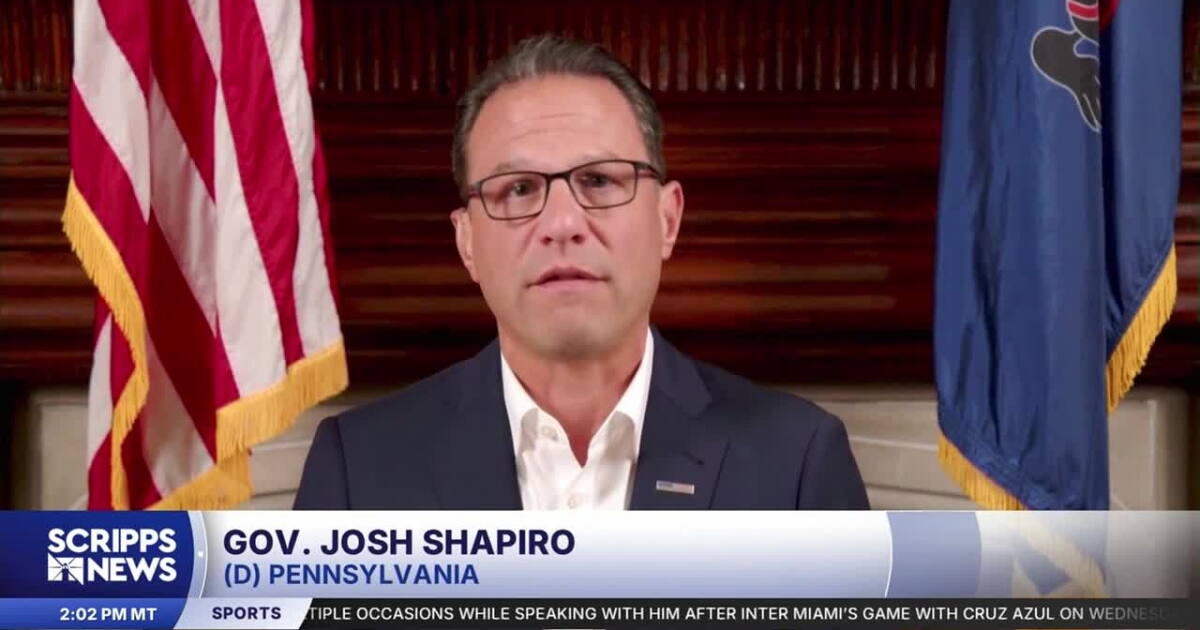
Governor Josh Shapiro has sharply criticized Robert F. Kennedy Jr. as Pennsylvania reports its first measles deaths in decades, an outbreak that health officials say is being worsened by confusion over vaccination. The governor’s remarks, reported by News 5 Cleveland WEWS, accused Kennedy, the current federal health secretary, in unusually direct language of spreading misinformation that undermines the scientific consensus around the measles vaccine. Shapiro did not limit his criticism to Kennedy’s past writings or speeches; instead, he tied the health secretary’s leadership to public health consequences unfolding in real time in Pennsylvania. With measles cases climbing among unvaccinated children and families across the Commonwealth, Pennsylvania has become a key flashpoint in a larger national debate over how the federal government should address vaccine hesitancy. The governor’s office emphasized that the MMR vaccine remains one of the safest and most effective disease prevention tools ever developed, and urged parents who have delayed vaccination to consult their pediatricians promptly. The statement made clear that measles is not a harmless childhood illness—it can cause pneumonia, encephalitis, permanent neurologic damage, and death, especially for infants, pregnant women, and people with compromised immune systems. By invoking Kennedy by name, Shapiro signaled that the issue is not merely about local public health outreach but also about federal messaging, particularly from a cabinet official who has openly questioned vaccine safety protocols for years. The accusation is likely to intensify a still-raw political fight over medical orthodoxy, government mandates, and personal choice.
Pennsylvania health officials have not released the names, ages, or specific communities of the patients who died, citing privacy and the ongoing active investigation. But the confirmation of fatalities alone marks a dramatic shift, as the state had not seen a measles death in a generation. For decades, public health authorities treated measles as a near-eradicated threat in the United States, a disease that physicians encountered only in medical textbooks or through imported cases from other countries. The current outbreak has disrupted that assumption, bringing into sharp focus the consequences of falling vaccination rates in certain regions. The cases have been concentrated in areas with lower immunity and have prompted emergency vaccination campaigns, exposure warnings, and quarantine guidance for schools and child-care centers. Hospitals are working to identify and contact people who may have shared waiting rooms, grocery stores, or other public spaces with infected individuals. Each new potential exposure complicates the response for understaffed county health departments. The emotional weight of the deaths is immense, especially among parents who believed their children were safe because they had not yet encountered measles. Epidemiologists note that measles is one of the most highly contagious viruses known, capable of lingering in the air for up to two hours after an infected person leaves a room. A single case can spark dozens of secondary infections if immunity levels in a community fall below the critical threshold. The Pennsylvania deaths therefore represent not just rare tragedy but a sentinel event for a United States that is watching once-eliminated diseases return.
Shapiro’s words carried particular weight because Kennedy has become one of the most controversial figures in American public health. Once a prominent environmental lawyer and independent presidential candidate, Kennedy has spent years raising questions about vaccine composition, regulatory approval processes, and the alleged risks of childhood immunizations. He has denied being anti-vaccine, insisting instead that he advocates for more rigorous safety studies. Yet public health experts argue that his repeated references to debunked research and his willingness to amplify unsupported theories have provided a powerful platform for fears that have no basis in contemporary medical evidence. The accusation of misinformation from Pennsylvania’s governor is therefore not a policy disagreement but a charge that lives are being endangered by official communication. Shapiro did not merely suggest that Kennedy should correct doubts; he asserted that Kennedy is creating them. In a response to the governor, Kennedy’s representatives have pushed back, maintaining that his focus is on informed consent and the need to reform a nation that has become too trusting of federal health authorities. They also note that vaccine decisions have long been made by states and families, not by the federal government. But that argument does little to reassure public health leaders in Pennsylvania who are now counting dead constituents. The governor’s language was chosen intentionally to force a response from a federal department that has been unusually quiet about the resurgence of measles in multiple states. By going public in such forceful terms, Shapiro made clear that he holds the Secretary of Health and Human Services personally responsible, at least in part, for the environment in which parents are making medical decisions.
The Pennsylvania reporting comes amid an alarming national landscape. Measles cases have also surged in other parts of the country, including rural communities in Texas and New Mexico, where vaccination exemptions have become common. The Centers for Disease Control and Prevention has issued repeated alerts, and the national case count in recent months has risen to levels not seen in years. The disease’s return is a direct consequence of declining MMR vaccination rates, which have fallen below the 95 percent coverage target recommended by public health officials. That threshold is necessary to establish community immunity and protect people who cannot be vaccinated—such as infants under six months, individuals undergoing chemotherapy, and those with severe allergies. When coverage drops, the virus finds vulnerable pockets and spread rapidly. Social media and targeted messaging have accelerated the spread of hesitancy, with parents encountering conflicting claims about vaccine injuries, autism, and government motives. Major medical organizations, including the American Academy of Pediatrics and the American Medical Association, continue to state categorically that the MMR vaccine does not cause autism—a conclusion reached after decades of large-scale, peer-reviewed studies that failed to find any connection. Yet misinformation remains remarkably durable, especially when figureheads with national platforms repeat false claims in interviews, at rallies, or in social media posts. Kennedy’s position at the Department of Health and Human Services has given such claims a legitimacy they would otherwise lack, despite the department’s official website still recommending vaccination. The contradiction is not lost on state officials who are fighting to rebuild trust in their own county health clinics while a federal leader simultaneously diminishes that trust.
The history of measles in the United States is important context for this moment. Before the introduction of the vaccine in 1963, nearly every child contracted measles by age fifteen, and the disease caused an estimated three to four million cases and four hundred to five hundred deaths every year in the United States. Many thousands more suffered from severe complications, including permanent hearing loss and brain swelling. The development of the two-dose MMR vaccine virtually eliminated the disease in the twenty-first century. By 2000, measles was declared eliminated in the United States, meaning that continuous transmission had been interrupted for at least a year. That success was cited as one of the greatest triumphs of modern public health. It also became a quiet triumph—so quiet that two generations of parents have grown up without any memory of measles wards, iron lungs, and funeral notices for children killed by contagious disease. As a result, the perceived risk of the vaccine has started to outweigh the perceived risk of the infection, a reversal that would have seemed unfathomable to physicians who practiced in the pre-vaccine era. This generational amnesia is now costing lives. Local outbreaks in Pennsylvania, along with clusters elsewhere, are the most tangible consequence of a long erosion of understanding about the disease’s severity. The return of measles deaths is an indictment of a collective failure to preserve and pass on the lessons of medical history. It also places an enormous burden on pediatricians, nurses, and public health educators, who must spend their limited time refuting false claims rather than caring for other emerging needs.
As Pennsylvania grieves, public health experts are calling for a unified message from every level of government. The priority, they say, is to vaccinate unvaccinated children and adults in affected areas as quickly as possible. Post-exposure prophylaxis, including a dose of MMR vaccine within seventy-two hours or immunoglobulin within six days, can offer some protection to those who have been exposed. Anyone with symptoms is urged to isolate and to contact medical providers before arriving at facilities in order to avoid further transmission. At the same time, officials are wrestling with the deeper challenge of how to counter a culture in which scientific truth is treated as a matter of opinion. The response will need to be collaborative, involving local physicians, trusted community leaders, and perhaps even federal policymakers willing to model evidence-based behavior. Governor Shapiro has made his position clear, and he is not alone among governors who see the measles resurgence as an avoidable tragedy. Unless vaccine confidence is restored, epidemiologists warn that more deaths will follow. The long-term solution is not simply to mandate vaccination, although several states have revisited their exemption laws, but to re-establish respect for the institutions and products that have saved countless lives. This is a matter that transcends partisan politics and should appeal to everyone who hopes to return to a world where measles is again a matter of history lessons rather than an active hazard. For now, though, Pennsylvania’s first measles deaths in decades will serve as an unforgiving reminder that words—especially the words of powerful federal officials—are not merely rhetorical. They can help determine whether children live or die. The sequence of events that led to this moment begins with an old, forgotten disease, increasingly loud mythology, and a public health establishment caught between protecting a skeptical population and telling the truth. It will take a massive effort to reverse course, and Pennsylvania is now looking squarely at the deadly price of having waited too long.