


Pennsylvania Measles Deaths Draw Fiery Accusation from Governor Against RFK Jr.
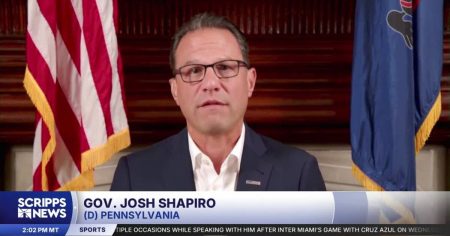
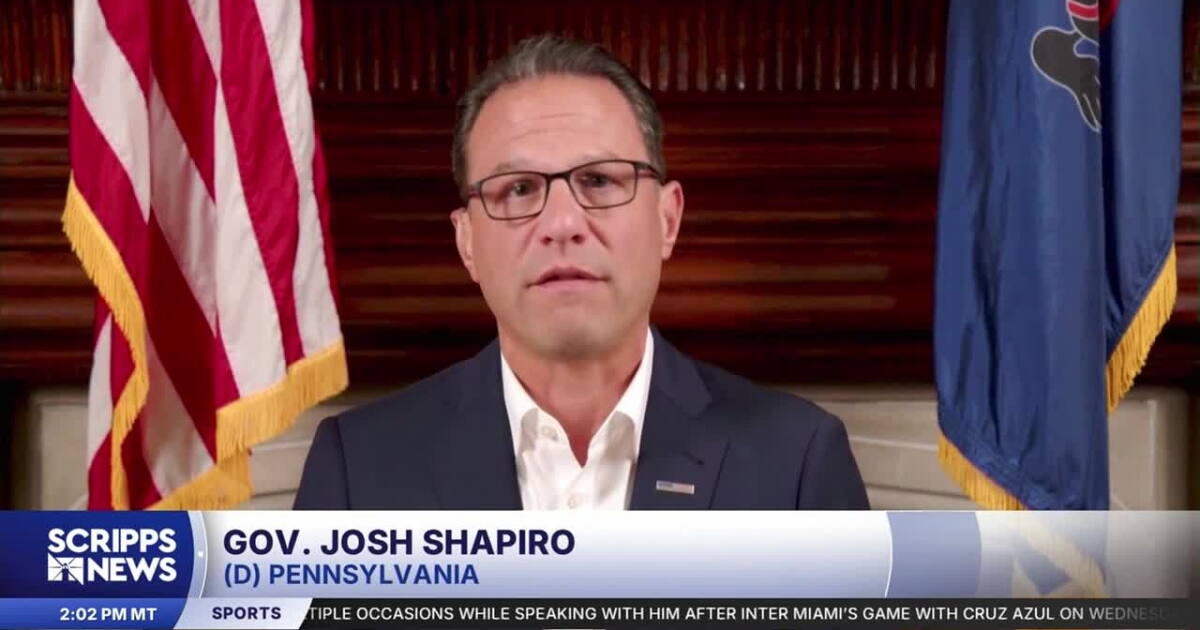
Pennsylvania confirmed its first measles deaths in decades, prompting Gov. Josh Shapiro to directly accuse U.S. Health and Human Services Secretary Robert F. Kennedy Jr. of spreading vaccine misinformation and undermining public confidence at the worst possible time. The announcement came as the state joined a growing national outbreak that has already claimed lives in Texas and New Mexico. Health officials did not release the identities of the deceased, but said they were unvaccinated and that their deaths were directly attributable to measles complications. Shapiro, a Democrat, did not hold back. He said the deaths were preventable and blamed years of anti-vaccine advocacy led by Kennedy, who now occupies the top health post in the country. He noted that Kennedy’s past statements questioning vaccine safety and promoting vitamin A and other remedies for measles have created false equivalences between proven medicine and pseudoscience. “When people in power spread doubts about vaccines, children die,” Shapiro said, according to a transcript of his remarks. The governor’s comments signal a deepening conflict between the federal government’s health messaging and state-level efforts to contain a disease that was declared eliminated in the United States two decades ago. The Pennsylvania Department of Health has opened an investigation and is tracing contacts across the commonwealth. City health departments in Philadelphia and Pittsburgh have been placed on alert. The news has stunned a state that had not recorded a measles death in generations.
Measles is among the most contagious diseases on Earth. It spreads by respiratory droplets and can remain suspended in the air for up to two hours. A person infected with measles is contagious to others from four days before the rash appears to four days after. The disease begins with fever, cough, runny nose, and watery eyes, followed by a rash. Complications include pneumonia, which is the most common cause of death, and encephalitis, which can lead to permanent brain damage. In young children, measles can also cause ear infections that lead to hearing loss. The CDC says that up to one in five unvaccinated people infected with measles will be hospitalized, and one in 20 will get pneumonia. The MMR vaccine prevents measles, mumps, and rubella. Two doses, given first at 12 to 15 months and second at 4 to 6 years, are 97 percent effective. Because the virus is so contagious, vaccination rates must be around 95 percent to maintain herd immunity. In Pennsylvania, as in much of the United States, that threshold has slipped, particularly in communities that claim religious or philosophical objections to vaccination. Robert F. Kennedy Jr. has spent decades making claims linking vaccines to autism and to chronic diseases, despite overwhelming scientific evidence that these claims are false. As HHS Secretary, he has downplayed the severity of measles and said the vaccine is “pretty good,” a phrase critics say implies it is merely adequate rather than one of the greatest successes in public health history. Shapiro and medical experts say this kind of language is dangerous and has contributed to falling vaccination rates. They point to the current cases as proof: measles deaths in 2025 are a tragedy because they are entirely preventable.
Governor Shapiro has been one of the most direct officials in the country in holding Kennedy accountable. At a press conference, the governor accused the federal health secretary of engaging in “deadly misinformation” and called on him to immediately and unequivocally recommend the MMR vaccine to all Americans. Shapiro said he was not opposed to healthy diets or supplements, but insisted that no amount of vitamin A can substitute for a vaccine. His comments were echoed by hospitals and medical societies across Pennsylvania. The governor’s office also announced plans to run public service announcements emphasizing vaccine safety and to work with local school boards to provide clear information about immunization requirements. Shapiro is not known for mincing words, but even his allies were surprised by the ferocity of his attack on a member of the cabinet. The state’s first measles deaths in decades, he said, were a tragedy manufactured by anti-vaccine propaganda. “We have hospitals, doctors, and nurses who are trained to save lives. We don’t need a federal official telling them their tools don’t work,” Shapiro said. The governor has also called on the legislature to review the state’s vaccine exemption laws. Pennsylvania is one of several states that allow philosophical exemptions for school vaccines, and vaccination rates among kindergartners have fallen below the 95 percent benchmark. Some lawmakers are now proposing to eliminate the philosophical exemption and to make it harder for parents to delay childhood vaccines. That proposal has already drawn criticism from anti-mandate groups, who argue that forcing vaccinations violates personal liberty. But Shapiro indicated that he would support a reasonable tightening of exemptions if it helps prevent further deaths. He said the state’s first obligation is to protect children.
The Pennsylvania deaths are part of a wider measles crisis that has alarmed public health officials across the United States. The first death in the current outbreak was reported in Texas in late February. The victim was a school-aged child in Gaines County, a rural area near the border with New Mexico, where vaccination rates are low and a Mennonite community has been at the center of the spread. That was the first measles death in the U.S. in five years. In early March, health officials in New Mexico confirmed a second death, an unvaccinated adult who tested positive for measles. With Pennsylvania’s deaths, the total death toll from the current outbreak has risen to at least four. Hundreds of cases have been reported in more than a dozen states, according to the CDC. Most of the cases are in unvaccinated people, and many have required hospital care. The CDC has recommended that communities with outbreaks consider the rule of “test, trace, and vaccinate,” and has renewed its standing recommendation that all children receive two doses of MMR. But the agency’s authority has been weakened by changes at HHS, and Kennedy has questioned some of its policies. In a recent interview, he suggested that the measles vaccine, while effective, did not need to be mandated and that resources should also go toward improving nutrition. Scientists point out that measles itself can cause “immune amnesia,” erasing the immune system’s memory of other pathogens and leaving children vulnerable to other infections for months. The national uptick in measles cases is not a random event; it tracks with a steady decline in vaccination coverage in kindergarteners. In the 2023–24 school year, the national vaccination rate fell below 93 percent for the first time in a decade. In some counties in Pennsylvania, the rate is under 80 percent. The combination of high contagiousness and large pockets of unvaccinated people has created the conditions for outbreaks that once seemed like a relic of the past.
In response, Pennsylvania has activated its emergency response system. The Department of Health is conducting contact investigations around every confirmed case, checking schools, day care centers, and childcare settings for possible exposures. Children and adults who are unvaccinated and were exposed are being asked to quarantine for up to 21 days. The state is also setting up vaccination clinics in the affected communities, providing both MMR shots and immune globulin for high-risk people who were exposed and cannot be vaccinated. Hospitals are screening patients for respiratory symptoms and asking about rash, fever, and vaccination history at entrances. Some pediatric practices have reported a spike in calls from parents who were previously hesitant and now want to vaccinate. Public health experts say that is a positive sign, but they also warn that misinformation is entrenched in certain communities. Pennsylvania’s Amish and Mennonite populations have historically had low vaccination rates, and outreach is being done by community leaders rather than government officials. The state is also partnering with faith-based organizations to distribute factual information. Shapiro has asked private insurers and Medicaid to cover travel and other costs for families seeking vaccines. He has also asked the federal government to provide additional technical support, but there is no indication that HHS will treat the outbreak with the urgency that state leaders want. The governor has made clear that Pennsylvania will not wait. “We will do everything in our power to protect our people, no matter what is coming out of Washington,” he said. “The first measles deaths in this state are a bucket of cold water for all of us,” Shapiro added. He said the state is considering every option, including school-based vaccination requirements and public health orders that would require unvaccinated residents to stay home if they were exposed.
The implications of the measles deaths extend far beyond Pennsylvania. They are a test of how the country will manage the return of vaccine-preventable diseases in an era of deep public distrust. Governor Shapiro’s decision to publicly attack RFK Jr. has transformed a local tragedy into a national political issue. Democrats have largely criticized Kennedy, but few governors have so directly spoken the words “vaccine misinformation” in connection with a federal official. Shapiro has no doubt opened himself up to criticism from anti-vaccine activists and from Republicans who support Kennedy. But his supporters believe he is on the right side of science and common sense. The political landscape has shifted in recent years: vaccine mandates are increasingly seen as a matter of parental choice, but outbreaks have a way of changing minds. The memory of measles deaths in the U.S. is fading because most parents have never seen the disease’s impact. Now Pennsylvania has seen it again. The first measles deaths in decades in that state will be studied and debated, and the question of whether the vaccination rate can be increased before more children die has become urgent. For now, the immediate priorities are containment, vaccination, and care for patients. The fight over who is responsible for the outbreak—Shapiro’s blunt accusation against Kennedy, and the broader fight over the future of public health—has only just begun. ABC15 Arizona’s coverage underscores the point: this is not a theoretical debate, but a matter of life and death. The hope of every health official is that the loss recorded in Pennsylvania will remind the nation what measles can do, and that the misinformation that allowed it to return will be confronted with the same force as the virus itself.