






Shapiro Accuses RFK Jr. of Fueling Vaccine Misinformation as Pennsylvania Confirms First Measles Deaths in Decades
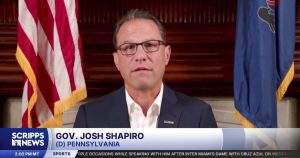
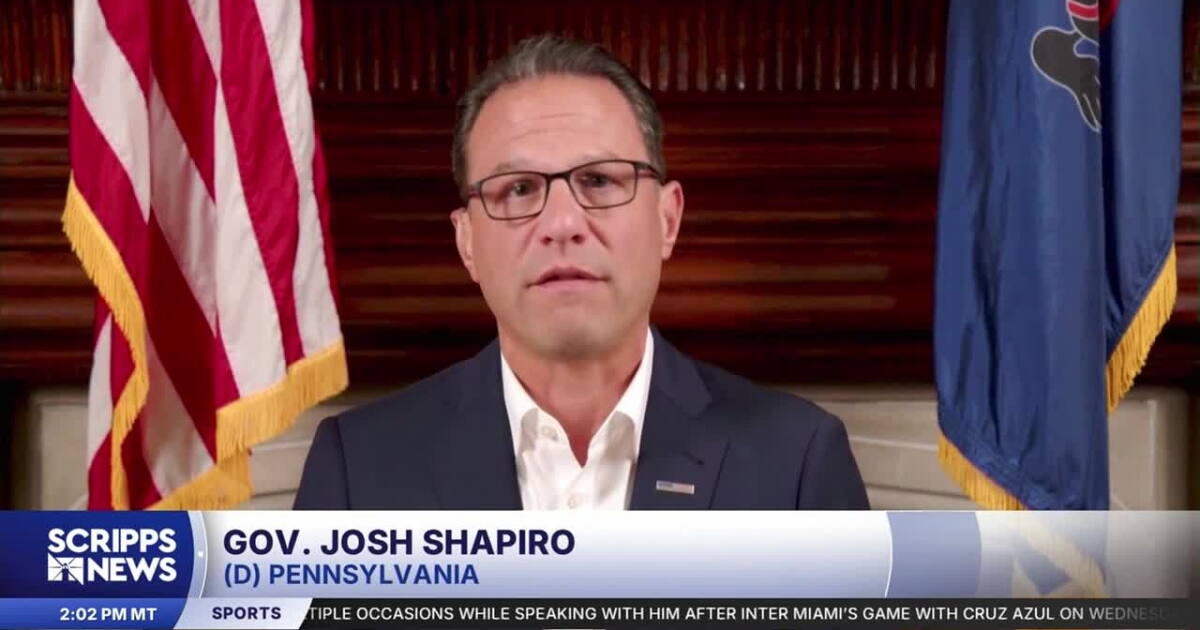
Pennsylvania Governor Josh Shapiro delivered a scathing rebuke of U.S. Secretary of Health and Human Services Robert F. Kennedy Jr. on Tuesday, accusing him of spreading dangerous vaccine misinformation even as the state grappled with its first measles deaths in decades. In a heated statement from the state capitol, Shapiro said Kennedy’s history of anti-vaccine advocacy and his current position atop the federal health apparatus have “emboldened a preventable public health crisis” that has now cost Pennsylvania children their lives. State health officials confirmed the deaths of several patients — including at least two young children — who were part of an ongoing measles outbreak centered in a rural county with notably low vaccination rates. The last time Pennsylvania recorded a measles fatality was in the early 1990s, and the confirmation of new deaths has sent a shockwave through hospitals, schools, and families across the Commonwealth. According to Scripps News reporting from Harrisburg, Shapiro singled out Kennedy by name, saying the secretary’s repeated questioning of vaccine safety and his public promotion of unproven treatments have given cover to parents who delay or skip the measles-mumps-rubella (MMR) vaccine. “This is not a matter of personal choice anymore,” Shapiro said. “When measles kills a child in Pennsylvania, that is a direct, tragic consequence of a sustained campaign of fear and lies — and the person leading that campaign now runs the federal agency responsible for protecting Americans from infectious disease.” The governor’s remarks raised the political stakes in what has become a national debate over vaccine policy, as several states struggle with measles outbreaks and a rising share of kindergartners entering school without required immunizations.
The outbreak has accelerated rapidly in recent weeks, with Pennsylvania health officials reporting more than 100 confirmed cases across at least six counties, most concentrated in an Amish and Mennonite community where vaccination exemptions and hesitancy are high. Measles is one of the most contagious viruses known to medicine; a single infected person can spread the disease to up to 18 other people, and the virus can remain in the air for up to two hours after an infected person leaves a room. Hospitals in the affected region have had to divert pediatric patients, set up separate isolation wards, and quarantine dozens of health workers and family members who were exposed before the outbreak was identified. The first deaths coincided with a spike in cases involving infants too young to be vaccinated and older children with underlying health conditions that made them more vulnerable to severe complications. Measles can cause pneumonia, encephalitis, and a rare but fatal degenerative brain condition called subacute sclerosing panencephalitis that can appear years after infection. Dr. Elena Rodriguez, an epidemiologist at Penn State Health, told Scripps News that the hospital has not seen this level of illness in her career. “We have children on oxygen. We have children with severe dehydration and respiratory distress. We have parents begging for answers,” Rodriguez said. “Every single one of these hospitalizations could have been prevented with two doses of the MMR vaccine, which is safe, cheap, and more than 97 percent effective.” The outbreak has overwhelmed local clinics, and officials have opened emergency vaccination sites in church basements and community centers, though turnout has been uneven. Public health workers describe a climate of deep mistrust in some communities, fueled by internet videos, political rhetoric, and now — in Shapiro’s view — by the highest-ranking health official in the United States.
Shapiro did not mince words in his address. He accused Kennedy of “weaponizing public office to undermine confidence in vaccines,” and he specifically referenced a post Kennedy made on social media last week in which the HHS secretary suggested that nutritional supplements and fresh air had historically played a greater role in measles recovery than immunization. Kennedy’s post stopped short of telling parents not to vaccinate their children, but it repeated familiar talking points from his decades of activism: that the MMR vaccine is not clearly effective, that its safety record has been insufficiently studied, and that federal health agencies have colluded with pharmaceutical companies to “lock in” a one-size-fits-all vaccine schedule. Shapiro called those claims “reckless” and “absurd,” noting that measles was declared eliminated in the United States in 2000 precisely because of widespread vaccination, and that the disease kills more than 100,000 people a year globally in communities without access to the vaccine. “We eradicated measles in this country by trusting science and doing the work,” Shapiro said. “Now we are reversing course, and children are paying the price with their lives.” The governor said he had no intention of inviting Kennedy to Pennsylvania. He also called on the federal government to “stop funding misinformation” and to allow state and local health departments to conduct aggressive vaccination campaigns without interference from Washington. Several members of Pennsylvania’s congressional delegation, mostly Democrats, echoed Shapiro’s criticisms and called for a congressional hearing on Kennedy’s fitness for office. A handful of Republicans, however, defended Kennedy’s approach, arguing that states, not the federal government, should decide vaccine policy and that “medical freedom” should be respected — even amid the outbreak.
Kennedy’s office did not issue a formal written response to Shapiro’s remarks, but a spokesperson for HHS said the secretary remains committed to “informed consent” and to ensuring that Americans have “complete information” about all public health interventions. Kennedy has long denied being anti-vaccine, insisting instead that he is “pro-safety” and that he only wants vaccines to be more rigorously tested. His supporters, including several conservative lawmakers and prominent podcast hosts, have accused public health officials and news media of exaggerating the measles outbreak to “drum up fear” and suppress dissent. But Kennedy’s own record is extensive: for more than two decades, he has written articles, given speeches, and raised money for groups that promoted the now-debunked link between vaccines and autism; he has repeatedly claimed that COVID-19 vaccines were among the deadliest ever made; and he has questioned whether measles is truly dangerous, once musing that thousands of children historically died each year from “infectious diseases that killed them all before they develop cancer, heart disease, or diabetes.” Those statements received renewed scrutiny this week after the Pennsylvania deaths. In a press briefing, a reporter asked Kennedy whether he would publicly urge parents in Pennsylvania to vaccinate their children. The secretary did not give an unequivocal answer; instead, he said that the decision to vaccinate “belongs in the hands of parents” and that the federal government should not “coerce” anyone into a medical procedure. Asked specifically whether he believes the MMR vaccine is safe, Kennedy said, “I think the MMR vaccine has been used for many decades. There have been studies, and there have been questions. I want to continue to look at the data.” That answer immediately drew condemnation from pediatricians and public health experts, who noted that the MMR vaccine has been administered to more than 600 million people since its introduction in the 1970s and has a remarkably low rate of serious adverse events.
Public health experts have warned that the Pennsylvania outbreak could be only the beginning. National vaccination coverage among kindergartners has fallen in recent years from roughly 95 percent to around 91 percent — below the threshold needed for herd immunity against measles. That means communities across the country are now highly vulnerable to imported cases from international travel. The U.S. Centers for Disease Control and Prevention reported that measles cases in the first months of this year already outnumber total cases from many previous years, and at least three other states are investigating outbreaks. In Pennsylvania, health officials have identified a “pocket” of unvaccinated children in the heart of the outbreak, where vaccination rates are estimated at under 40 percent. Many families in the affected communities belong to religious groups that have philosophical objections to immunization, but Shapiro insisted that “this is not a religious liberty issue” because vaccines are not prohibited by any mainstream religious denomination. “There is no bishop, no pastor, no rabbi and no imam who has told their congregation to let measles kill the children,” Shapiro said. The governor has ordered state agencies to explore every legal avenue to contain the outbreak, including mandatory vaccination orders for children attending public shools in affected zones. State law currently allows emergency vaccine mandates during an outbreak, though enforcement has historically been lax and parents can obtain religious exemptions. Shapiro said he would support limiting exemptions in the affected counties if voluntary vaccination rates do not improve within the next two weeks. He also directed the Pennsylvania Department of Health to launch a public education campaign featuring doctors, nurses, and community leaders — a direct counter-message to the misinformation that, as he put it, “has been given a megaphone by the leader of HHS.”
The political consequences of the Pennsylvania measles deaths are likely to reverberate well beyond the state. Already, several Democratic governors have issued statements supporting Shapiro, and the chairs of three medical associations released a joint letter to the White House urging President Trump to overrule Kennedy’s approach or ask for his resignation. But the president has so far shown no sign of doing so; he has praised Kennedy for “questioning everything” and has described vaccine mandates as a violation of civil liberties. Shapiro’s attack on Kennedy is particularly notable because the governor is a rising star in the Democratic Party and has frequently positioned himself as a pragmatist who can reach across the aisle — yet he used the word “misinformation” more than a dozen times in his speech, and he called on the HHS secretary to visit the hospital wards where children are dying. “I want Mr. Kennedy to look into the eyes of a parent who has lost a child because they were told to trust their gut, do their own research, and skip the shot,” Shapiro said. “Bring your raw milk and your vitamins and your opinions. But do not come to Pennsylvania claiming that this tragedy is an acceptable cost of ‘freedom.'” Meanwhile, grieving families in the affected communities have begun to speak out, with some saying they regret not vaccinating their children. A local funeral home director told Scripps News he had never handled a measles death in his life and described the atmosphere in the county as “one of fear and sorrow, mixed with scary silence.” The outbreak still has no end in sight; measles spreads asymptomatically for up to four days before symptoms appear, so more cases are almost certain to emerge. As children continue to fill hospital beds, the debate over Kennedy’s role, vaccine choice, and the limits of individual liberty has never been more acute — and nor has the cost of misinformation. For now, Pennsylvania has joined a small but tragic list of states where a disease once eliminated in America has found enough unvaccinated hosts to kill again. And in the governor’s view, that is a preventable failure created by a man he believes should not hold public office. “There will be time for politics later,” Shapiro said. “Right now, we are burying children. And the person who helped dig those graves works for the government of the United States.”


