


The Pervasiveness of Fake News in 2025: A Deep Dive into a Troubling Trend
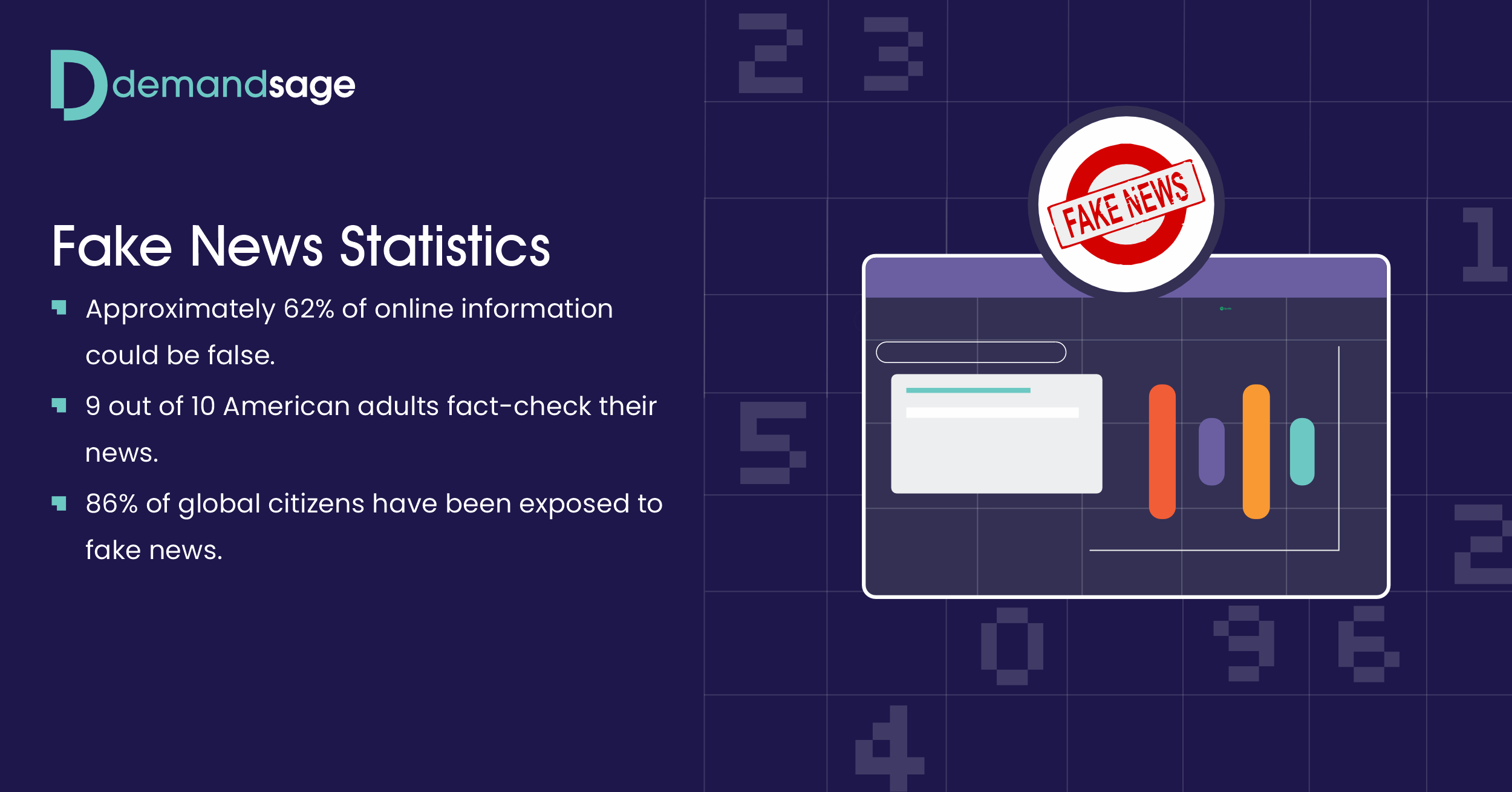
The digital age, while offering unprecedented access to information, has also unleashed a torrent of misinformation, commonly known as “fake news.” In 2025, this phenomenon continues to plague the online landscape, reaching alarming proportions and impacting societies worldwide. A staggering 62% of online content is now classified as false, exposing 86% of the global population to this deceptive information. The pervasiveness of fake news has eroded public trust in institutions, fueled political polarization, and inflicted significant damage on the global economy.
The US Epicenter: A Breeding Ground for Misinformation
The United States stands as a stark example of fake news’s grip. A disturbing 80% of American adults have consumed fake news at some point, with 23% admitting to sharing false stories, either knowingly or unknowingly. This widespread exposure has contributed to a decline in trust in traditional and new media, with only 32% of Americans expressing confidence in news outlets. The constant bombardment of misinformation has left many struggling to discern fact from fiction, resulting in a climate of skepticism and confusion.
Social Media: The Amplifier of Falsehoods
Social media platforms, designed to connect people and share information, have ironically become primary vectors for the spread of fake news. With 40% of content shared on these platforms being false, and almost half of Americans relying on social media as a news source, the potential for widespread deception is immense. Although social media companies have implemented measures to combat misinformation, including AI-powered tools to flag and remove fake content, these efforts appear insufficient to stem the tide. The sheer volume of user-generated content and the speed at which it spreads pose significant challenges for effective moderation.
The Global Reach of Fake News: A Transnational Threat
The proliferation of fake news is not confined to national borders. Its global reach is evident in the 86% of global citizens who have been exposed to misinformation, with 44% encountering false news in print media and 51% on television. This widespread dissemination underscores the need for international collaboration to address this challenge. The erosion of trust in information sources, fueled by the proliferation of fake news, poses a threat to democratic processes, public health, and economic stability worldwide.
The Role of Artificial Intelligence: A Double-Edged Sword
Artificial intelligence, while holding the potential to address societal challenges, is also being exploited to create and spread fake news. The emergence of deepfake technology, capable of producing highly realistic fabricated videos, has further blurred the lines between reality and deception. A startling 93% of social media videos are now synthetically generated, many using AI for manipulation. This alarming statistic highlights the evolving sophistication of misinformation tactics and the urgent need for robust countermeasures.
The Economic and Societal Toll: A Pricey Deception
The economic consequences of fake news are substantial, costing the global economy an estimated $78 billion annually. This financial burden stems from losses in the stock market, reputational damage to businesses, and the spread of misinformation in areas such as public health. Beyond the economic impact, fake news has far-reaching societal implications, eroding trust in government, fueling political polarization, and undermining public discourse. The constant barrage of misinformation makes it increasingly difficult for individuals to make informed decisions, threatening the very fabric of democratic societies. Combating this pervasive issue requires a multifaceted approach involving media literacy education, fact-checking initiatives, responsible technology development, and international cooperation. The fight against fake news is a fight for the integrity of information and the health of our global community.