


Disinformation Campaign Targets Georgian Legion Fighting in Ukraine, Fuels Political Tensions in Slovakia
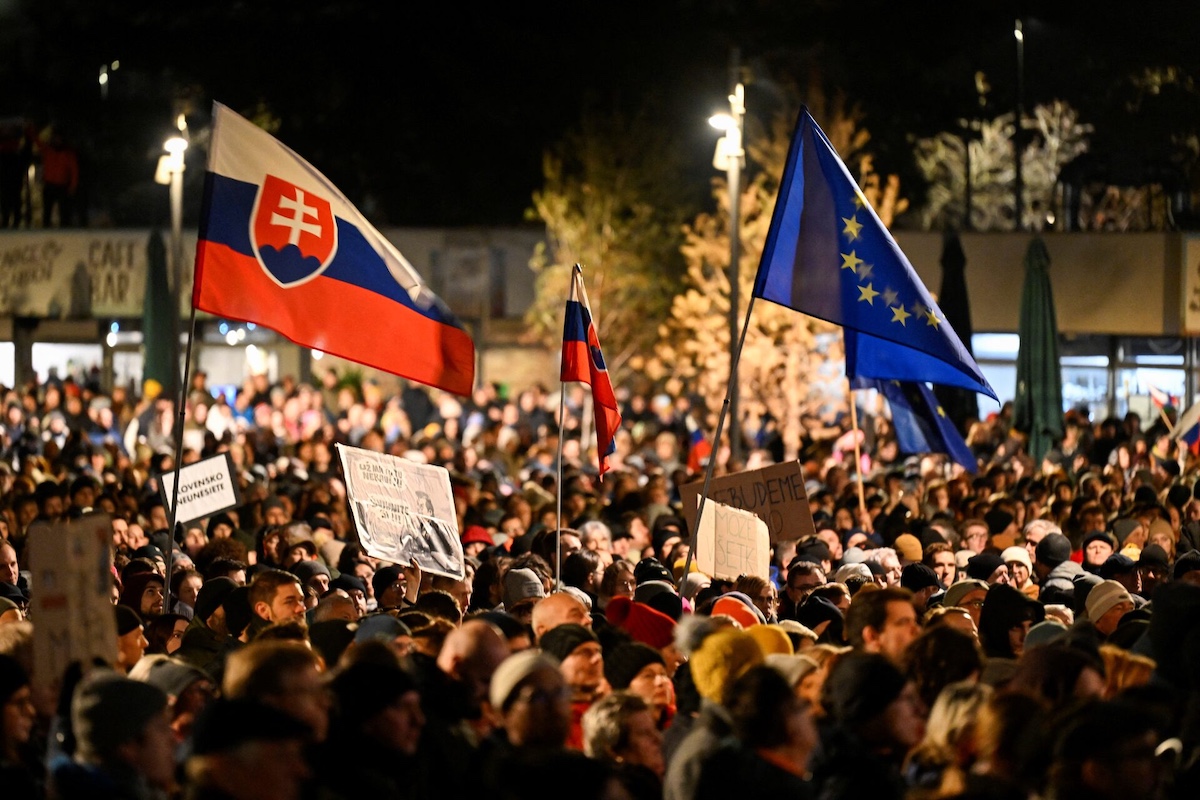
Bratislava, Slovakia – A web of disinformation targeting the Georgian Legion, a volunteer unit fighting alongside Ukrainian forces, has ensnared Slovakian politics, leading to the banning of the Legion’s commander, Mamuka Mamulashvili, from the country and accusations of coup attempts. The Slovakian government, led by Prime Minister Robert Fico, has accused the Legion of orchestrating protests and conspiring with opposition parties, claims that independent investigations suggest are part of a broader Russian disinformation campaign. The accusations have heightened political tensions within Slovakia and raised concerns about the vulnerability of democratic processes to manipulation.
The controversy began in September 2024 with the publication of an article on a dubious website, Ukraine Today, accusing Mamulashvili of staging his own poisoning to solicit donations and engaging in fraudulent activities. This article, despite its questionable source, quickly gained traction on social media, particularly amongst pro-Ukrainian activist groups, sowing doubt about the Legion’s legitimacy. The timing of the disinformation campaign coincided with a period of internal turmoil within the Georgian Legion itself, further complicating its ability to respond effectively. A former press officer, who had relocated to the United States and suffered a mental health crisis, began posting incoherent and offensive messages on the Legion’s social media accounts, adding fuel to the fire of the burgeoning disinformation campaign.
The Slovakian government seized upon this narrative, accusing the Georgian Legion of interfering in domestic affairs and attempting to destabilize the country. Prime Minister Fico publicly linked the Legion to opposition parties Progressive Slovakia and Democrats, claiming they were collaborating to orchestrate anti-government protests. These accusations, however, appear to lack any credible evidence and are seen by many as a cynical attempt to deflect attention from Slovakia’s internal challenges and discredit the opposition. Mamulashvili has vehemently denied any involvement in Slovakian politics, stating that while he supports those who oppose Russia, he has no connections to the opposition parties and is focused solely on the war in Ukraine.
Independent investigations, including one by journalist Tomáš Forró of Dennik N, a Slovakian news outlet, have concluded that the accusations against the Georgian Legion are part of a coordinated disinformation campaign originating from Russia. The campaign appears designed to undermine support for Ukraine, sow discord amongst its allies, and destabilize the political landscape in countries like Slovakia. The targeting of the Georgian Legion, a unit comprised of international volunteers fighting for Ukraine’s sovereignty, serves as a potent symbol of this broader effort to discredit those resisting Russian aggression.
The Slovakian government’s embrace of this disinformation narrative raises serious concerns about the susceptibility of democratic institutions to manipulation and the potential for such campaigns to erode public trust. The banning of Mamulashvili from Slovakia, based on unsubstantiated accusations, further fuels concerns about the government’s willingness to suppress dissent and utilize disinformation as a political tool. The situation highlights the urgent need for critical media literacy and robust fact-checking mechanisms to counter the spread of disinformation and protect the integrity of democratic processes.
The case of the Georgian Legion and the ensuing political fallout in Slovakia serves as a cautionary tale about the dangers of disinformation in the digital age. The speed and reach with which false narratives can spread online, amplified by both state and non-state actors, pose a significant threat to social cohesion and political stability. The incident underscores the importance of international cooperation to combat disinformation campaigns and support independent journalism, which plays a crucial role in exposing and debunking false narratives. As the war in Ukraine continues and geopolitical tensions remain high, the need for vigilance against disinformation and its potential to undermine democratic values becomes ever more critical.