








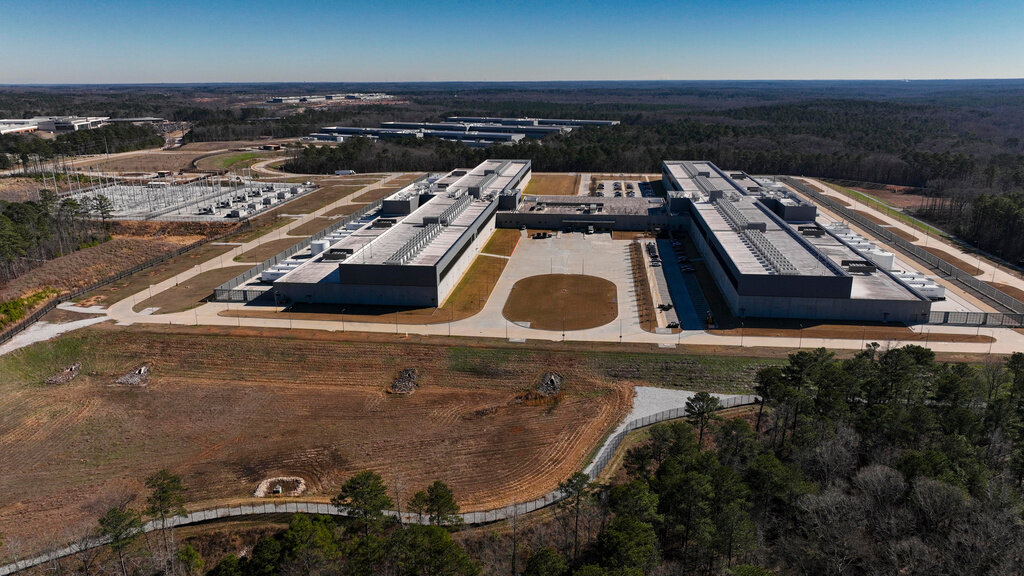
The Georgia Chamber of Commerce has launched a proactive messaging campaign to counter growing public opposition to data centers, aiming to highlight their economic benefits to communities while addressing concerns about environmental impact and utility costs. The organization has formed the Georgia Digital Infrastructure Alliance, which brings together industry leaders, utility representatives, policymakers, and community members to advocate for responsible development and transparent communication with the public. Chris Clark, the Chamber’s president and CEO, acknowledged that the initiative comes in response to significant backlash and negative publicity surrounding data centers, with the group planning to brief policymakers statewide beginning in September to push back against what they perceive as public misinformation.
The timing of this campaign is significant, as recent polling shows a dramatic shift in public opinion against data center development. The Annenberg Public Policy Center at the University of Pennsylvania conducted a survey during the summer that found 61% of Americans now oppose construction of new data centers in their areas, a substantial 12-percentage-point jump from spring polling. This opposition spans the political spectrum, with 69% of Democrats and 54% of Republicans expressing opposition to new local data centers. The issue may have become a political liability in the approaching election season, coming less than three months before voters determine control over the state and Congress, leading both political parties to be cautious about how they approach the topic.
The political implications have become increasingly apparent in Georgia’s gubernatorial race, which has emerged as an indicator of data center politics. Democratic candidate Keisha Lance Bottoms has called for a pause on new data centers, while Republican candidate Rick Jackson has taken a more nuanced approach, noting that data centers’ property tax revenue could potentially eliminate tax bills for other residents in 70 counties and that local communities should have the choice in approving projects. The issue has become prominent enough that other Republican leaders who previously championed data centers are now being forced to reconsider their positions, as illustrated by Texas. The announcement of a halt on new data center approvals pending audits of utility usage and neighbor impacts shows the issue has even reached the federal level, with President Donald Trump stating that data centers need “a little public relations help.”
At the heart of the debate are conflicting claims about data centers’ water and energy consumption. The Chamber’s leadership argues that data centers have become more water-efficient, using less water than a decade ago, and that developers fund the energy infrastructure that delivers power to their facilities. The industry has responded to criticism by implementing more sustainable technologies, such as the closed-loop cooling system announced by OpenAI for its massive project in Georgia. However, environmental advocates challenge the accuracy of these claims. Chris Manganiello, water policy director for the Chattahoochee Riverkeeper, points to data showing significant water loss through evaporation at power plants, noting that a single plant in Cobb County withdrew 10 million gallons of water daily from the Chattahoochee River in 2023 and returned only a quarter of that amount.
The electric infrastructure and potential economic risks are also raising concerns about the ability of the state and communities to handle the increased demands that data centers will require. Amy Sharma, executive director of Science in Georgia, is travelling to town halls to raise alarm about these issues, highlighting the absence of legislative protection for residential ratepayers against electricity cost increases that are necessary to serve the data centers companies. The recent bill that would have made it illegal for Georgia Power to pass on grid expansion costs to consumers was weakened and failed to pass, leaving individuals exposed to potential increases. Sharma also worries about the potential consequences if the AI market downturn or project abandonment leaves new communities with the burden and economic burden of abandoned or unfinished data centers, costs that would fall on the residents.
The Chamber’s campaign has the potential to increase visibility on the issue rather than quell opposition, with the argument that it is not entirely factual. The industry and local leaders have difficulty with a lack of transparency surrounding these projects, creating an issue for residents who are not getting their questions answered through the official channels. This led to them seeking knowledge elsewhere. Regardless of its intent to be transparent and list facts, the new initiative might be seen as it is a spin by some; however, Georgia’s role as a data center hub will be significantly decided by the public opinion that these conversations will influence in the upcoming November election. The core contradiction lies in the fact that while the Chamber proposes development and tax revenue, opposing parties have clear arguments for community choice, allowed the power and water to be sufficient, and the number of bonds for potential losses, all of which highlight the complexities of a growing industry in the state.


