









Paragraph 1: Introduction to the Disinformation Controversy and the Committee’s Response
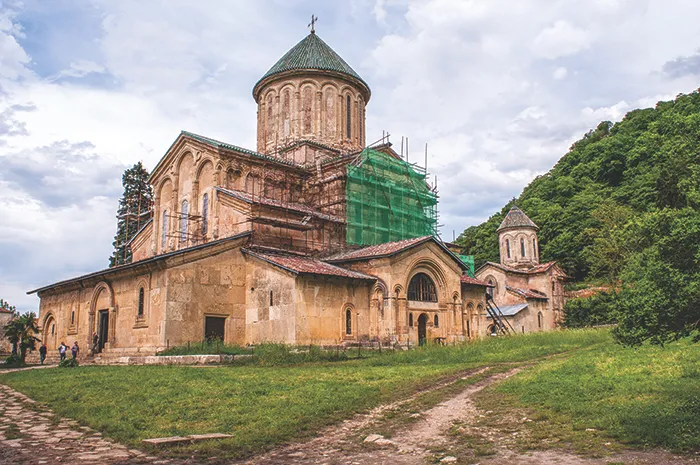
In a robust and detailed public statement, the Temporary Committee for the Rehabilitation of Gelati Monastery has formally addressed what it describes as a sustained and deliberate “disinformation campaign” targeting the ongoing conservation efforts at the UNESCO-listed site. The committee, which is charged with overseeing the complex and unprecedented rehabilitation project, expressed its frustration with what it perceives as repeated attempts by a small group of individuals to mislead the public and undermine the credibility of the large-scale work being undertaken. The statement comes in response to recent social media activity and press coverage that questioned both the methodology and the materials being used in the cathedral’s restoration, specifically focusing on the installation of a temporary roof and the alleged deterioration of the interior frescoes. The committee has not only rejected these claims as groundless but has also issued a stern rebuke to the critics, urging them to “return to the standards of human and professional ethics” and to cease what it characterizes as “lies and slander.” By framing the criticism as a targeted and subjective attack rather than legitimate scholarly debate, the committee has set a firm tone, insisting that its work remains scientifically rigorous, fully transparent, and in complete alignment with the highest international standards. The statement aims to clarify technical details for the public, defend the decisions made by its international team of experts, and reaffirm its commitment to saving the complex, despite what it describes as the “disgraceful rumors” and “unfounded” accusations circulating in the public domain.
Paragraph 2: Defense of the Temporary Roof and the Material Specifications
The central point of contention addressed in the committee’s statement concerns the temporary protective roof installed over the Cathedral of the Nativity of the Virgin. Critics have reportedly derided the structure, using the colloquial and derogatory term “cellophane” to describe the covering, implying a cheap or inadequate solution. The committee has categorically refuted this characterization, explaining that the material is in fact a high-tech, specialized coating manufactured in Germany specifically for the Gelati project. Furthermore, they argue that the installation of this unified roof is not an arbitrary decision, but rather a direct, explicit, and primary requirement of the UNESCO World Heritage Centre (WHC), a mandate that has been in place since 2020. The committee emphasized the technical complexity involved in designing a solution that could address the delicate microclimate of the historic structure. They highlighted that among nineteen design proposals submitted by Georgian specialists and one from an Italian team, only the structural design developed under the aegis of the Committee—resulting from a collaborative effort between Georgian and German engineers—proved practically viable. This design, they assert, was uniquely capable of addressing the various engineering and conservation challenges posed by the cathedral. Notably, the committee claimed that this specific implemented project has received the highest appraisal from the World Heritage Centre, lending official international legitimacy to their choice of design and materials, and directly countering the narrative that the roof is a hasty or ill-conceived intervention.
Paragraph 3: Clarification on Fresco Stability and Conservation Continuity
Beyond the issue of the roof, the committee also moved to dispel what it termed “groundless” claims regarding the alleged mass flaking of the cathedral’s celebrated medieval frescoes. Reports and social media posts had apparently suggested that the conservation process was causing irreversible damage to these irreplaceable works of art. The committee’s statement directly contradicts this, asserting that all critical areas of the frescoes have been stabilized and that the scheduled conservation process is continuing without interruption. They present the stabilization of these areas as a proactive measure, ensuring that the artwork is protected from further degradation while the broader environmental issues of the building are addressed. The committee’s response suggests that the critics have misinterpreted or misrepresented the normal, careful processes of art conservation, which often involve phases of cleaning, consolidation, and reinforcement. By insisting that the work is proceeding according to plan and that the frescoes are secure, the committee aims to reassure the public and stakeholders that the integrity of the Gelati artwork is the top priority, and that the allegations of damage are a misrepresentation of the scientific procedures being employed. The statement frames the continuation of the work as a testament to the project’s success, with the stabilization efforts being a critical step in halting the centuries-old deterioration of the paintings.
Paragraph 4: The Scientific Basis: Professor Camuffo and the Microclimate Study
To further bolster their position and counter accusations of scientific negligence, the statement references the work of Professor Dario Camuffo, an Italian researcher described by the committee as “a recognized pioneer in the scientific discipline of cultural heritage microclimate research.” The committee noted that Professor Camuffo’s advanced textbooks are used to train climatology students at leading European universities, establishing his authority on the subject. They questioned why the scientific reasoning contained in his report on Gelati is being portrayed as a threat, given his unimpeachable credentials. The committee then explained the core scientific problem identified by Camuffo, which they describe as a climatological issue typical of all major cathedrals due to their massive thermal mass. Specifically, the cathedral’s 170-centimeter-thick walls retain their winter chill well into the spring and summer months. As warm, sun-heated air enters the building, it comes into contact with the cold surfaces, causing moisture to condense. This results in the accumulation of water on the floors and lower walls, up to a height of approximately 70 centimeters. The committee clarified the physics behind this phenomenon—heat coming into contact with cold surfaces induces condensation, and sharp temperature contrasts can produce dew droplets. As a proven solution to this issue, the committee highlighted Professor Camuffo’s proposal for a mild underfloor heating system, which would be activated from the onset of spring until mid-summer, designed to equalize the temperature differences and prevent condensation from forming. This explanation frames the conservation strategy as a scientifically calibrated response to a diagnosable physical problem, rather than an experimental or harmful intervention.
Paragraph 5: Rebuke of Critics and Calls for Ethical Conduct
In a pointed conclusion aimed directly at their detractors, the committee implored “a group of several individuals pursuing specific subjective goals and agendas” to refrain from their attempts to inflict reputational damage on the conservation work. They accused this group of deliberately misleading the public and of having repeatedly “discredited themselves through lies and slander.” The committee’s language is notably forceful, moving beyond mere correction of the record to a direct challenge of the critics’ motives and ethics. By suggesting that the critics are driven by “subjective goals and agendas” unrelated to the preservation of the monument, the committee seeks to delegitimize the opposition, framing it as a nuisance rather than a source of constructive oversight. The call for a “return to the standards of human and professional ethics” implies that the critics have crossed a line by making personal attacks or unfounded accusations that threaten the morale of the conservation team and the project’s stability. This section of the statement underscores the high-stakes tension surrounding the project, with the committee taking a hardline stance against what it perceives as an irrational and obstructive campaign, prioritizing the successful completion of the UNESCO-mandated work over engaging in public disputes.
Paragraph 6: Conclusion on Project Significance and International Standards
The committee concluded its statement by re-emphasizing the unprecedented scale, scientific depth, and international collaborative nature of the Gelati rehabilitation project. They asserted that the conservation processes implemented at the complex fully comply with the highest international standards for conservation work, a claim reinforced by positive appraisal from UNESCO. This final summary serves to place the entire controversy within a broader context of global heritage management, positioning the committee’s work not just as a local restoration project, but as a world-class scientific endeavor. By highlighting the involvement of international experts—from Germany and Italy—and the rigorous study of the site’s unique conditions, the committee presents a unified front of professional expertise standing behind their decisions. The statement implies that the project is not merely about fixing a roof or cleaning walls, but about establishing a new benchmark for how complex cultural heritage sites are preserved and managed in the face of environmental challenges. With the work continuing “uninterrupted,” as stated, the committee’s final message is one of resilience and conviction, projecting confidence that the project is on the right track despite the noise of its critics, and that the decisions made today will secure the Gelati Monastery’s future for generations to come.


