








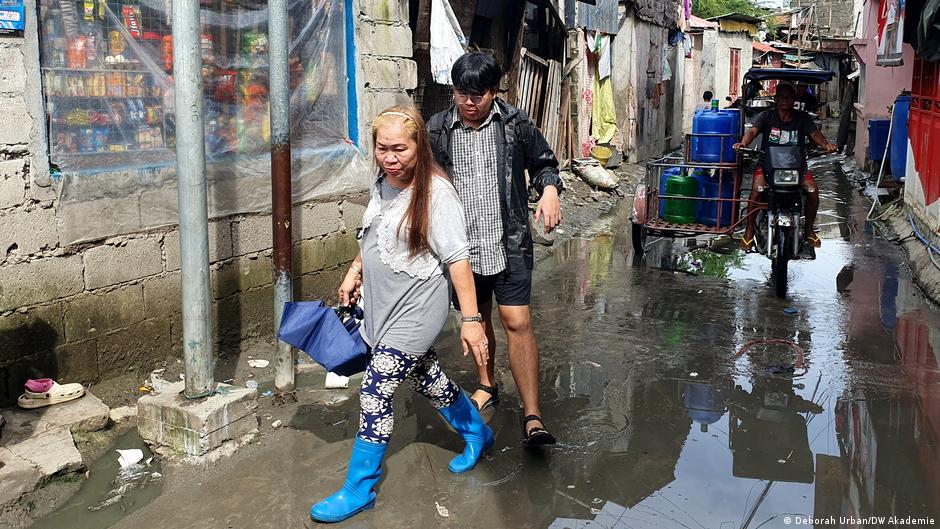
As heat waves, wildfires, floods and other extreme weather events grow more frequent and destructive, the health, food supplies and livelihoods of people around the world are increasingly endangered. Yet alongside these physical impacts, a second, less visible crisis is unfolding: the deliberate spread of false and misleading information about climate change, its causes and the measures proposed to address it. Outright climate denial — the claim that climate change does not exist, is not caused by human activity, or carries no serious consequences — has become rare in mainstream public discourse. But disinformation has not disappeared. Instead, it has mutated into more subtle and effective forms that distort scientific findings, downplay risks, undermine public trust and stall political action. These tactics are particularly aggressive on social media, where false narratives can travel quickly and reach vast audiences with little accountability. The deliberate dissemination of false or misleading information in this context is known as climate disinformation, and it is increasingly recognized as one of the biggest obstacles to meaningful climate action. It does not simply confuse individuals; it shapes public debate, weakens the political will needed for strong policies, and ultimately leaves the most vulnerable communities to bear the consequences of inaction. Around the world, media development organizations such as DW Akademie are working with local partners to expose these narratives and build resilience against them. Their projects span countries including Colombia, the Philippines, Namibia and the Middle East and North Africa, where journalists, fact-checkers and civil society groups are testing practical ways to counter disinformation before it takes root and to strengthen reliable, evidence-based climate reporting. The urgency of this work is growing, because every delay in public understanding and every postponement of effective policy makes the already severe effects of the climate crisis worse.
Climate disinformation today can be grouped into two broad categories. Climate denial, in its classic form, still exists but is less prevalent in public debate than in previous decades. It continues to surface in certain political and digital spaces, often by questioning scientific findings, misrepresenting climate data, or overemphasizing natural climate fluctuations to cast doubt on human responsibility. Such claims are rarely the product of honest scientific disagreement; they are usually designed to create the false impression that the scientific consensus is still contested. Much more common today, however, is a second approach: climate delay. Climate delay strategies generally accept that climate change is real, but they question the necessity, effectiveness or cost-effectiveness of climate protection measures. The arguments can be sophisticated. It may be claimed that climate protection will destroy jobs, threaten economic growth, or is impractical because of existing uncertainties and gaps in knowledge. Sometimes the focus is on individual responsibility, shifting the burden away from governments and corporations. The common thread is not a direct rejection of climate science, but a calculated effort to postpone political decisions and prevent effective countermeasures. By sowing doubt about solutions rather than science, climate delay narratives can be even more damaging than outright denial because they make inaction seem reasonable and responsible. These narratives often exploit genuinely difficult policy questions, such as the balance between economic development and environmental protection, and use them to justify continued reliance on fossil fuels. The goal is not to offer better solutions but to keep the status quo intact while the window of opportunity for preventing catastrophic warming narrows. The distinction between denial and delay is important for journalists, researchers and policy makers who are trying to identify and counter disinformation. Denial seeks to replace facts with falsehoods; delay seeks to drown the urgency in a flood of caveats, costs and false alternatives. Both forms contribute to the same dangerous outcome: delayed action and increased suffering.
The actors behind climate disinformation are diverse, and they are not always easy to identify. They include companies, lobby groups and interest groups, most prominently those representing the fossil fuel industry and other extractive sectors such as mining. For these actors, the motivation is often to protect existing business models, weaken regulation, and influence public perception of climate protection measures in ways that preserve their commercial interests. Disinformation campaigns may be funded indirectly, through think tanks and advocacy groups that present themselves as independent while advancing industry-friendly narratives. Political actors and parties can also play a significant role, either by spreading misleading claims directly or by amplifying them through official channels. Such messages rarely stay in one place. They are picked up by sympathetic media outlets, amplified by influencers, and distributed through coordinated online networks that share content across social media platforms. The result is a powerful feedback loop in which climate-skeptical narratives gain visibility and legitimacy despite being unsupported by evidence. Several tactics are especially common. Greenwashing is the practice of portraying companies, products or institutions as environmentally friendly without being able to substantiate that claim. It is used to create a cheap image of responsibility, often through vague language, misleading labels, or the deliberate withholding of negative information. Climate conspiracy narratives go further by suggesting that climate science, climate policy or climate activism are driven by secret political or economic interests. Such narratives are difficult to refute because they are built on unsubstantiated claims and often ignore institutional complexity. Another widespread tactic is cherry-picking: the deliberate selection of isolated data points, examples or events that support a desired claim while ignoring the broader scientific context. A cold winter in one region, for example, can be used to imply that global warming is not happening, even when global temperature records tell the opposite story. These tactics are not ordinary mistakes or simple overstatements; they are consciously designed to distort the picture and misleadingly influence public opinion. In combination, they create a toxic information environment where reliable scientific findings are treated as opinion, and motivated falsehoods are presented as valid alternatives.
The consequences of climate disinformation are not felt equally by everyone. People and communities that already have less political influence, more limited access to information, or fewer resources to protect themselves are affected first and worst. This includes rural communities, indigenous groups, women, children and others who are highly vulnerable to the effects of a changing climate. When the risks are downplayed or the impacts of climate change are obscured, it becomes much harder for these communities to make informed decisions about their health, their homes and their futures. They may miss early warnings about extreme weather, fail to prepare for drought or flood, or unknowingly stay in areas where environmental damage threatens their safety. Distorted information also weakens their ability to advocate for their interests and assert their rights, because they are deprived of the facts needed to demand action. Climate change itself is often described as an environmental issue, but the impacts of climate disinformation reveal another dimension: it is also a human rights issue. The deliberate confusion of public understanding prevents affected people from participating meaningfully in decisions that shape their lives. It can also make them more vulnerable to exploitation by actors who want to avoid accountability or to profit from continued resource extraction. A clear example is the destruction of the Amazon, for instance in Peru, where local and indigenous peoples are directly affected by deforestation, oil contamination and environmental degradation. Their knowledge of the forest and their warnings about the risks are often ignored or deliberately undermined by disinformation campaigns that seek to justify economic activity at any cost. The damage is not limited to the local level. The Amazon plays a critical role in regulating the global climate, so false narratives that undermine its protection have consequences that reach every corner of the planet. This uneven impact means that countering disinformation is not only about correcting false statements. It is about justice, equality and ensuring that those least responsible for climate change are not the ones made to pay the highest price.
In response to these dangers, international efforts are beginning to take shape. On November 12, 2025, at the UN Climate Change Conference COP30, the Declaration on Information Integrity on Climate Change was presented. The declaration is part of the Global Initiative for Information Integrity on Climate Change, launched by Brazil, the United Nations and UNESCO. It recognizes that the global fight against climate change cannot succeed if public understanding is systematically undermined by disinformation. Signatory states commit to combatting climate disinformation and to strengthening access to scientifically sound climate information. The declaration also calls for concrete measures to protect environmental journalists, scientists and researchers from disinformation campaigns and attempts at intimidation. These protections are essential, because those who report on climate change and those who study it are often the first targets of coordinated harassment and false accusations. The presence of the declaration at COP30 marks a significant shift in the international conversation: information integrity is now being treated not as an add-on to climate policy but as a core condition for achieving it. Yet a declaration alone is not enough. International commitments need to be translated into national policies, institutional reforms and funding for journalism and education. Without strong public awareness and independent reporting, even the most ambitious climate commitments can be eroded by disinformation. The declaration sends a clear signal that governments are beginning to understand the scale of the challenge. But the responsibility does not rest only with states. Media organizations, civil society groups, scientists and citizens all have a role to play in defending the truth from deliberate distortion. The most effective response is not censorship or suppression, but a positive effort to make reliable information more accessible and more credible than the lies it is competing against.
The media and education systems are at the frontline of the fight against climate disinformation. Effectively countering the problem requires collaboration among the media, the scientific community, policy makers and civil society. Instead of responding only after misinformation has spread, the primary goal must be to identify it at an early stage, raise awareness of typical disinformation patterns, and strengthen access to reliable information. This means investing in quality journalism and independent climate reporting, because the demand for authoritative coverage has never been greater. It also means training and professional development for climate journalists, as well as better protection for them, because the work of analyzing complex science and holding powerful interests accountable comes with serious risks. Expanding fact-checking and verification services is another key element. So-called pre-bunking initiatives, which warn people about common disinformation techniques before they encounter them, are becoming increasingly effective. Environmental education and media literacy are equally important, especially for young people who rely heavily on social media as their primary source of information. People need the tools to ask critical questions: Who created this content? What evidence does it rely on? Is the source credible? What information is missing? Media literacy does not simply make people better at spotting falsehoods; it also makes it easier for them to appreciate the difference between scientific certainty and political opinion. Improving collaboration between science, media and civil society is fundamental, as is facilitating access to understandable, evidence-based climate information. None of these approaches can succeed in isolation, but together they can create an information environment in which disinformation does not dominate. DW Akademie partner organizations around the world are already implementing these approaches in very different regional contexts. In Colombia, the Philippines, Namibia and across the Middle East and North Africa, projects are combining media literacy training, fact-checking initiatives, independent reporting and community engagement to counter climate disinformation at the local level. Their experience shows that the fight against disinformation is not hopeless. It is difficult, persistent work, but it is work that works. The consequences of climate change are increasingly tangible, and so too are the consequences of allowing lies to shape the response. Countering climate disinformation is therefore not a secondary concern. It is an essential part of ensuring that the world can act in time, with fairness and with facts on its side.


