








The Internet Fact-Checking Crisis: How Misinformation Thrives in the Digital Age and the Fight to Correct It
The internet has emerged as the world’s most vast and accessible repository of information, offering users the ability to learn everything from the intricacies of sourdough baking to the complex historical evolution of the Spanish language. However, this unprecedented access to knowledge comes with significant caveats, as the same platforms that host educational tutorials are also riddled with falsehoods, conspiracy theories, and outright lies. On social media, where speed of dissemination is prioritized over accuracy, the line between verified fact and fabricated fiction has become increasingly blurred. The proliferation of fake news on platforms such as X (formerly Twitter) and Facebook has become a pressing concern for democratic societies, public health agencies, and the general public alike. In response to this digital dilemma, communities of vigilant users have emerged, dedicating themselves to fact-checking and publicly correcting those who spread misinformation, creating a niche of community-driven accountability that aims to keep the digital landscape honest, one post at a time.
The scale of the misinformation problem is staggering, and data suggests that it is not a marginal issue but rather a pervasive element of the modern social media experience. Research conducted by the Social Market Foundation indicates that a significant majority of local Facebook groups and an overwhelming majority of X searches contain at least one piece of misinformation within their recent post history. The issue is particularly acute in “news deserts,” which are areas that have lost their local news outlets; in these regions, fake news appears nearly three times as often as in areas with a healthy local press ecosystem. Furthermore, the timing of misinformation spikes is telling, with a notable surge in false claims occurring in the days leading up to local elections, suggesting a coordinated effort to influence voter perception. Statistics like these highlight that misinformation is not merely an occasional mistake by a confused user but a systematic challenge to the integrity of public discourse. With 38% of American adults regularly receiving news from social media and 35% from YouTube, the reliance on these unregulated platforms for critical information has created a dangerous vulnerability where lies can be shared and believed as readily as legitimate journalism.
The consequences of this digital deception extend far beyond harmless misunderstandings, posing a direct threat to political stability and democratic processes. The Anti-Defamation League has pointed to the rampant spread of disinformation, which is the intentional dissemination of propaganda, as a tool that deeply impacts elections and political sentiment. The most prominent recent example revolves around the baseless claims that the 2020 U.S. election was “rigged,” a narrative that has fueled deep-seated distrust in democratic institutions and exacerbated political division across the nation. This intentional distortion of reality has created an environment where citizens can no longer agree on basic facts, leading to a fractured public sphere where political opponents are not just disagreed with but seen as enemies. The architecture of social media facilitates this by creating echo chambers, where algorithms push users toward content that aligns with their pre-existing views, regardless of its veracity. Consequently, users are fed a steady diet of propaganda that reinforces their beliefs, making it increasingly difficult for objective truth to penetrate the narrative bubble they inhabit, thereby intensifying polarization and eroding the foundations of a shared reality necessary for functional democracy.
Beyond the political arena, the spread of online misinformation poses a dire risk to public health and safety by undermining decades of medical progress and encouraging dangerous behaviors. The internet is rife with pseudoscientific claims that vaccines cause autism or that sunscreen is more harmful than the sun itself, both of which have been categorically refuted by the scientific community. Yet, the persistence of these myths has had devastating consequences; the United States has recently witnessed its largest measles outbreak in 35 years, directly linked to declining vaccination rates spurred by online fear-mongering. Similarly, discouraging the use of sunscreen increases the population’s risk of skin cancer based on faulty logic and cherry-picked data. The rapid spread of such health misinformation proves exceptionally challenging to combat because it often preys on parental anxieties and general skepticism toward authority. Platforms prioritize user engagement over user safety, meaning that a sensationalist health claim will often outperform a dry, scientific rebuttal. While mainstream news outlets are generally expected to maintain editorial standards and fact-check their content, social media has no such safeguards, placing the onus on the individual user to discern fact from fiction in a landscape flooded with conflicting and often hazardous health guidance.
The viral nature of social media is a key factor in the rapid propagation of false claims, with mechanics that differ significantly from traditional media paradigms. The American Psychological Association notes that social media platforms do not have the same safeguards against false claims as mainstream outlets, and any pretense of objectivity is secondary to algorithmic engagement. This has a profound impact on the velocity of misinformation; the “outrage” factor drives shares and retweets, meaning that outrageous lies often travel faster and further than measured corrections. Once a lie is posted, it can be clipped, screenshot, and re-shared across multiple platforms within minutes, with the context and nuance stripped away. For instance, a misleading clip or a decontextualized quote can become a “viral moment” that millions of users see, relegating the actual facts of the issue to a footnote that few will check. This dynamic creates a post-truth environment where the emotional Resonance of a claim often outweighs its factual accuracy, and where attempts at correction are often viewed with suspicion as part of an alleged conspiracy, further entrenching the falsehood in the minds of the audience.
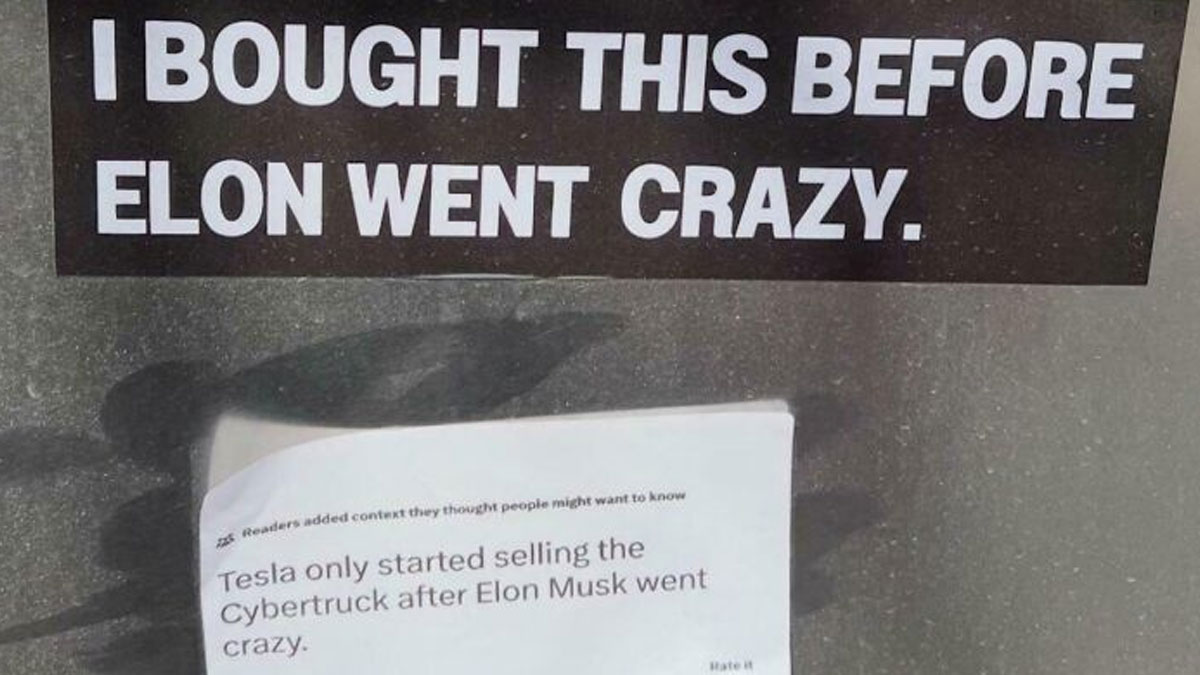
In the face of these overwhelming challenges, a beacon of hope has arisen from the creativity and tenacity of internet users themselves, who have turned fact-checking into a community sport. Platforms like Reddit, through communities such as the ‘Get Noted’ subreddit, have become battlegrounds where users meticulously screenshot and share instances of public figures, celebrities, and ordinary citizens being corrected by community notes or rebuttals. These viral call-outs serve dual purposes: they educate the public on the facts while providing a satisfying dose of schadenfreude for those who witness ignorant statements being publicly dismantled. The “Community Notes” feature on X is a prime example of this crowdsourced approach, allowing users to add context to misleading posts. While these mechanisms are not perfect and can be manipulated, they represent a significant shift toward accountability, showcasing that ordinary citizens can and will challenge the narrative of powerful figures. This digital vigilantism forces a semblance of transparency upon the murky waters of social media, suggesting that while platforms may fail to regulate content, the collective intelligence of the user base can step in to referee the game. How to protect themselves and live in a world where discernment is a survival skill.


