









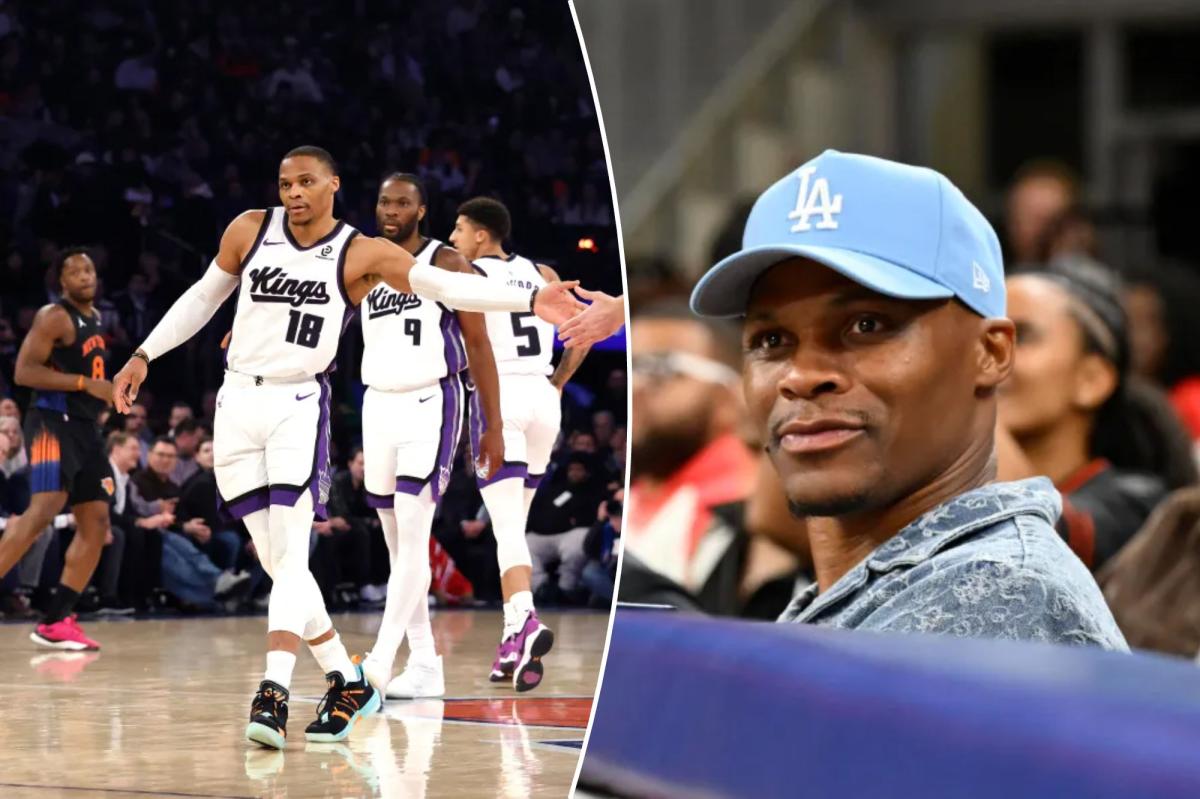
Russell Westbrook is Not Headed to Hapoel Tel Aviv: The Anatomy of a Sophisticated Social Media Hoax
Russell Westbrook is not in advanced negotiations with Hapoel Tel Aviv, a claim that has been definitively debunked as a social media hoax. The fabricated report, which sent shockwaves through the basketball world and sparked premature farewells from fans across the globe, originated from a fraudulent X account masquerading as basketball reporter “Marc Jacobs.” This impostor account asserted that the former NBA MVP and the Israeli club had developed mutual interest, that negotiations were progressing at a rapid and serious pace, and that the 37-year-old guard was seriously contemplating a move to play overseas for the first time in his storied and Hall of Fame-bound career. Crucially, the hoax explicitly attributed this groundbreaking information to The Athletic, a reputable and widely respected sports journalism outlet, lending a veneer of false credibility to an entirely invented scoop. However, a thorough search of The Athletic’s extensive archives, live feeds, and authenticated journalism reveals no corresponding report, and no legitimate journalist from that outlet has made any such claim about Westbrook’s potential departure from the NBA. The rumor was quickly identified as a fabrication by journalist Philip Lewis, who astutely pointed out that the “Marc Jacobs” account was, in fact, a parody profile meticulously designed to mimic the aesthetics, handle structure, and posting cadence of a real insider. This incident serves as a stark and timely reminder of the extreme fragility of information in the modern digital age, where a single malicious tweet can cascade into a global news cycle before the truth has a chance to put its shoes on, leaving players, agents, and legitimate media to clean up the wreckage of a completely baseless narrative.
The speed at which this falsehood propagated itself across the digital landscape is a textbook case study of the viral misinformation pipeline that currently plagues sports media. The initial humorous or sensational post on X was rapidly picked up by content aggregators and repackaged without any semblance of basic fact-checking or source verification. The most notable casualty of this lack of editorial diligence was The Jerusalem Post, which published a full article based solely on the parody account’s post, thereby lending the weight of a major international publication to a baseless claim. In a stunning and embarrassing leap of editorial logic, the publication elevated the claim from “mutual interest” to “advanced talks,” completely bypassing the fundamental journalistic step of contacting the parties involved, cross-referencing with league sources, or verifying the authenticity of the originating account. Even ClutchPoints insider Brett Siegel, typically plugged into the NBA’s underground rumor mill and known for his reliable reporting, could not corroborate the story, issuing a tepid non-confirmation that did little to quell the growing tide of speculation and excitement among fans. The very fact that a parody account with zero verifiable credentials could deceive a major metropolitan newspaper highlights the technical and ethical shortcomings of aggregator-driven media, where speed is prioritized over accuracy. Furthermore, the rumor was dangerously plausible on its face, which is precisely why it gained traction so quickly. Westbrook is currently an unsigned free agent, having navigated a similarly precarious and frustrating market the previous season. At 37 years old, with his explosive athleticism slightly diminished but his competitive fire and intensity undimmed, the prospect of him taking his talents to the EuroLeague—where he could dominate the ball, be the undisputed focal point of an offense, and secure a substantial payday—was not inherently absurd. This intersection of a genuine transitional period in a player’s career and a sophisticated hoax created a perfect storm of misinformation that overwhelmed logic, reason, and due diligence.
To fully understand why this hoax gained such rapid traction, one must examine Westbrook’s current professional landscape and his precarious contractual status. The former Los Angeles Lakers star and perennial All-Star remains unsigned for the 2025-26 season after a solid, if not spectacular, year with the Sacramento Kings. During his tenure with the Kings, Westbrook averaged 15.2 points, 6.7 assists, 5.4 rebounds, and 1.3 steals per game, proving to the league that he can still contribute as a high-energy, sixth-man playmaker and a valuable veteran presence in a locker room. He demonstrated flashes of his past brilliance, delivering vintage triple-double performances and providing mentorship to younger rosters. However, his market has been frustratingly quiet for a player of his immense pedigree and statistical output. Just a year prior, in 2025, he encountered an equally slow and underwhelming market before eventually agreeing to join Sacramento on a one-year contract shortly before the opening night tip-off, a deal that many viewed as a last-minute marriage of convenience. This repeating pattern strongly suggests that teams are increasingly wary of his age, his ball-dominant style, or his perceived fit in modern, spacing-heavy offensive schemes, despite his undeniable Hall of Fame resume and his leadership qualities. Consequently, the idea that he might be seeking a lucrative or emotionally fulfilling opportunity abroad—perhaps in a league like the Israeli Premier League where he could be the hero, or a higher-paying environment in China or Europe—was a narrative that many fans, pundits, and even some media professionals wanted to believe, as it provided a dramatic storyline to fill the dog days of the offseason. Yet, the reality is stark and clear: no such talks exist. While his next NBA destination remains a subject of intense speculation, back-channel conversations, and uncertainty, a move to Hapoel Tel Aviv is definitively not among the possibilities currently being discussed in his camp, by his agent, or in any legitimate league circles.
The Westbrook incident is not an isolated anomaly in the sports world; rather, it is a symptomatic manifestation of a deeply entrenched and growing ecosystem of sports misinformation that thrives specifically on the X platform. This social media network, more than any other, has become a breeding ground for parody accounts that deliberately and maliciously imitate the names, profile pictures, posting style, and even the verification badges of established NBA insiders such as Adrian Wojnarowski, Shams Charania, and Chris Haynes. Accounts such as “NBA Centel” and “SharmsCharania” have accrued massive followings—often numbering in the hundreds of thousands or even millions—precisely by generating fictional reports that are close enough to the truth to be mistaken for breaking news at a glance. They churn out fabricated coaching comments, phantom roster moves, and invented front-office changes, often designed to provoke reactions, generate outrage, or simply to amuse their creators with the chaos they can sow. The inherent danger arises when these satirical or malicious posts are severed from their original context. Aggregators, who scrape content from across the platform to generate web traffic and clicks, often fail to notice the parody status of the account, republishing the falsehood as a legitimate scoop across their own websites and social media channels. Mainstream media outlets, scrambling to beat competitors on a hot story and desperate for exclusive headlines, lower their editorial standards, leading to situations exactly like the Jerusalem Post debacle. To a user scrolling through a fast-moving timeline, the difference between a verified insider like Shams Charania and a parody account like “SharmsCharania” is often negligible, especially when the latter is paying for a blue checkmark, using an AI-generated profile photo that looks nearly identical to the real thing, and copying the exact formatting of a legitimate news alert.
Why do these nefarious accounts persist and proliferate with such alarming frequency, one might ask? The motivation extends far beyond the fleeting amusement of going viral among basketball fans or the satisfaction of being the center of online attention. There is serious, tangible money to be made in generating misinformation, and the financial incentives are becoming increasingly sophisticated. Front Office Sports, a leading sports business outlet, has extensively documented how X’s engagement-based monetization program can provide substantial financial rewards to accounts that drive high volumes of impressions, likes, and shares. By planting a provocative, believable scoop—like the Westbrook rumor—a nefarious account can generate tens of millions of impressions in a matter of hours, translating directly into ad revenue share for the account owner. For accounts with a large following, a single viral hoax can generate thousands of dollars in a single day. Awful Announcing has further reported that some of these fake insider accounts have cleverly pivoted to promoting prediction markets, crypto-currencies, or NFTs alongside their invented scoops, leveraging the credibility of a fake “breaking news” moment to pump specific assets and manipulate markets. This creates a dangerously perverse incentive structure: the more outrageous, unverifiable, and shocking the lie, the more money it generates. The creator of the “Marc Jacobs” account, whether motivated by profit, confusion, or sheer chaos, succeeded in injecting fabricated content into the legitimate news cycle, forcing actual journalists to spend valuable time and resources debunking a story that should never have seen the light of day. This underscores a systemic failure where the economics of the platform intrinsically reward fabrication over accuracy, and where the line between satire, entertainment, and malicious disinformation has become blurred almost beyond recognition.
The fallout from this hoax extends far beyond Russell Westbrook’s immediate travel plans or the itinerary of his private jet. For the player himself, it creates unneeded distraction, confusion, and potential embarrassment during a sensitive and critical free agency period. It forces his team of agents to field frantic calls from confused international clubs, domestic teams, and local media, all while trying to secure a viable NBA roster spot for him and navigate his complex legacy. For the journalism industry, it is a humiliating reminder of the critical importance of source verification and editorial restraint, as The Jerusalem Post will likely have to issue public corrections, retract the article, and face significant reputational damage for its failure to apply basic due diligence to a story that was easily debunkable. For the fans, it serves as a harsh and necessary lesson in media literacy—a reminder that “something on the internet” is not evidence, and that a blue checkmark or a recognizable name in a tweet is no guarantee of authenticity or truth. As the next major news cycle inevitably scales up, the sports world must adapt to this new and dangerous reality. Media organizations need to invest in robust verification tools and strict editorial protocols that require primary sourcing and direct confirmation before publication. Platforms like X must update their policies to clearly label parody accounts, enforce stricter authentication standards, and aggressively crack down on the monetization of fake news and disinformation campaigns. Ultimately, while Russell Westbrook’s future in the NBA remains uncertain, and he patiently awaits the right opportunity to continue his illustrious career, one thing is now crystal clear: he is not headed to Hapoel Tel Aviv. The rumor was nothing more than a mirage, a digitally manufactured ghost born from a sophisticated and financially motivated hoax, and the basketball community can collectively breathe a sigh of relief knowing that the Triple-Double King is still firmly focused on finding his next home within the National Basketball Association, where his legacy will undoubtedly continue to be written.


