


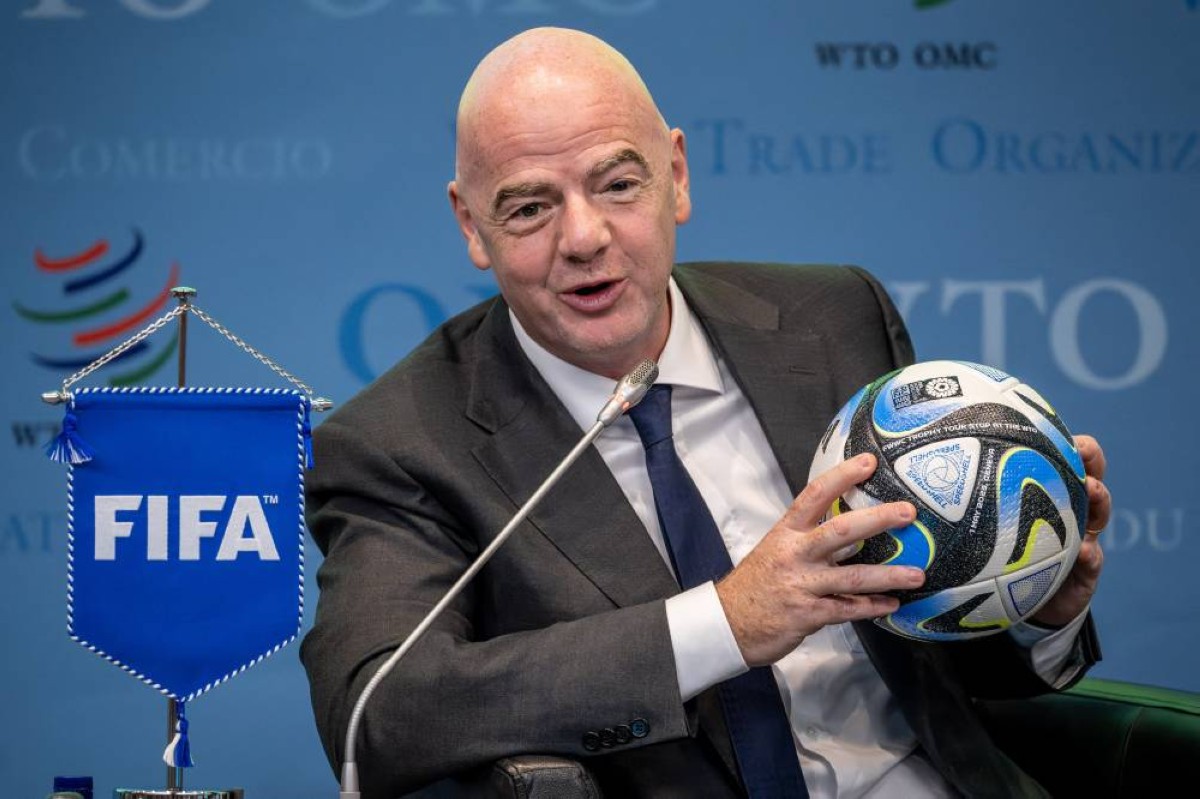
FIFA Accuses UEFA of ‘Misinformation Campaign’ in Battle Over Infantino’s World Cup Plans
PARIS — FIFA has launched a blistering attack on UEFA, accusing European football’s governing body of orchestrating a “misinformation” campaign against FIFA President Gianni Infantino. The accusation comes in response to a legal case in Florida, where UEFA is attempting to force FIFA to hand over documents relating to Infantino’s controversial plan to sell off parts of the World Cup. In its court filing, FIFA claims that UEFA’s legal manoeuvre is not simply about transparency, but is a calculated attempt to “influence” next year’s FIFA presidential election, in which Infantino is standing for another term. The world governing body’s response paints UEFA as a bitter rival determined to damage Infantino’s reputation and derail his re-election bid through the courts, public statements and behind-the-scenes pressure. The filing also alleges that UEFA made “numerous false or misleading statements” about Infantino and FIFA, including the explosive claim that “Infantino sought to profit personally from the FFE proposal.” AFP has contacted UEFA for a response to these allegations, but the European body has not yet issued a formal statement in reply.
The dispute centres on the FIFA Forward Enterprise (FFE) initiative, a plan that caused uproar within global football when it was first floated in July. Under the proposal, FIFA would have created a new commercial subsidiary to run its biggest and most lucrative events, including the World Cup and the Club World Cup. Crucially, private investors would have been allowed to buy stakes in this new company, effectively giving outside financial interests a share in the revenues generated by football’s showpiece tournaments. Infantino and his allies argued that the structure would unlock new streams of investment, allowing FIFA to grow the game and distribute more money to its member associations. But critics, led by UEFA, saw the scheme as a dangerous sell-off of football’s crown jewels. The backlash was swift and fierce. Within weeks, FIFA was forced to shelve the proposals, but the damage had been done. UEFA has since used the episode as a rallying point in its long-running opposition to Infantino, and the legal battle in Florida is the latest front in that conflict.
In its Florida court filing, FIFA goes further than simply defending the merits of the FFE initiative. It argues that UEFA’s attempt to obtain documents about the proposal is part of a broader strategy to weaponise the controversy for political ends. FIFA says UEFA’s requests are designed to “influence” the upcoming presidential election, which is scheduled for March next year. The filing suggests that UEFA is seeking to use the discovery process in the U.S. court case to unearth sensitive internal communications that could be used to embarrass Infantino and undermine his campaign for re-election. FIFA also rejects what it describes as “numerous false or misleading statements” made by UEFA about Infantino and the world body. One of the most damaging accusations — that Infantino personally stood to profit from the FFE proposal — is dismissed by FIFA as baseless. The organisation insists that Infantino acted in good faith, with the aim of securing more funding for football development worldwide, and that UEFA has distorted the facts to paint him as corrupt or self-serving.
The timing of the legal fight is significant. Infantino has already confirmed that he will stand again for the FIFA presidency in the election next March, and he retains powerful support across the global football community. This week, in what is widely seen as an attempt to shore up that support, Infantino sent a letter to FIFA’s 211 member associations suggesting that more money could be distributed to them from FIFA’s cash reserves. In the letter, seen by AFP, he said he would support “the greatest level of additional funding that can responsibly be delivered.” He also took the opportunity to defend the abandoned FFE commercial proposal, insisting that it had been intended to raise more money for football. “The recent commercial proposal, now withdrawn, was intended to enable FIFA to invest more in football,” Infantino wrote. The letter appears designed to reassure member associations that they will benefit financially under his continued leadership, while also countering UEFA’s narrative that the FFE plan was a reckless or self-interested power grab.
Infantino is not without powerful backers in his fight against UEFA. Saudi Arabia, which is set to host the 2034 World Cup, formally backed him last month, a significant show of support from one of the most influential nations in the global game. The African football confederation, known as CAF, and South America’s CONMEBOL have also thrown their weight behind Infantino, highlighting the regional divisions that increasingly characterise FIFA politics. UEFA, whose members include World Cup holders Spain and major football nations such as France, England and Germany, has led the opposition to Infantino and has openly called for his removal. The battle lines are clear: European football authorities, frustrated by what they see as Infantino’s authoritarian style and controversial commercial ambitions, are ranged against a coalition of non-European confederations and wealthy Gulf states that see him as a champion of the global south and a reliably ambitious dealmaker. The Florida court case has now become a proxy battlefield for this wider power struggle, with UEFA attempting to force the disclosure of documents that could shape the narrative ahead of the election.
The outcome of this dispute could have profound implications for the governance of world football. If UEFA succeeds in obtaining the documents it seeks, it may be able to paint Infantino’s commercial plans in a far more damaging light, potentially swaying undecided voters among FIFA’s member associations. If FIFA’s accusations of a “misinformation” campaign gain traction, however, UEFA could find itself cast as the aggressor, interfering in the democratic process of a global sporting body. For Infantino, the stakes could not be higher. Re-election would consolidate his control over FIFA for another four years, allowing him to oversee the planning of the 2026 World Cup and the controversial 2034 tournament in Saudi Arabia. Defeat, or a serious erosion of trust within FIFA’s ranks, could leave him politically isolated and expose FIFA to further legal and regulatory scrutiny. As the court case in Florida grinds on, both sides are likely to escalate their rhetoric, with the real prize being not just legal vindication, but the allegiance of the 211 football nations whose votes will decide who leads the sport into a new era. For now, FIFA has made its position clear: UEFA’s campaign against Infantino is not about accountability, but about political interference — and the battle for the future of football has only just begun.