









Paragraph 1:
The escalating battle between the Walt Disney Company and the Federal Communications Commission (FCC) took a dramatic legal turn on Tuesday, as ABC formally initiated a First Amendment lawsuit against the regulatory body, accusing the Trump administration of orchestrating a “retaliatory campaign” intended to punish the network for its editorial decisions. In response, the FCC launched a blistering public counterattack, branding Disney’s legal maneuvers and public statements as an “ongoing campaign of disinformation” designed to distract from a legitimate regulatory inquiry. At the heart of this high-stakes confrontation lies the fate of ABC’s eight owned-and-operated television stations and their broadcast licenses, which are currently under early renewal review by the FCC. The lawsuit, filed in a federal district court, seeks a sweeping injunction to block the FCC from taking any detrimental action against Disney, ABC, or those specific stations, arguing that the agency has weaponized its regulatory authority to coerce the network into surrendering its editorial independence. The FCC, however, maintains that its review is rooted in statutory obligations concerning “public interest” and investigates claims that Disney engaged in discriminatory diversity, equity, and inclusion (DEI) practices. This legal clash does not exist in a vacuum; it represents the culmination of months of mounting tension between the Trump administration and major media conglomerates, with ABC finding itself squarely in the crosshairs due to its news coverage and specific programming choices. The FCC hasn’t merely denied the allegations of retaliation; it has aggressively turned the tables, suggesting that Disney is resorting to diversionary tactics to avoid accountability for its corporate policies and broadcast duties.
Paragraph 2:
The complaint, filed by ABC’s legal team, presents a stark and urgent narrative of duress and impending censorship. The network characterized the FCC’s actions as an existential threat, arguing that it has “no alternative means to eliminate these ongoing and immediate threats other than total capitulation to the administration’s demands.” The pleading goes further, detailing how what began as general inquiries has escalated into what ABC describes as “express demands that ABC be stripped of its broadcast licenses because of its speech.” An ABC spokesperson stated that the lawsuit is a necessary measure to safeguard the constitutional protections afforded to the press, asserting that the freedom to report the news without fear of government reprisal is non-negotiable. The suit specifically targets the FCC’s early consideration of license renewal applications filed for the eight stations, a process ABC claims has been abnormally accelerated and weaponized against it. By filing for early renewal, ABC sought to secure its licenses well in advance, only to have the FCC inject controversial matters like DEI policies and specific program content into the review—issues which ABC argues are entirely unrelated to a broadcaster’s obligations to serve its local community. The core of ABC’s legal argument rests on the established precedent that the government cannot retaliate against a private citizen or entity for exercising its right to free speech, even when that speech criticizes government officials. The lawsuit requests immediate judicial intervention to halt the FCC’s proceedings indefinitely, claiming that the mere threat of losing broadcast licenses constitutes irreparable harm, not just to Disney’s bottom line, but to the fundamental integrity of an independent press in the United States. This legal action sets the stage for a monumental constitutional showdown concerning the extent of the FCC’s mandate and its intersection with the First Amendment in the modern media landscape.
Paragraph 3:
The FCC’s response came swiftly and without diplomatic restraint, with a spokesperson unleashing a detailed rebuke of Disney’s conduct. “All broadcasters have a legal obligation to operate in the public interest—even Disney. The FCC has been examining claims that Disney engaged in illegal DEI discrimination for over a year,” the spokesperson declared. The statement directly accused the entertainment giant of engaging in a deliberate public relations strategy to distort the facts of the ongoing investigation. “Disney is obviously very concerned about the FCC’s proceeding, as evidenced by their ongoing campaign of disinformation as well as their decision to ask a court to stop the FCC from further pursuing matters,” the spokesperson added, reaffirming the agency’s commitment to an objective review. The FCC firmly rejected ABC’s claims of retaliation, framing its inquiry instead as a routine, albeit rigorous, examination of compliance with federal non-discrimination mandates that apply to all broadcasters. The regulator insists that its investigation into Disney’s DEI practices—which may involve alleged quotas or preferential treatment based on race or gender—is well within its statutory purview to determine if a licensee meets the “character” qualifications required to hold a public airwave license. The FCC’s language is pointed, suggesting that Disney’s legal challenge is an act of desperation from a company that knows its internal records might not withstand official scrutiny. The spokesperson’s final remark, “The FCC will continue to follow the facts and law wherever they lead,” serves as both a promise of impartiality and a pointed warning that the agency will not be intimidated by corporate legal firepower. This response frames the lawsuit not as a noble defense of press freedom, but as a smoke screen erected by a powerful corporation trying to protect its privileged FCC licensing without complying with the rules that accompany that privilege.
Paragraph 4:
The corporate response to these escalating pressure tactics has been defiant, with Disney leadership publicly circling the wagons around its news division. In a recent interview on CNBC, Disney CEO Josh D’Amaro unequivocally reinforced the company’s commitment to editorial independence, stating that ABC will not capitulate to external political demands. “I like what we do. We tell incredible stories,” D’Amaro remarked, emphasizing Disney’s global reach and storytelling legacy. “I think we do it well. We do it around the world. And we’re going to stay committed to that.” Crucially, D’Amaro addressed the FCC’s encroachment directly, declaring that “we’re not going to be told how to run that side of our business.” This categorical refusal to accept government oversight of newsroom decisions marks a significant departure from the typically conciliatory tone media conglomerates might adopt to smooth over regulatory friction. D’Amaro’s comments suggest that Disney is prepared to absorb significant financial and legal costs to preserve the integrity of its ABC News operations, viewing the FCC’s actions as a dangerous precedent that could allow the administration to dictate not only what stories get told but also how they are framed. By elevating the dispute to a matter of journalistic integrity, Disney is appealing to public opinion and to other media entities, framing this as a battle that will define the future of broadcast journalism in America. The CEO’s public pronouncements, coming on the heels of the legal filing, signal that Disney is firmly committed to a scorched-earth legal strategy, betting that the courts will uphold the principle that licensing powers cannot be used to suppress disfavored speech or to chill coverage of a presidential administration.
Paragraph 5:
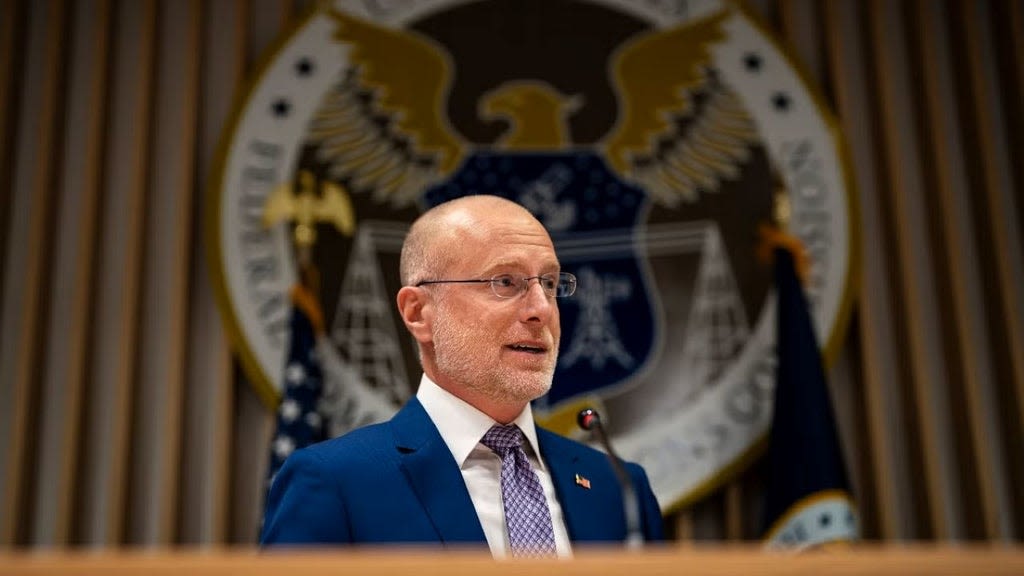
The FCC Chairman, Brendan Carr, has remained a central figure in this conflict, and his public statements reveal a layered rationale for the agency’s scrutiny that extends beyond simply corporate DEI policies. While Carr has consistently asserted that the license renewal review is primarily tied to alleged discriminatory DEI practices, he has also dropped a significant hint that programming decisions could be folded into the overall assessment. Specifically, Carr suggested that ABC’s decision to restrict live coverage of President Trump’s primetime address last month could be a factor weighed during the license review, insinuating that a network’s failure to air presidential speeches might constitute a failure to serve the public interest. This linkage between structural regulatory compliance and specific editorial content represents a considerable expansion of the FCC’s traditional role, which historically avoids content-based judgments. Beyond the main license renewals, Carr has also initiated a separate review of a petition from ABC seeking a “bona fide” news exemption for its daytime talk show “The View”—a procedural matter that has now been scrutinized with unusual intensity. This isn’t the first time the chairman has aimed his sights at ABC’s programming; the agency previously targeted “Jimmy Kimmel Live!”, which resulted in a temporary suspension due to a technical violation, an action seen by many critics as a pretextual warning shot. By accumulating multiple technical and legal fronts—the licenses, the DEI investigation, the “View” exemption, and prior Kimmel actions—Carr is constructing a comprehensive legal and administrative siege against Disney. This broad-spectrum approach suggests a coordinated strategy to exhaust Disney’s resources and patience, compelling them towards the “total capitulation” mentioned in their lawsuit, all while maintaining a veneer of conducting separate, unrelated regulatory reviews.
Paragraph 6:
The procedural timeline of this dispute is now moving toward a critical decision point, independent of the litigation. The final replies in the FCC’s license renewal proceeding officially closed on Aug. 5, and the record now includes a substantial influx of public comments, with Disney and ABC marshalling thousands of supportive statements from viewers and community organizations. Speaking to reporters last month, Chairman Carr acknowledged the completion of the comment period, stating that the agency would “look at the record and decide based on the evidence before us what the next step will be,” though he declined to provide a specific timeline for that decision. This open-ended deadline creates a suspenseful environment where the FCC could issue a ruling at any moment, which would likely trigger an immediate escalation in the court battle. The dual tracks—the administrative review at the FCC and the concurrent federal lawsuit—will now unfold in tandem, with each potentially influencing the other. The lawsuit provides a crucial check on the FCC’s power, but if the agency is successful in issuing an adverse ruling regarding the licenses before a court issues an injunction, it could create a fait accompli that would be exceedingly difficult to reverse. Legal experts note that this case has profound implications for all broadcasters, establishing a chilling benchmark for how aggressively a regulatory agency can scrutinize the internal policies and programming choices of license holders. Regardless of the eventual outcome, the clash between ABC and the FCC has fundamentally altered the relationship between the government and the media industry, moving it from a landscape of cooperative oversight to an adversarial arena of constitutional warfare. The coming months will determine whether the public airwaves remain a bastion of independent journalism or become instruments subject to the political whims of the executive branch that appoints the agency’s leadership, making this one of the most consequential media law cases of the modern era.


