


Close Menu
DISADISA
  • Home
  • News
  • Social Media
  • Disinformation
  • Fake Information
  • Social Media Impact
Trending Now

Meta’s $16.68 Billion Settlement Establishes a Major Precedent for Accountability Regarding Social Media’s Impact on Minors.

August 27, 2026

Lincoln Families Respond to Meta’s New Restrictions on Adolescent Social Media Use.

August 27, 2026

Judge Expresses Concern Over Misinformation in RealPage Litigation.

August 27, 2026
Facebook X (Twitter) Instagram
Facebook X (Twitter) Instagram YouTube
DISADISA
Newsletter
  • Home
  • News
  • Social Media
  • Disinformation
  • Fake Information
  • Social Media Impact
DISADISA
Home»Disinformation»Fact Check: Verification of President Zelenskyy’s Safety Following Russian Airstrikes
Disinformation

Fact Check: Verification of President Zelenskyy’s Safety Following Russian Airstrikes

Press RoomBy Press RoomJune 25, 2026No Comments
Facebook Twitter Pinterest LinkedIn Tumblr Email

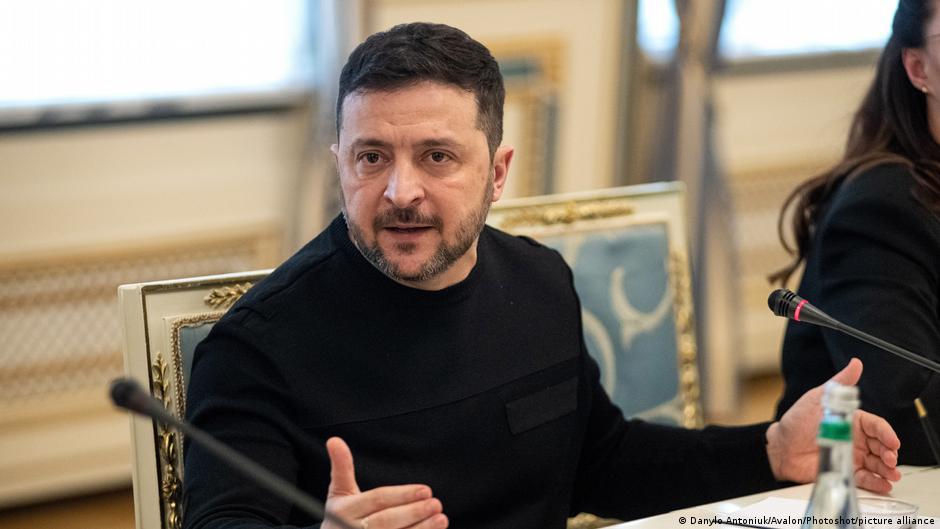
A surge of disinformation recently flooded social media platforms, featuring a viral video of a massive explosion and claims that Ukrainian President Volodymyr Zelenskyy had been killed in a Russian airstrike. The posts, which garnered millions of views and utilized repetitive, alarmist phrasing, suggested that the Ukrainian leader had been assassinated over the weekend. However, DW Fact Check has soundly debunked these reports, confirming that Zelenskyy remains alive and that the visual “evidence” provided by bad actors is entirely fabricated and unrelated to the ongoing conflict in Ukraine.

The primary evidence used to support these claims—a 15-second clip showing a blinding light and mushroom clouds—was quickly debunked through a reverse image search as footage of the 2015 port explosion in Tianjin, China, which claimed the lives of 173 people. Furthermore, the purported “breaking news” was entirely absent from reputable Ukrainian media outlets such as The Kyiv Post and the Kyiv Independent. President Zelenskyy himself swiftly disproved the rumors by appearing in an official video on X, where he was documented meeting with Mathias Cormann, the Secretary-General of the Organization for Economic Cooperation and Development (OECD).

The propagation of these death hoaxes marks a recurring trend in international disinformation campaigns. Similar false reports regarding Zelenskyy’s demise have appeared multiple times since 2022, including baseless rumors of suicide. These tactics are not unique to the Ukrainian conflict; world leaders, including Israeli Prime Minister Benjamin Netanyahu, have frequently been targets of coordinated “death rumors.” Experts note that these fabrications are increasingly sophisticated, often utilizing generative AI to create realistic—albeit entirely false—visual narratives that prey on the immediate emotional responses of social media users.

Investigations into the accounts disseminating this latest rumor reveal clear indicators of a coordinated bot network. Dozens of accounts, many brandishing nationalistic imagery and military-themed aliases, posted nearly identical content. Notably, about half the posts shared the same stylized phrasing, and at least 12 individual accounts reproduced the exact same grammatical error: “Zelensky has died.!” Analysts from the Institute for Strategic Dialogue suggest that these accounts are designed to mimic legitimate state-sponsored news outlets in order to drum up mass engagement and manipulate the global information environment.

This specific wave of misinformation appears to be strategically timed to follow genuine geopolitical developments, serving as a distraction or a tactical counter-narrative. The recent hoax followed a significant Ukrainian strike on a Russian oil depot in Crimea, while a similar rumor earlier in June surfaced immediately after Zelenskyy proposed a direct meeting with Russian President Vladimir Putin. By flooding the zone with sensationalized, high-impact content, malicious actors aim to cloud the truth surrounding battlefield realities and political developments in Ukraine.

Ultimately, the ease with which these claims achieved viral status highlights the persistent danger of state-aligned disinformation networks on platforms like X. By hijacking tragic historical footage and pairing it with repetitive, bot-driven messaging, these actors rely on the speed of digital media to manufacture confusion. Despite the high visibility of these posts, the evidence confirms that they are part of a calculated campaign to destabilize public perception through psychological warfare, underscoring the critical need for users to scrutinize sources before accepting sensational social media updates as fact.

Share. Facebook Twitter Pinterest LinkedIn WhatsApp Reddit Tumblr Email

Read More

Pre-Election Disinformation Campaign Directed at Chris Hipkins

August 26, 2026

Engineers as Essential Builders of Latin America’s Democratic Future

August 26, 2026

Poles Cite the Principal Reasons for Hostility Toward Ukrainians.

August 26, 2026
Add A Comment
Leave A Reply Cancel Reply

Our Picks

Lincoln Families Respond to Meta’s New Restrictions on Adolescent Social Media Use.

August 27, 2026

Judge Expresses Concern Over Misinformation in RealPage Litigation.

August 27, 2026

Senator Padilla Probes Kalshi and Polymarket Regarding Election-Related Influencer Content.

August 27, 2026

Here are a few rewritten versions of the headline in a formal tone:

  1. Florida Declines $17 Billion Settlement with Meta Regarding Child Safety on Social Media

  2. State of Florida Rejects $17 Billion Meta Settlement Over Minors’ Social Media Use

  3. Florida Authorities Turn Down $17 Billion Meta Agreement Citing Concerns for Youth Welfare

  4. Florida Refuses Proposed $17 Billion Meta Settlement Addressing Impact on Children

  5. Florida Rejects $17 Billion Meta Settlement in Children’s Online Safety Case

August 26, 2026
Stay In Touch
  • Facebook
  • Twitter
  • Pinterest
  • Instagram
  • YouTube
  • Vimeo

Don't Miss

News

Here are a few options for a formal title, each with a slightly different nuance.

Option 1 (Most Direct and Standard)

Call for Papers: JMIR Metascience and Research Integrity Seeks Submissions on Misinformation in Scientific Publishing

Option 2 (More Formal and Announcement-Style)

Announcement: Call for Submissions on Misinformation in Publishing for the New JMIR Journal of Metascience and Research Integrity

Option 3 (Emphasizing the Journal’s Mission)

JMIR Metascience and Research Integrity Issues Call for Papers on Misinformation in Scholarly Publishing

Option 4 (Concise and Professional)

Call for Papers: Addressing Misinformation in Scientific Publishing in JMIR Metascience and Research Integrity

I recommend Option 1 for its clarity and directness, aligning with standard academic publishing conventions.

By Press RoomAugust 26, 20260

JMIR Metascience and Research Integrity Launches New Section to Combat Misinformation in Scholarly Publishing Toronto,…

Here are a few options with a formal tone:

Option 1 (direct and concise) The Osun 2026 Election: AI and the Weaponization of Doubt in Nigeria’s Information Landscape

Option 2 (more academic) Artificial Intelligence and Electoral Integrity: Examining the Weaponization of Doubt in Nigeria’s 2026 Osun State Election

Option 3 (journalistic and formal) The Role of Artificial Intelligence in the Weaponization of Doubt: Insights from Nigeria’s 2026 Osun Election

Option 4 (shorter, more precise) Artificial Intelligence and the Weaponization of Doubt in the Osun 2026 Election

August 26, 2026

Two-Day Conference at Sciences Po Examines Artificial Intelligence’s Influence on Democratic Institutions and Public Discourse


Alternatively:

Sciences Po Hosts Two-Day Symposium on the Implications of Artificial Intelligence for Democracy and the Public Sphere

August 26, 2026

Pre-Election Disinformation Campaign Directed at Chris Hipkins

August 26, 2026
DISA
Facebook X (Twitter) Instagram Pinterest
  • Home
  • Privacy Policy
  • Terms of use
  • Contact
© 2026 DISA. All Rights Reserved.

Type above and press Enter to search. Press Esc to cancel.