



# Disinformation Threatens Society’s Stability and Unity, Kyrgyz Media Expert Warns
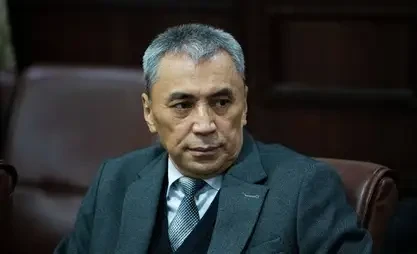
BISHKEK — A leading Kyrgyz media expert has backed President Sadyr Japarov’s call for decisive action against online disinformation, warning that the unchecked spread of false and exaggerated claims is becoming a major threat to public confidence, social harmony, and national development. Kuban Abdymeen, whose commentary on digital communication and the role of social media has been widely followed in Central Asia, expressed his views in an exclusive comment to the state news agency Kabar. He said that recent months have seen a marked increase in the amount of incorrect information posted by both independent bloggers and ordinary citizens using social networking platforms. This growth, he argued, is causing concern among government officials as well as members of the public, who increasingly find it difficult to separate reliable news from rumors and manipulation. Abdymeen agreed with the president’s assessment that misinformation is not a harmless pastime but a serious issue that can fuel anger, spread panic, and deepen political and ethnic divisions. “The problem of exaggeration and dissemination of false information in modern society is becoming increasingly relevant. This can escalate and provoke negative reactions,” he said. He also emphasized that such content often appears in many forms: exaggerated statistics, fabricated documents, manipulated photos and videos, or deliberately mistranslated official statements. These falsehoods can look credible because they are delivered in an authoritative style and published on pages that imitate traditional news media, making it difficult for ordinary users to detect deception. As a result, false information reaches people who may not have the time, training, or tools to verify what they are reading, and it quickly becomes part of their understanding of reality.
Abdymeen went on to describe the information environment in Kyrgyzstan as especially vulnerable because of the high penetration of smartphones and the widespread popularity of Telegram, Instagram, TikTok, and Facebook. In a country where independent print media often have limited resources and television viewership is aging, social media frequently serves as the primary source of news for young people, students, and even government employees. This creates favorable conditions for false narratives to spread quickly, because a single attention-grabbing message can be reposted by thousands of users before journalists or state agencies have time to respond. The expert noted that some bloggers deliberately exaggerate minor incidents to create dramatic stories, while others simply re-post information they have received from unknown sources without checking. The results may be identical: public anger, confusion, or fear. In recent years, countries across the wider region have seen examples of viral misinformation leading to public health crises, border incidents, and social unrest, and Abdymeen said Kyrgyzstan should learn from these experiences. He drew particular attention to the danger of using social media to provoke ethnic tensions in a country with dozens of nationalities. The president, he observed, was right in his speech to the Jogorku Kenesh to highlight the link between disinformation and the risk of instability. Social media algorithms also tend to reward posts that arouse strong emotions, so shocking headlines and out-of-context images spread far more quickly than sober analysis. Furthermore, messaging applications allow false information to move within closed groups where professional journalists and fact-checkers cannot easily enter, meaning that dangerous rumors may circulate for a long time before anyone who knows the truth hears them.
At the heart of the expert’s commentary is a call for accountability. Abdymeen pointed out that the right to free expression is an important democratic achievement and must be preserved, but he insisted that it does not provide a license to deceive or harm others. He said that deliberate disinformation campaigns — those aimed at destabilizing politics, smearing individuals, inciting hatred, or creating public panic — should be punished under the law. The problem, however, is that not every false statement is made with malicious intent. Some people genuinely believe the information they are passing on; others think they are performing a public service by exposing hidden truths. In their haste to be perceived as honest, they can end up spreading rumors and distortion. “Bloggers, in their desire to convey the truth, sometimes publish information that is actually incorrect and can provoke public discontent. Therefore, it is important to respond adequately and take measures to prevent the spread of such materials,” Abdymeen emphasized. He argued that the legal response should be directed at the originators of harmful information rather than at those who share it unknowingly. He also stressed that penalties should be proportional to the damage caused. A post made in ignorance should not be treated the same as a calculated attempt to manipulate public opinion. There is also a difference between corrections and punishment: bloggers who have published incorrect information should be allowed to correct their mistakes, and platforms should mark disputed content so that users are not misled. Only repeated failures or clear intent to harm should trigger legal consequences. In his view, the authorities should make a clear distinction between genuine journalists performing their duties, citizens making critical comments, and malicious actors deliberately spreading lies. The goal, he said, is not to create fear among bloggers but to create an environment where falsehood has consequences and where reliable information can flourish.
President Japarov’s address to the Jogorku Kenesh, which prompted these comments, contained several pointed messages. He urged citizens, bloggers, and experts to refrain from populism and from publishing unverified information with the aim of attracting subscribers. The president also called for strict legal measures against those who disseminate false information and mislead society, arguing that such behavior directly hampers the country’s development. By framing disinformation as a development issue, Japarov made an important point: inaccurate information weakens decision-making, damages the reputation of institutions, undermines public confidence in the judicial system, and distracts attention from real social and economic problems. It also discourages foreign investors, who may be frightened by unstable online rhetoric and the possibility of social conflicts. The president’s remarks were first reported by the Kabar agency and were later widely discussed on social media. Some commentators welcomed them, saying they reflected the frustration many people feel about unscrupulous internet personalities. Others expressed concern that the phrase “strict legal measures” could be used to suppress critical voices. Abdymeen, for his part, was careful to frame his support in terms of fairness. He said that the president’s emphasis on the need to prevent the spread of harmful materials should be implemented through transparent legal procedures, not through arbitrary censorship. The expert recalled that Kyrgyzstan’s own history since independence has included periods of political instability, and he stressed that poison spread through a phone screen could be just as dangerous as poison in the water supply. The question, he said, is how to respond without doing more harm than good. Other countries in the region and Europe have introduced different models of online regulation, some based on criminal liability and others on platform self-regulation, but none has found a perfect balance. The Kyrgyz authorities have not yet announced specific draft legislation, but the president’s words indicate that the issue will be on the parliament’s agenda in the near term, and this prospect has already generated heated debate among online users, with some promising to resist any attempt to limit internet freedom and others demanding immediate action against harmful accounts.
Media and legal analysts in Bishkek have pointed out that the prevention of disinformation requires a comprehensive toolkit. First, laws should be modernized to cover online speech and include clear definitions of what constitutes illegal misinformation. Second, state institutions must develop stronger communication departments so that official information is timely and accessible. Third, schools and universities should incorporate media literacy into their curricula, teaching students how to identify emotionally manipulative content, verify sources, and understand algorithmic bias. Fourth, independent fact-checking organizations should be supported, as they can debunk false claims more convincingly than the state. Fifth, social media platforms should be engaged in a constructive dialogue about content moderation. Abdymeen emphasized that no law can replace the public’s ability to think critically. A media user who has learned to ask basic questions, such as “Who is speaking? What is their evidence? Why should I believe this?”, is far less likely to become a victim of manipulation. He also suggested that bloggers and online influencers should be encouraged to adopt voluntary codes of conduct, including a commitment to correct errors when they are discovered. The role of traditional journalists, he said, remains crucial: professional media can investigate claims, interview sources, and provide context that social media users often ignore. By collaborating with fact-checkers, newsrooms can help reduce the volume of false information without resorting to bans. Abdymeen also highlighted the importance of psychological understanding. People share false information not because they are necessarily evil, but because it tells a story that confirms their fears, hopes, or prejudices. By understanding this emotional dimension, educators and public officials can craft messages that address people’s real concerns and reduce the appeal of simplistic lies. The fight against misinformation, therefore, cannot be reduced to legislation and algorithms; it must also involve empathy, communication, and a serious investment in the education of the public.
In conclusion, the exchange between President Japarov and media expert Abdymeen highlights a moment of growing awareness about the fragility of the public information space in Kyrgyzstan. The danger posed by online disinformation is no longer hypothetical; it is evident in daily life, in conversations among neighbors, and in endless streams of forwarded messages. The president’s appeal to citizens, bloggers, and experts to act responsibly may not by itself stop harmful rumors, but it sets a political tone and opens a much-needed national conversation. Abdymeen’s comments to Kabar add nuance to that conversation: legal measures are important, but they must be paired with education, professionalism, and public vigilance. He acknowledged that the battle against misinformation is difficult, perhaps even endless, because technology changes and new platforms emerge. Yet he insisted that the struggle is worth it. Stability and unity depend on a common basis of facts. If people cannot agree on basic reality, they cannot govern themselves effectively; they will live in separate worlds of fear and suspicion. The joint responsibility lies with everyone who uses the internet. State bodies must act carefully and transparently. Bloggers must understand the power of their words. Editors must check their work. Citizens must pause before sharing. As Abdymeen said, the problem of exaggeration and dissemination of false information is becoming increasingly relevant; ignoring it will only make the consequences worse. Political leaders must also be held to high standards, since officials who use social media irresponsibly cannot credibly ask others to behave differently. The task is not to protect the government from criticism, but to protect citizens from being manipulated. The path forward is not to retreat from digital society, but to build a more honest and resilient ecosystem of communication. With responsible leadership, robust institutions, and informed citizens, Kyrgyzstan can navigate the digital age without losing its bearings. The words of President Japarov and the analysis of Kuban Abdymeen offer a starting point, but only sustained and principled action will make the difference.