


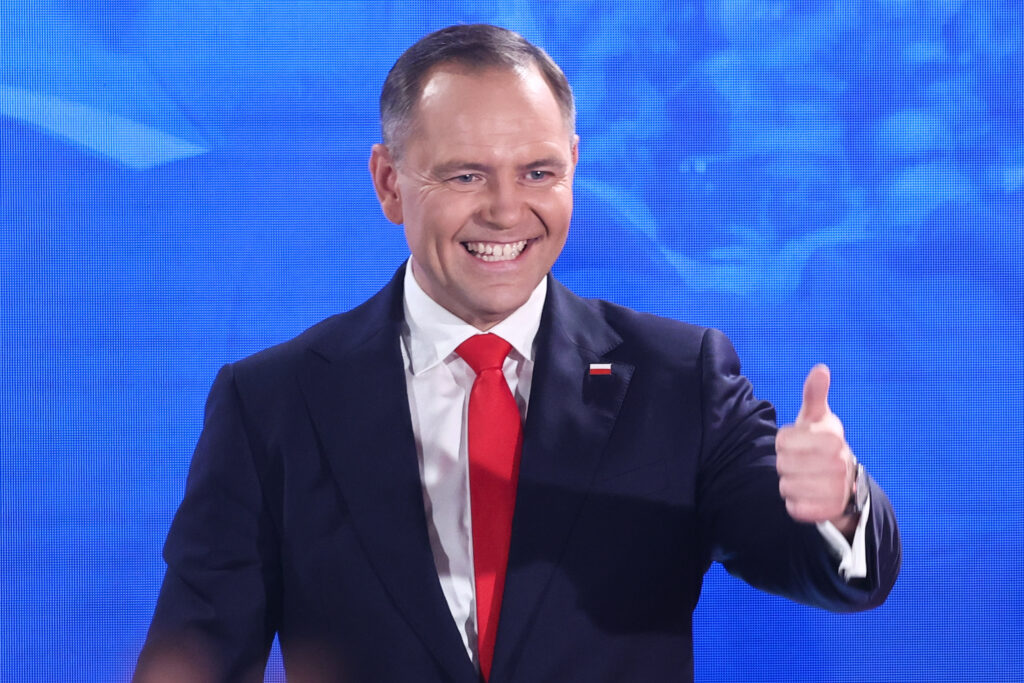
Poland Elects Conservative Karol Nawrocki as President in Tightly Contested Election
Warsaw, Poland – In a closely watched presidential election that underscored the deep political divisions within Poland, conservative historian and former boxer Karol Nawrocki emerged victorious, narrowly defeating Warsaw Mayor Rafał Trzaskowski. Backed by the ruling Law and Justice (PiS) party, Nawrocki’s victory sets the stage for potential political maneuvering as he assumes the role of head of state opposite Prime Minister Donald Tusk, a centrist leader with a pro-European stance. The election, held against the backdrop of the ongoing war in Ukraine and strained US-European relations, carries significant implications for Poland’s domestic and foreign policy.
Nawrocki’s campaign resonated with a segment of the Polish electorate seeking a more conservative approach to national identity, social values, and economic policy. His victory reflects a broader trend of conservative nationalism gaining traction in parts of Europe, often fueled by concerns about migration, economic inequality, and cultural change. While some observers have labeled Nawrocki as "populist" or "far-right," others argue such labels are overly simplistic and fail to capture the nuances of Polish politics. His supporters emphasize his commitment to Polish sovereignty, traditional values, and a strong national defense.
The election outcome raises questions about Poland’s future direction within the European Union and its relationship with the United States. Nawrocki’s perceived alignment with the Trump administration, evidenced by his past visit to the White House and endorsement from Trump, could influence US-Poland relations. While this connection could potentially strengthen security cooperation, particularly regarding US military presence in Poland and support for Ukraine, it also raises concerns about Poland’s relationship with the EU, a crucial source of funding and a key partner in defense and security matters.
The new president will face the challenge of balancing his campaign rhetoric with the broader national interests of Poland. Maintaining a strong relationship with the EU while addressing concerns about migration policies and climate regulations will require delicate diplomacy. Similarly, while Nawrocki’s supporters often express pro-American sentiments, navigating the complexities of transatlantic relations will require careful consideration of both shared interests and potential points of divergence.
Domestically, Nawrocki inherits a deeply polarized society. Bridging the divides between different segments of the Polish population will be a critical task. His ability to find common ground with the Tusk government on key issues such as economic policy, social welfare, and judicial reform will determine the stability and effectiveness of the Polish government in the coming years. Furthermore, managing the ongoing impact of the Ukrainian refugee crisis, which has placed a strain on resources and social cohesion, will require careful attention and a balanced approach.
The influence of social media in the election remains a subject of debate. Both sides of the political spectrum engaged in vigorous online campaigns, often employing hyper-partisan rhetoric and targeted advertising. While the extent to which social media influenced voter behavior is difficult to quantify, it is clear that digital platforms have become an integral part of modern political campaigns, raising concerns about disinformation, foreign interference, and the potential for manipulation. The new president will need to address these challenges while upholding democratic values and ensuring a free and fair media environment.
In conclusion, the election of Karol Nawrocki as Poland’s president marks a significant moment in the country’s political trajectory. His presidency will be shaped by the complex interplay of domestic and international factors, including the ongoing war in Ukraine, the evolving relationship between the US and Europe, and the deep-seated political divisions within Polish society. Nawrocki’s ability to navigate these challenges will determine the course of Poland’s future and its role on the global stage.