


The Escalating Threat of Fake News in Nigeria and the EU’s Support for Fact-Checking Initiatives
Nigeria grapples with a pervasive issue of misinformation, fake news, and disinformation, a phenomenon that poses a significant threat to the credibility of its mass media and the stability of the nation. The rapid dissemination of false narratives, often fueled by political agendas or malicious intent, erodes public trust, fuels social divisions, and can even incite violence. Recognizing the critical role of editors in safeguarding the integrity of information, the European Union (EU) has stepped forward to support Nigerian media organizations in their fight against this insidious trend.
The pervasiveness of fake news stems in part from the rapid proliferation of digital platforms and social media, which facilitate the swift and unchecked spread of misinformation. Unlike traditional media, which adheres to journalistic standards and editorial processes, online spaces often lack the necessary safeguards against the dissemination of false or misleading information. This creates an environment where fabricated stories, manipulated images, and distorted facts can easily gain traction, often reaching vast audiences before being debunked. The sheer volume of information online, coupled with the ease with which it can be shared, makes it challenging for individuals to discern the truth from falsehoods.
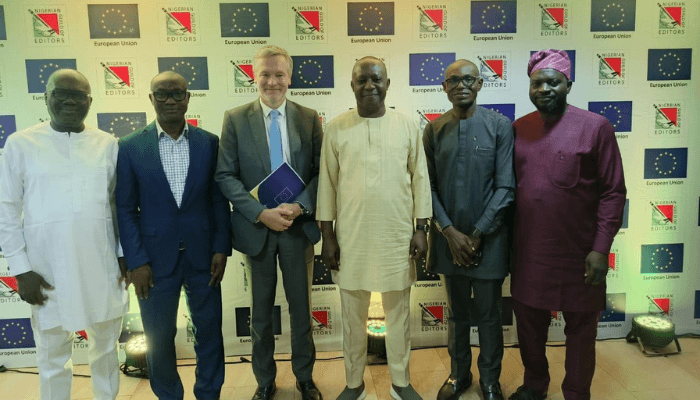
Recognizing the urgency of the situation, the EU recently organized a workshop for Nigerian editors, focusing on enhancing fact-checking skills and establishing dedicated fact-checking desks within newsrooms. The initiative underscores the EU’s commitment to supporting media literacy and empowering journalists with the tools necessary to combat misinformation effectively. The workshop brought together approximately 40 editors from print, online, and electronic media platforms, fostering a collaborative approach to tackling the shared challenge.
The EU Ambassador to Nigeria and ECOWAS, Mr. Gautier Mignot, emphasized the importance of media literacy as a crucial defense against misinformation and disinformation. He highlighted the detrimental impact of misleading information on individuals’ ability to make informed decisions, stressing that it undermines trust not only in the message but also in the messenger and the media institution itself. Mr. Mignot also underscored the growing sophistication of disinformation tactics, noting how technology is being used to create increasingly realistic and difficult-to-detect fabricated content.
The President of the Nigerian Guild of Editors, Mr. Eze Anaba, echoed the Ambassador’s concerns, emphasizing the dangerous consequences of fake news for Nigeria’s public opinion landscape. He noted that the deliberate spread of false information not only erodes public trust but also poses a serious threat to social cohesion, democratic governance, and national security. Mr. Anaba’s remarks highlight the far-reaching implications of misinformation, extending beyond the media sphere to impact the very fabric of Nigerian society.
The commitment of Nigerian editors to establish fact-checking desks within their respective organizations represents a significant step forward in the fight against fake news. These desks will serve as dedicated units responsible for verifying information, debunking false narratives, and promoting accurate reporting. By investing in fact-checking infrastructure, Nigerian media organizations are demonstrating their commitment to upholding journalistic integrity and rebuilding public trust. The training provided by the EU equips editors with the skills and knowledge necessary to identify and expose misinformation, ensuring that the information reaching the public is credible and reliable. This collaborative effort between the EU and Nigerian media organizations is crucial for fostering a more informed and resilient society, one that is better equipped to resist the manipulative tactics of misinformation campaigns. The long-term goal is to empower citizens with the critical thinking skills needed to navigate the complex information landscape and make informed decisions based on factual evidence, thereby strengthening democracy and promoting stability.