


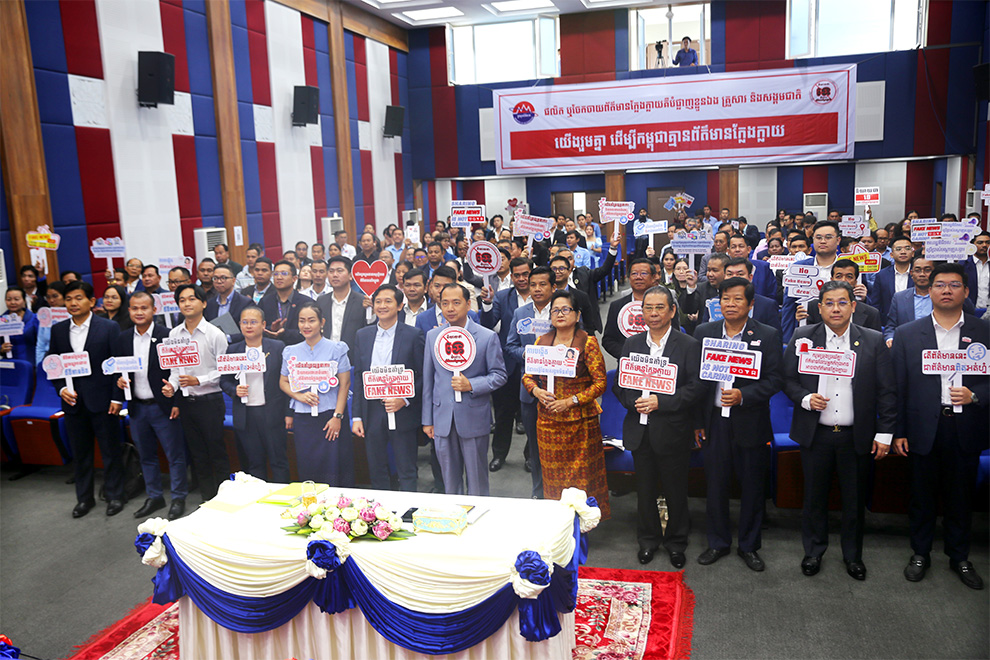
Cambodia Launches "Say No to Fake News" Campaign to Combat Misinformation
The Cambodian government has launched a nationwide campaign titled "Say No to Fake News" to combat the spread of misinformation and disinformation across the country. The initiative, inaugurated on April 1, 2025, aims to educate the public about the dangers of fake news, equip them with tools to identify it, and take action against those who deliberately create and disseminate false information. The campaign’s core principles revolve around safeguarding citizens’ right to accurate information, ensuring the quality of information disseminated, and securing information for responsible public use.
Minister of Information, Neth Pheaktra, spearheading the campaign, emphasized its focus on curbing the proliferation of fake news on social media platforms like TikTok and Facebook. He stated that the government would collaborate with these platforms to shut down accounts spreading fake news, and in severe cases, pursue legal action against those responsible. The minister underscored that the creation and dissemination of fake news is not protected under the umbrella of freedom of expression or press freedom, but rather constitutes an illegal act in Cambodia.
The campaign identifies several potential sources of fake news, including social media platforms, artificial intelligence (AI) technologies, manipulated media like deepfakes, politically motivated propaganda, influential figures (KOLs and MCNs), and vulnerable individuals susceptible to manipulation. Young people, often lacking the experience and critical thinking skills to discern truth from falsehood, are particularly vulnerable to the effects of fake news. To address this, the Ministry of Information is working with social media platforms to strengthen Community Standards, outlining acceptable online behavior and prohibiting content such as nudity, graphic violence, hate speech, and discrimination. AI tools will also be employed to detect and flag potential instances of fake news.
The "Say No to Fake News" campaign aims to equip citizens with the tools to identify and counter misinformation. The Minister advised the public to critically evaluate information sources, verify the credibility of news organizations, and be wary of information circulating solely on single accounts without corroboration from reputable media outlets. Citizens are encouraged to report fake news through the reporting mechanisms available on social media platforms and refrain from sharing unverified information. The government acknowledges the scale of the problem, with 3,651 cases of fake news identified in 2024, a figure believed to be a significant underrepresentation of the actual number of fake news items circulated daily.
The detrimental impact of fake news on society and national security is a key concern. The Minister highlighted the potential for fake news to undermine public trust in the government, damage international relations, and incite social unrest. False narratives surrounding political, diplomatic, and military issues can destabilize the nation and erode public confidence. Furthermore, fake news can fuel social divisions, inflame public anger, and promote hatred and discrimination. The rise of cyberbullying, a form of online harassment fueled by misinformation, is another alarming consequence, with severe emotional repercussions for victims, sometimes leading to tragic outcomes.
The campaign categorizes fake news into three main types: disinformation, malinformation, and misinformation. Disinformation refers to intentionally fabricated false information designed to cause harm. Malinformation involves the deliberate distortion or selective sharing of true information to damage reputations or interests. Misinformation, on the other hand, is false information spread unintentionally due to ignorance about its accuracy, often leading to confusion and misunderstanding. The campaign seeks to raise public awareness of these distinctions and the potential harm associated with each type of fake news.
The "Say No to Fake News" campaign, initiated in Phnom Penh and Kandal province in April 2025, will be rolled out nationwide over the course of a year, reaching all 25 provinces of Cambodia. The campaign utilizes a multi-pronged approach leveraging traditional and digital media, social media platforms, and direct phone messages to reach the widest possible audience, currently reaching an estimated 20 million SIM card users. The results of the campaign will be evaluated upon its completion in March 2026. This initiative coincides with a concerning trend of increased harassment against journalists, highlighted by the Cambodian Journalists’ Alliance (CamboJA), which reported a 28% increase in harassment cases in 2024 compared to the previous year. This underscores the importance of addressing the broader issue of information integrity and protecting the freedom of the press in Cambodia.