


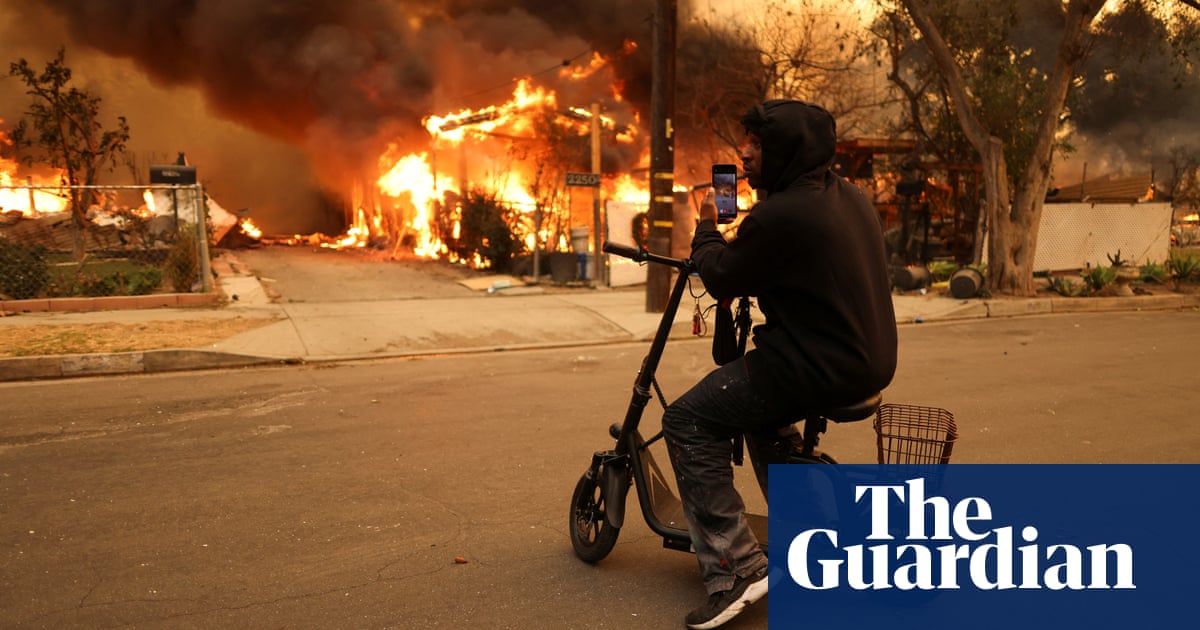
Wildfires Ignite Misinformation Inferno in Los Angeles
As wildfires continue to rage across Los Angeles, a parallel blaze of misinformation is spreading rapidly, fueled by rumors, conspiracy theories, and outright fabrications. This phenomenon, while not new, has intensified in the digital age, creating a treacherous information landscape for residents grappling with a real-world crisis. The proliferation of false narratives, ranging from the absurd (the Hollywood sign ablaze) to the politically charged (deliberate arson linked to high-speed rail), underscores the challenge of discerning fact from fiction during emergencies.
The human tendency to seek explanations and control amidst chaos creates fertile ground for misinformation to take root. Professor Lisa Fazio of Vanderbilt University points out that these fabricated narratives often align with pre-existing beliefs, providing a sense of order in a disordered world. This was evident following Hurricane Helene in 2023, where misinformation was weaponized for political gain, foreshadowing the current wave of disinformation engulfing Los Angeles. The volume and speed with which false information spreads online, amplified by social media algorithms and influential figures, pose significant threats to effective disaster response and recovery.
The consequences of misinformation during a crisis can be dire. Professor Samantha Montano of Massachusetts Maritime Academy, an expert in disaster response, emphasizes that accurate information is essential for individuals and families to make life-saving decisions. When the information ecosystem is polluted with lies and distortions, effective decision-making becomes virtually impossible, potentially leading to tragic outcomes. First responders can face unwarranted threats, aid distribution can be hampered, and long-term recovery efforts can be misdirected if the root causes of the disaster are misidentified.
While some narratives contain kernels of truth, often twisted or exaggerated, others are pure fiction designed to advance political agendas. The fires in Los Angeles have become a battleground for partisan narratives, with some attempting to downplay the role of climate change in exacerbating these events. Former President Donald Trump’s calls to "release the water," despite expert assurances that water supply isn’t the issue, exemplify this politically charged misinformation campaign. The amplified reach of prominent figures like Trump and Elon Musk further fuels the spread of these false narratives, blurring the lines between informed debate and deliberate deception.
Emergency management agencies are struggling to contain this wildfire of misinformation. Websites, social media posts, and press conferences aimed at disseminating accurate information are often outpaced by the viral spread of false narratives. The Federal Emergency Management Agency (FEMA) has ramped up its rumor-control efforts, while California Governor Gavin Newsom has launched a dedicated website to debunk false claims. However, these efforts face an uphill battle against the sheer volume and velocity of misinformation.
The underlying issue, according to Professor Montano, is a widespread lack of disaster literacy. Many people lack a basic understanding of how disaster response and recovery work, leaving them vulnerable to misinformation that fills the knowledge void. Addressing this knowledge gap is crucial to building resilience against misinformation campaigns. Emergency management agencies need to adopt more proactive and innovative strategies to counter the flood of false information. This requires not only debunking specific claims but also fostering a deeper public understanding of disaster preparedness and response. The challenge lies in finding effective ways to cut through the noise and empower individuals to critically evaluate the information they encounter during times of crisis.