








Vice President Opoku-Agyemang Tasks West African Youth with Responsible Digital Citizenship, Urges Hope Amid Regional Crises
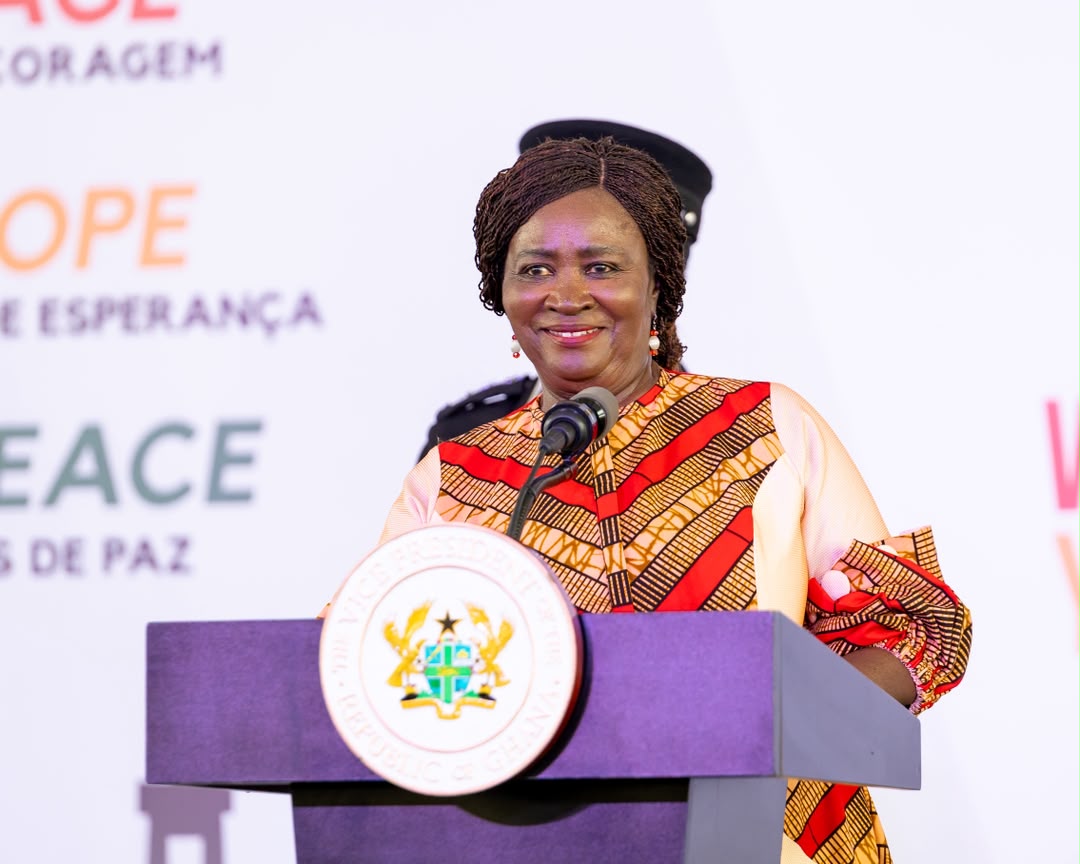
ACCRA, Ghana — Vice President Professor Jane Naana Opoku-Agyemang has issued a powerful appeal to young people across West Africa to exercise responsibility in their use of digital tools, warning that careless online behaviour can spread prejudice, amplify misinformation and threaten the social cohesion that many communities in the region have worked hard to build. Delivering an address at the 2026 West Africa Youth Days in Accra, the Vice President said technology and digital platforms are double-edged swords: they can either deepen divisions or foster knowledge, opportunity and peace, depending on how they are used. The event, organized by the Regional Episcopal Conference of West Africa and hosted by the Ghana Catholic Bishops’ Conference, drew attention to the critical role of youth in a rapidly changing digital and social landscape. Professor Opoku-Agyemang, Ghana’s first female Vice President, told the gathering that the digital revolution has handed young people unprecedented power to shape public conversation. With that power, she argued, comes an equally unprecedented responsibility to reject hateful rhetoric, resist the temptation to spread unverified content and avoid narratives that dehumanize others. “While technology and digital platforms have the potential to deepen divisions in society, they can also be harnessed to promote knowledge, create opportunities and build peaceful communities,” she said. Her remarks were directed not only at policymakers and tech leaders but at the young men and women in the audience, whom she described as the most active participants in the digital space. She called on them to be mindful of what they share, to verify before forwarding and to use their platforms to lift others up rather than tear them down. The Vice President also acknowledged that many young people are frustrated by unemployment, inequality and limited access to quality services, and said their digital engagement should not be dismissed but rather guided and supported. She noted that West Africa is one of the youngest regions in the world, with a significant share of its population under thirty, and that the choices this generation makes online will help determine the region’s future stability, prosperity and peace.
The Vice President’s warning comes at a moment when West Africa is experiencing a profound digital transformation. Mobile phones and social media platforms have become central to how young people communicate, learn, organize and entertain themselves. In a region with a youthful population and expanding internet connectivity, these tools have made it possible for ideas to travel across borders in seconds. They have empowered young people to demand accountability, share skills and connect with peers from different countries and cultures. However, the same open networks have become channels for misinformation, ethnic slurs, religious intolerance and even recruitment by extremist groups. Experts have repeatedly noted that false narratives and hate speech can spread faster than facts, especially in societies where trust in institutions is low and social tensions are high. The Vice President stressed that West African nations cannot afford to treat digital spaces as lawless arenas. Instead, she said, the region must invest in digital literacy, media education and ethical frameworks that equip young people to navigate the online world critically. She urged the youth to see themselves as guardians of truth and agents of unity. “The choice between division and peace is often made in the quiet moments when we decide what to post, what to ignore and what to condemn,” she said. Her words reflected a growing concern among African leaders and religious institutions that the next generation’s potential could be undermined by the very technologies designed to empower them. She said that just as digital tools can be used to organize protests and demand justice, they can also be used to spread hope and build bridges. The challenge, she insisted, is not to reject technology but to master it. She also called on civil society organizations and faith-based groups to help create safe online spaces where young people can discuss issues respectfully, challenge harmful narratives and develop the critical thinking skills needed to distinguish truth from falsehood. In a region where social media has sometimes been used to inflame ethnic and religious tensions, the Vice President’s message was both timely and urgent. She said that the fight for peace in West Africa is no longer fought only on battlefields but also in comment sections, messaging apps and news feeds, and that young people must choose which side they wish to be on.
Beyond the digital sphere, Professor Opoku-Agyemang called for sustained efforts to improve education and expand opportunities for young people. She said that the ability to use digital tools responsibly is closely linked to the broader conditions of young people’s lives. When young people are well educated, gainfully employed and actively engaged in society, they are less likely to resort to destructive behavior and more likely to contribute constructively to their communities. The Vice President urged governments in West Africa to prioritize education as a fundamental pillar of development, not only in terms of access to schools but also in terms of the quality of learning and its relevance to modern economies. She highlighted the importance of science, technology, engineering and mathematics, as well as the humanities, in producing well-rounded citizens who can think critically and act ethically. She also emphasized the need to create pathways for young people to apply their skills in meaningful ways, through entrepreneurship, innovation and public service. The West Africa Youth Days, she said, should be more than an annual meeting; it should be a catalyst for policies and programs that put young people at the center of national and regional development. She expressed confidence in the creativity and resilience of West African youth, noting that many have already built businesses, led social movements and pioneered solutions to local challenges. With the right support, she argued, they can do far more. Her call for expanded opportunities resonated with many in the audience who have experienced the frustration of holding qualifications without finding work. By linking digital responsibility to broader social and economic justice, the Vice President framed the conversation around youth not merely as a problem to be managed but as a resource to be developed. She said the future of West Africa depends on how well its leaders prepare and trust the next generation. She also challenged the private sector to partner with governments and educational institutions to create internship, apprenticeship and mentorship programs that would give young people practical experience and a sense of belonging. She stressed that education must not stop at the classroom door; it must extend into every aspect of a young person’s life, including the digital spaces where so much of their identity and ambition is now formed.
The President of the Ghana Catholic Bishops’ Conference, Reverend Matthew Kwasi Gyamfi, reinforced the Vice President’s message, urging young people to remain courageous and hopeful despite the many challenges confronting the sub-region. He acknowledged that the youth of West Africa are facing a difficult landscape characterized by economic hardship, youth unemployment and the threat of violent extremism. These are not abstract issues; they are daily realities that can lead to despair, frustration and, in some cases, the radicalization of vulnerable young people. Reverend Gyamfi said the Church and other faith-based organizations have a responsibility to walk alongside young people, offering not only spiritual guidance but also practical support in education, skills training and moral formation. He called on the youth not to give in to fear or despair, insisting that every generation faces its own trials and that West African youth have the strength and ingenuity to overcome theirs. He said the courage and hope he was speaking about are not naive optimism but a deep and abiding trust in God and in the human capacity for good. “Do not allow the darkness of the present moment to blind you to the light of the future,” he said. The bishop also urged political and religious leaders to do more to create environments in which young people can flourish, warning that rhetoric that divides, systems that exploit and silence that ignores the cries of the young only make the region’s problems worse. He called for dialogue, inclusivity and solidarity among the countries of West Africa, noting that the challenges of one nation quickly become the challenges of all. The presence of young people at the gathering, he said, was a sign of hope for the Church and for the region. He reminded them that many great leaders in history emerged from times of crisis, and that their generation too could rise to meet the moment. He also encouraged the young participants to support one another, build networks of mutual care and resist the isolation and cynicism that often accompany hardship. In a world where young people are constantly told that they are failures or threats, Reverend Gyamfi said, the Church and the wider society must be voices of affirmation and encouragement.
The 2026 West Africa Youth Days, organized by the Regional Episcopal Conference of West Africa and hosted by the Ghana Catholic Bishops’ Conference, is one of the region’s most important gatherings of young Catholics and youth advocates. It provides a space for reflection, prayer, learning and networking, bringing together participants from different countries, cultures and backgrounds to share experiences and discuss common challenges. The theme of the gathering, centered on the role of youth in building a peaceful and prosperous West Africa, reflects the Catholic Church’s broader commitment to social justice and human dignity. For decades, the Church has been a key actor in education, healthcare and peace-building across the region, and the Youth Days are an extension of that mission. The event also gives young people an opportunity to speak directly to bishops and other leaders, ensuring that their voices are heard at the highest levels of the Church. In a region where the population is overwhelmingly young, such forums are essential. They help to channel youthful energy in positive directions, build leadership skills and foster a sense of belonging to a wider West African community. The hosting of the event in Accra underscores Ghana’s reputation as a stable democracy and a hub for regional dialogue. It also highlights the close relationship between the Church and the state in matters of national development. The Vice President’s participation was particularly significant, as it demonstrated the importance that the government attaches to youth engagement and to the role of faith-based institutions in addressing social issues. By bringing together government leaders, church leaders and young people, the event sought to create a united front against the forces that threaten the region’s peace and stability. Participants were also given opportunities to attend workshops, share best practices and develop action plans that they could take back to their local communities. The organizers expressed hope that the energy and ideas generated in Accra would not fade after the event but would inspire sustained youth-led initiatives across the sub-region.
As the 2026 West Africa Youth Days concluded, the messages delivered by Professor Opoku-Agyemang and Reverend Gyamfi left the assembled young people with a clear sense of mission. The Vice President’s call for responsible use of digital tools and the Bishop’s call for courage and hope are two sides of the same coin. One addresses the way young people engage with the world around them; the other addresses the inner strength needed to face the world’s challenges. Together, they form a vision of a generation that is not passive in the face of change but actively shapes it. The youth of West Africa are not waiting for permission to lead; they are already leading in their communities, classrooms, churches and online spaces. What they need is guidance, support and the freedom to make mistakes and learn. The event in Accra was a reminder that despite the economic hardships, unemployment and violence that make headlines, there is a reservoir of hope and talent in the region that cannot be measured by statistics alone. The challenge for leaders is to tap into that reservoir, to trust young people with real responsibility and to create the conditions in which their potential can be fully realized. For the young people who attended, the message was simple: use your power wisely, do not be afraid and never lose hope. If they do, the Vice President said, they will not only transform their own lives but also help build a West Africa that is peaceful, just and prosperous for all. The 2026 West Africa Youth Days ended with prayers, commitments and a renewed sense of solidarity, leaving no doubt that the future of the region rests in capable hands. The gathering also served as a reminder that the fight for a better society is not a solitary one; it is shared by people of faith, people of government and people of every walk of life. With continued cooperation between the Church, the state and the youth themselves, West Africa can look forward to a new generation of leaders who are rooted in integrity, equipped with skills and driven by hope.


