









Pittsburgh’s South Side Rocked by Misleading Flyers Targeting Proposed Neighborhood Improvement District
In a troubling development for local governance, residents of Pittsburgh’s South Side have recently been receiving flyers containing glaringly false information about a proposed Neighborhood Improvement District (NID), prompting an immediate and forceful response from City Councilman Bob Charland, who represents the district. The flyers, which began appearing last week, claim that homeowners will be forced to pay hefty monthly fees—$125 in some versions, and an alarming $1,250 in others—to fund the district’s operations. These documents have been distributed to individuals living outside the actual proposed footprint, specifically targeting residential zones that would not be directly subject to the district’s assessment fees. Charland, a Democrat who has championed the proposal as a tool for revitalizing the commercial corridor, has categorically dismissed the mailers as a “deliberate disinformation campaign” designed to sow confusion and anger among constituents who might otherwise support the measure. The timing of the mailers is particularly problematic, as City Council is preparing to host a second public hearing on the matter this Wednesday, a critical juncture in the deliberative process where accurate information is paramount for civic engagement.
The deceptive flyers are crafted with a veneer of officialdom, featuring the tagline “Make South Side Great Again,” a phrase that co-opts national political rhetoric to evoke an emotional response from residents. According to Charland, the information contained within is not merely inaccurate but overtly fraudulent. The letters claim that all residents, regardless of property type, will contribute to the fund, which is a direct contradiction of the actual legislative text. The legitimate proposal, which is the subject of ongoing review, explicitly states that single-family, owner-occupied residential properties and tax-exempt properties are entirely exempt from any mandatory financial contribution. Furthermore, the return address printed on the flyers points to a United Parcel Service (UPS) store located on East Carson Street—a classic anonymous mail drop designed to obscure the identities of the senders. Charland noted that his office has received roughly ten reports of these letters so far, but the actual number in circulation is likely higher. The use of specific monetary figures, ranging from $125 to $1,250, appears to be a calculated tactic to maximize anxiety—the lower figure is a common monthly cost for some utilities, while the higher figure is outrageously inflated, designed to make any future compromise look favorable by comparison.
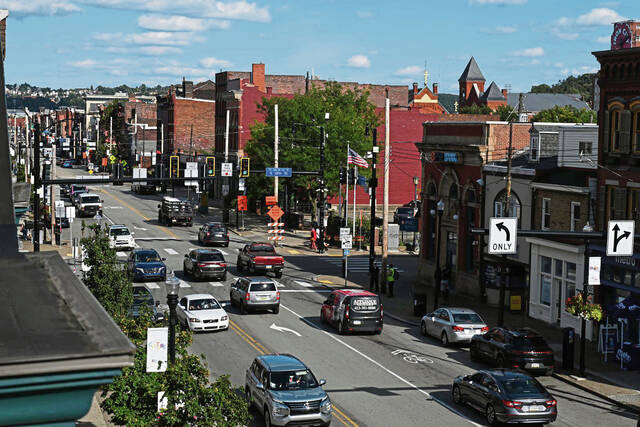
To fully understand the gravity of the misinformation, one must examine the actual details of the proposed Neighborhood Improvement District (NID). The district’s footprint is strictly limited to commercial properties within the business district, encompassing the core of East Carson Street, specific portions surrounding Bedford Square, and commercial properties along South 10th and 14th Streets. A NID is a local financing mechanism where property owners within a defined geographic area agree to pay a self-imposed assessment—a supplementary tax—to fund specific, localized improvements that go beyond what the city provides generally. In this case, the proposed improvements are focused on tangible community benefits: comprehensive graffiti removal to maintain the aesthetic appeal of the historic street, funding for neighborhood events that draw visitors and support local merchants, enhanced public safety measures such as increased lighting or private security patrols, and the creation of a formal advocacy body to lobby for state and federal grants. This advocacy body, composed of local stakeholders, would have the authority to direct how the accumulated funds are spent, ensuring that the needs of the business community are met directly. Crucially, the liability for these assessments falls solely on the commercial landlords and business owners who stand to benefit most directly from a cleaner, safer, and more vibrant commercial district—not on the residential homeowners living in the adjoining streets who receive the mailers.
Councilman Charland’s reaction has been swift and decisive. He publicly labeled the flyers a “disinformation campaign,” expressing his strong suspicion that the anonymous senders are motivated by a desire to either sabotage the proposal entirely or to poison the well of public opinion before the legislative process concludes. He speculated that the authors are likely individuals or groups who oppose the NID on philosophical or financial grounds, but who are unwilling to engage in honest, transparent debate. By targeting residents outside the footprint, they are attempting to manufacture a false narrative of widespread community opposition, hoping that the City Council will be swayed by an outpouring of angry calls and emails from misinformed constituents. In a significant escalation of the matter, Charland has confirmed that he has formally reported the flyers to law enforcement agencies, specifically referencing the potential for mail fraud—a federal offense. Using the United States Postal Service or commercial couriers to distribute deceptive materials with the intent to deceive or defraud is illegal, and Charland intends to pursue all legal avenues to identify the culprits. He has urged all residents who received the flyer to contact his office, not only to report it but also to obtain the factual documentation of the proposal so they can make an informed judgment.
The controversy arrives against a backdrop of previous civic engagement on the issue. During a public hearing held in July, a substantial majority of property owners within the proposed district voiced their overwhelming support for the measure, recognizing the potential for the NID to catalyze economic development and improve the quality of life in the area. However, a vocal minority of detractors pushed back, arguing against shouldering additional fees in an era of rising property taxes and increasing cost-of-living pressures. These opponents raised legitimate concerns about the transparency of fund allocation and the equitable distribution of costs versus benefits. The misleading flyers now threaten to disrupt this delicate balance by conflating the legitimate concerns of commercial taxpayers with the misguided fears of residential homeowners. This tactic is reminiscent of historical efforts to undermine special assessment districts in other cities, where opponents use scare tactics—exaggerated costs, false claims of mandatory contributions for residents—to trigger a backlash that overwhelms the measured support of those directly affected. The complexity of urban renewal initiatives in Pittsburgh, a city that has struggled with population decline and commercial vacancies on various corridors, makes the success of this NID potentially a bellwether for other neighborhoods considering similar approaches.
Looking ahead, the upcoming City Council hearing on Wednesday represents a pivotal moment in what has become an increasingly contentious civic debate. Charland has emphatically encouraged all citizens, regardless of their position on the NID, to read the actual legislation and attend the public hearing to get unfiltered information. He has promised that the council will not be swayed by fraudulent mailers, but he remains concerned about the corrosive effect such disinformation can have on community trust in local government. The investigation into the mailers is ongoing, and if the senders are identified, they may face significant legal and financial consequences for their actions. Ironically, the disinformation campaign may have the opposite effect of its intended purpose: by unifying the local business community and residents who see through the deception, it has galvanized support for the proposal. However, the immediate task for Charland and his colleagues is to ensure that the democratic process is executed with integrity, allowing the voters and property owners of South Side to make a decision based on facts rather than fear. As Wednesday approaches, all eyes are on City Hall to see if a legitimate, grass-roots revitalization effort can withstand the onslaught of a covert and deceptive opposition.


