








2026: A Year of Turmoil and the Global Battle for Truth
The year 2026 may well be remembered as one of the most turbulent periods in a century, a time when the convergence of environmental catastrophe and geopolitical strife created an unprecedented atmosphere of global instability. The turbulence stems not only from rising temperatures and extreme droughts scorching various parts of the world, but also from an escalating cascade of political tensions across multiple regions, threatening to redraw the map of international relations. The Russia-Ukraine war, now dragging into its fourth year, has shown no clear end, continuing to drain resources and destabilize European security. Concurrently, coordinated strikes by the United States and Israel against Iran have widened the already volatile Middle Eastern conflict, while deliberate disruptions to shipping through the strategic Strait of Hormuz have sent shockwaves through global energy markets, raising serious concerns over crude oil supplies. The fragile maritime security in the region is further strained by ongoing tensions involving Saudi Arabia and the Houthi militia, which have persistently disrupted commercial traffic in the Red Sea and the Bab el-Mandeb strait. Far from these traditional hotspots, South America has also seen a resurgence of historical grievances. Argentina has once again thrust the question of the Malvinas Islands—known in Britain as the Falkland Islands—onto the international political stage, a move given poignancy by the nation’s emotional runner-up finish at the 2026 World Cup. These developments, however, represent only a fraction of the conflicts and tensions affecting different corners of the globe; Southeast Asia, too, has witnessed armed clashes between neighboring states, including a violent border confrontation between Thailand and Cambodia in 2025.
While armed conflict remains the most visible manifestation of global instability, a more insidious and far-reaching threat has emerged: the rampant spread of false and misleading information. Digital technology has fundamentally altered the information ecosystem, making it easier than ever for divisive content to circulate rapidly across borders, bypassing traditional editorial filters and fact-checking mechanisms. Disinformation—the deliberate creation and dissemination of false information—and misinformation—the unintentional sharing of falsehoods—have become significant global risks, recognized by international bodies and security experts alike. The World Economic Forum’s (WEF) 2026 Global Risks Assessment has placed these information integrity failures among the most serious short-term global risks, ranking them alongside social polarization and geoeconomic confrontation, which are themselves exacerbated by the breakdown of truthful discourse. The assessment is stark: more than 80 percent of experts surveyed globally assert that the disinformation crisis is already having a tangible impact on political stability, eroding public trust in institutions, fomenting social unrest, and influencing electoral outcomes. The rapid and unchecked development of artificial intelligence (AI) has added a dangerous new layer to the problem. AI-generated deepfakes, which can convincingly impersonate world leaders, journalists, and ordinary citizens, have reportedly increased by a staggering 3,000 percent globally. This technological leap has made it trivially easy to produce and distribute deceptive content at scale, creating a reality where seeing is no longer believing. At the same time, many institutions and governments remain woefully unprepared; surveys indicate that a significant number of public and private organizations still lack formal plans to respond to disinformation-related crises, leaving them vulnerable to manipulation and chaos.
Indonesia, the world’s largest archipelagic nation and one of Southeast Asia’s most vibrant democracies, faces this challenge with acute severity. The Ministry of Communication and Digital Affairs has recorded a staggering 16,999 hoax and disinformation issues on social media between August 2018 and July 2026, a figure that reflects the sheer volume of malicious content circulating in the national digital sphere. Furthermore, around 800,000 websites have been identified as potentially spreading such harmful content, creating a vast network of sources that can be tapped to seed false narratives. This problem is compounded by Indonesia’s digital demographics: the country boasts approximately 230 million Internet users, 331 million active mobile connections, and an estimated 180 million social media identities—a vast, highly connected population that is increasingly dependent on mobile devices and digital platforms for news and information. This reliance, while offering opportunities for connectivity, also exposes citizens to false narratives at an alarming speed, with AI-amplified disinformation making the problem even more intractable. Against this backdrop, Indonesia’s national news agency, ANTARA, has taken a significant step toward strengthening cross-border cooperation on information integrity, recognizing that the Indonesian experience is not isolated but part of a global pattern that demands a coordinated response. The agency’s proactive stance highlights a growing recognition among state media that traditional roles of reporting must be expanded to actively defend the truth.
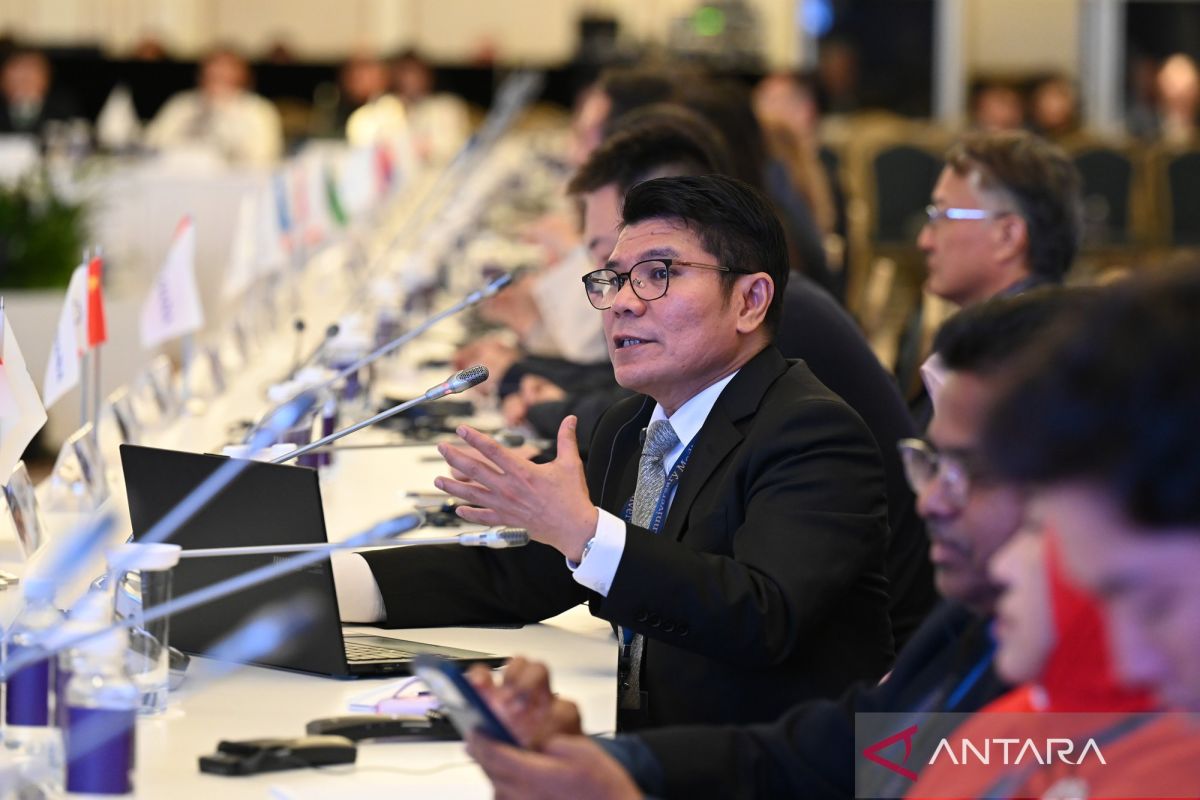
The annual meeting of the Organization of Asia-Pacific News Agencies (OANA), held in Moscow and attended by 35 of its 41 member agencies, provided the perfect momentum for a significant new initiative. At this gathering, ANTARA proposed the establishment of a permanent working mechanism for cross-border news verification, as disinformation increasingly becomes amplified by AI and other digital tools. This initiative is of paramount importance because OANA brings together national news agencies from countries that account for a large share of the world’s population and information landscape, including nations with longstanding political differences and competing interests. The proposal, spearheaded by ANTARA President Director Benny Siga Butarbutar, is rooted in a clear-eyed assessment of the current crisis. Butarbutar has emphatically stated that disinformation is no longer merely a media problem but rather an accelerator of broader global risks that threatens to upend economies, destabilize governments, and incite violence. His core principle is simple yet powerful: if disinformation can move across borders without restraint, then accurate information must move faster and collectively. This principle is central to the role of a national news agency. Accuracy, speed, and quality are the fundamental pillars of news agencies, which provide verified information to the public and serve as crucial, reliable sources for other media outlets, from newspapers to broadcasters to digital platforms.
The scale of OANA’s network gives this cooperation added significance, making it a potential bulwark against the rising tide of falsehoods. OANA member countries have a combined population estimated at 4.74 billion, more than half of the world’s population, with major population centers such as India, China, Indonesia, Pakistan, Bangladesh, Russia, and Japan all represented within its ranks. The member agencies operate in some of the world’s largest and most digitally connected information markets, making the need for cooperation ever more critical. Across OANA member countries, the number of Internet users is estimated at a staggering 3.2 billion to 3.3 billion, while social media identities number around 2.5 billion, representing a massive global audience that is both a reservoir of potential understanding and a target for manipulation. Looking at the numbers in detail, Indonesia’s figures are echoed and overshadowed by its larger neighbors: China has about 1.1 billion Internet users, while India’s total is close to 1 billion, and Internet penetration in the Gulf countries has reached around 100 percent. As digital connectivity continues to expand, the volume and speed of information circulating across these markets will only grow, creating greater opportunities for reliable information to reach the public, but also creating greater room for false narratives to spread unchecked. The sheer demographic weight of OANA members means that decisions made within this forum have the potential to shape the information environment for a majority of humanity, making cross-border verification and cooperation not just beneficial, but essential for global stability.
Looking ahead, the proposed shift from OANA being a mere platform for exchanging news to a broader regional information integrity network could provide a practical and much-needed framework for international cooperation. Cross-border verification, faster information sharing, and stronger coordination among member agencies could help news organizations respond collectively and decisively when false or misleading narratives emerge, particularly during times of geopolitical crisis. The objective is not to eliminate disagreement between countries; news agencies cannot resolve geopolitical disputes, nor should they attempt to. Their role is more concrete and profound: to ensure that disagreements are debated on the basis of information that has been checked, attributed, and responsibly reported. Amid an increasingly crowded, fragmented, and often chaotic information environment, OANA has a clear opportunity to establish itself as a trusted reference point when conflicting narratives spread across borders. For national news agencies, that role extends beyond the simple delivery of news; as the authoritative voices of their nations, they can also help keep channels of communication open and make information cooperation a practical form of peaceful diplomacy. In a world where lies travel at the speed of light and truth lags behind, the collective action of news agencies is not just a professional imperative but a moral one. The initiative put forward by ANTARA at the Moscow meeting, supported by OANA members, represents a critical step toward reclaiming the global information space from those who seek to poison it with falsehoods, and ensuring that future generations have access to information that is not only timely but trustworthy.


