




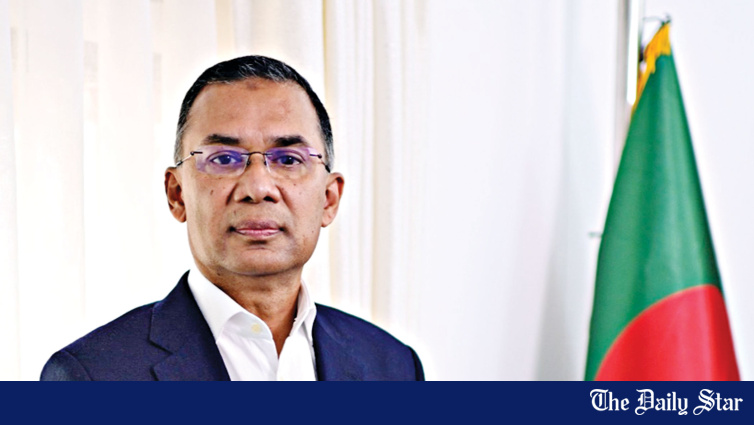
Prime Minister Tarique Rahman yesterday directed cabinet members to become significantly more active on social media, instructing them to highlight the government’s initiatives and respond decisively to misinformation and negative campaigns that have been spreading across digital platforms. The issue received particular attention at yesterday’s cabinet meeting, held at the Secretariat, according to people with knowledge of the discussions. The meeting took place against the backdrop of several recent incidents in Dhaka that have generated widespread debate online, including the attack, looting and demolition of the Radda MCH-FP Centre in Mirpur-1, and the vandalism of content creator Salman Muqtadir’s Brownfish Studio in the ECB Chattar area. Cabinet members reportedly raised concerns that unverified claims and outright falsehoods surrounding these incidents were circulating rapidly on social media, and that these narratives were damaging the government’s image. The Prime Minister’s directive was therefore seen as an urgent call for a more coordinated and aggressive digital communication strategy, one that would ensure the government’s side of the story is not drowned out by hostile or misleading content. The instruction applies to all cabinet members, not only those with official communications roles, reflecting a broader expectation that every minister and adviser must act as a public advocate for the government’s policies and actions.
During the cabinet session, attendees acknowledged that while there has been a substantial amount of negative campaigning and misinformation on social media, the visible efforts from both the government and the party to counter it have been weak and insufficient. One cabinet member, speaking after the meeting, said, “There is a lot of negative campaigning and misinformation on social media, but there have been little visible efforts from either the government or the party to counter it — the response has been weak. All of us have been told to promote positive issues on social media to counter the negative ones.” This candid assessment underscores the frustration within the administration over its inability to shape the online narrative in its favour, particularly at a time when social media is increasingly the primary source of news and political discussion for many Bangladeshis. The recent incidents in Dhaka have further complicated matters, as the attack on the Radda health centre and the vandalism of Brownfish Studio became immediate flashpoints for angry online discourse. Cabinet members were particularly worried about how quickly unverified claims and manipulated content can go viral, and how these false narratives can harden public opinion before official clarifications are even issued. The Prime Minister reportedly emphasised the need to place factual information before the public with greater speed, and to communicate the government’s activities more effectively through social media channels. This is not merely about defensive response; it is also about proactively showcasing the government’s development work, welfare schemes, and administrative achievements to build public trust and counterbalance the relentless barrage of criticism.
The social media directive is also a direct response to the evolving nature of political disinformation, particularly the use of artificial intelligence to create fabricated content. Fact-checkers have recently identified a number of fake political posts, including an AI-generated image purportedly showing Prime Minister Tarique Rahman shaking hands with Israeli Prime Minister Benjamin Netanyahu. Such fabricated content is designed to provoke outrage, sow confusion, and undermine the credibility of the government and its leadership. The fact that sophisticated AI tools are now being used to generate convincing fake images and videos presents a major challenge for any administration, and yesterday’s cabinet discussion reflected growing awareness of this threat. Law and order was not part of the cabinet’s principal agenda, but meeting insiders said the recent incidents in the capital came up during the discussion, particularly the attack on the Radda health centre. This suggests that the government is not only worried about the physical security situation but also about the narrative battle that follows such events. The Prime Minister’s instruction to cabinet members to be more active on social media should therefore be understood as part of a broader strategy to win back the initiative in public discourse, to ensure that the government’s actions and explanations are not lost in a sea of speculation, rumour, and deliberate disinformation. There was an implicit understanding that silence or slow responses allow falsehoods to take root, and that every minister must now be equipped and willing to engage directly with the public through digital platforms.
In a separate but significant decision, the cabinet approved a move to restore monthly Value Added Tax returns, effectively reversing the quarterly filing system that had been introduced only in July. The cabinet gave in-principle and final approval to the draft Value Added Tax and Supplementary Duty (Amendment) Ordinance, 2026, subject to vetting by the Legislative and Parliamentary Affairs Division. According to a release from the Prime Minister’s press wing, the Internal Resources Division placed the proposal to amend section 64 of the Value Added Tax and Supplementary Duty Act, 2012, with the stated aim of improving the pace of revenue collection at the field level. The shift back to monthly returns is a major administrative change that will affect businesses across the country. Under the quarterly system, businesses had been submitting their VAT returns once every three tax periods, a change that was intended to ease compliance burdens and reduce paperwork. However, the move proved controversial, and revenue officials soon raised concerns about its practical implications. Once the new amendment takes effect, taxpayers will again be required to submit a return for each tax period, restoring the old monthly cycle. This means businesses must be prepared to file more frequently, which may increase administrative work for many companies, but the government believes this will allow tax authorities to track revenue collection more closely and identify potential gaps or irregularities earlier.
The specific modalities of the restored monthly system were also outlined in the cabinet decision. Taxpayers will be required to file their returns within 15 days of the end of each tax period. If the 15th day falls on a government holiday, the deadline will be extended to the next working day, providing a small measure of relief. However, a slightly different rule will apply to government, semi-government and autonomous bodies, banks, insurance companies, and taxpayers who file zero returns; these entities will be allowed up to 20 days after the end of a tax period to submit their returns. The decision to restore the monthly system had been under consideration by the National Board of Revenue for some time, following concerns raised by field offices about monitoring difficulties, operational problems, and risks to revenue collection under the quarterly arrangement. These concerns were not unfounded: VAT collection fell by about 21 percent year-on-year during July and August, a worrying sign for a government that relies heavily on tax revenue to fund public spending. NBR officials, however, have cautioned that it is too early to attribute the decline solely to the new filing system, as other economic factors could also have played a role. Nonetheless, the sharp drop in collection appears to have accelerated the decision to reverse the quarterly system, with the government clearly prioritising revenue certainty over the convenience of taxpayers. The move is likely to be welcomed by revenue officials who argued that quarterly filing made it harder to detect underreporting and evasion, but it may face criticism from business groups who had welcomed the earlier move as a progressive simplification of the tax system.
Finally, the cabinet also adopted a resolution congratulating the Prime Minister and the Bangladesh delegation on their participation in the 81st session of the United Nations General Assembly. This resolution was a separate item on the cabinet agenda but served as a reminder of the government’s diplomatic engagements and its presence on the international stage. Taken together, the outcomes of yesterday’s cabinet meeting reveal a government that is seeking to respond to multiple pressures simultaneously: managing the narrative at home, maintaining fiscal discipline, and projecting diplomatic engagement abroad. The social media directive and the VAT decision are both, in their own ways, reactive measures — one designed to counter misinformation and negative campaigning in the digital sphere, and the other to address declining revenue collection and operational difficulties in tax administration. But they also reflect a more proactive desire to regain control: control over the public narrative, and control over the country’s revenue streams. In the coming weeks, it is likely that cabinet members will be more visible online, posting about government initiatives, responding to criticism, and trying to shape public opinion. At the same time, businesses will need to adjust once again to the more demanding schedule of monthly VAT returns. Whether these moves will achieve their intended objectives remains to be seen, but they signal a government that is paying close attention to the emerging challenges of the digital age and the traditional demands of public finance. The cabinet’s decisions yesterday were therefore both timely and consequential, and their implementation will be watched closely by political observers, business groups, and the general public alike.