


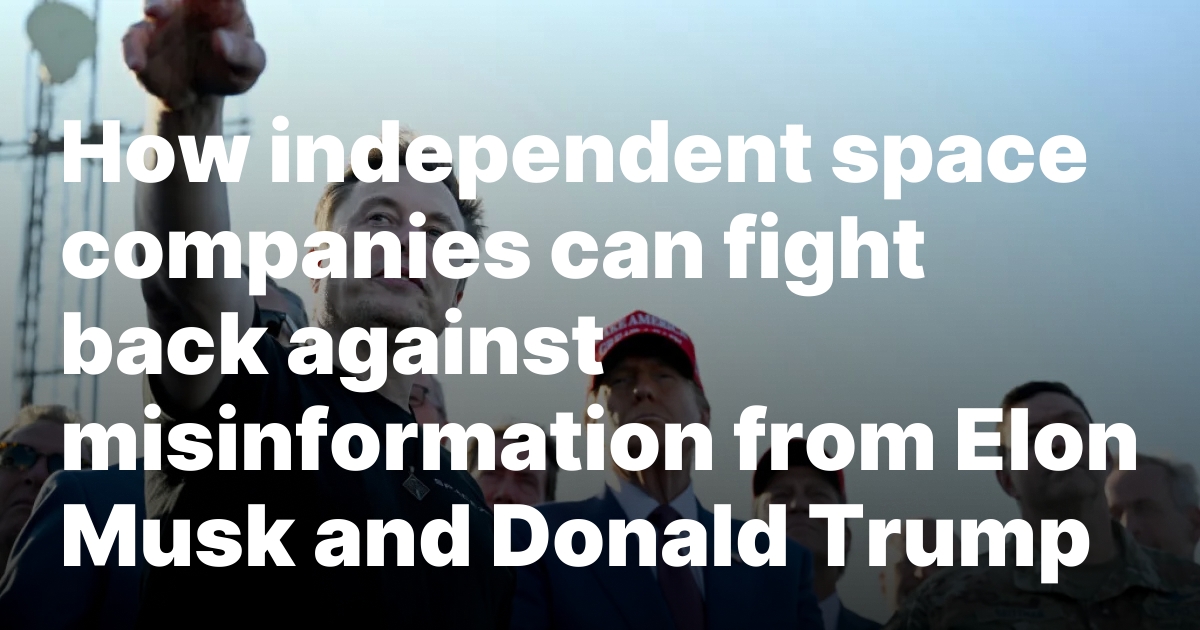
The Battle for Truth in the Cosmos: How Independent Space Companies Can Counter Misinformation
The space industry, a realm of precision, innovation, and scientific rigor, has become increasingly susceptible to the distorting effects of misinformation. Dominating figures like Elon Musk and Donald Trump, armed with massive platforms and a penchant for spectacle, often overshadow factual reporting with exaggerated claims and outright falsehoods. This manipulation of narratives not only advances their own agendas but also undermines their rivals, creating a challenging environment for independent space companies striving to operate within a framework of accuracy and transparency. The recent controversy surrounding the International Space Station, with accusations of "abandoned astronauts," serves as a prime example of how these narratives can be weaponized to distort public perception. The question then becomes: how can independent space entities effectively counter this misinformation when the playing field is so uneven?
Traditional approaches to public relations, such as press releases and technical briefings, are no longer sufficient in this age of rapid-fire information dissemination. Independent space companies must adopt more aggressive and unconventional strategies to penetrate the noise and reclaim the narrative. Humor and satire, powerful tools for engagement and critique, can be employed to expose the absurdity of false claims. Viral memes, parody videos, and cleverly crafted press releases can effectively dismantle misinformation while simultaneously educating the public in an entertaining and shareable format. The inherent virality of humor ensures a wider reach than traditional fact-checking mechanisms.
Furthermore, fostering transparency and accountability within the industry is paramount. Encouraging whistleblowers to expose potential wrongdoings, such as unrealistic timelines, safety concerns, or mismanagement, is crucial. Leaked information, disseminated through traditional media, social platforms like Reddit, or anonymous channels, can amplify these revelations and hold powerful figures accountable. This approach allows independent companies to leverage the public’s inherent desire for truth and fairness.
Turning the tables on those who manipulate information is another effective strategy. Cultivating non-affiliated online voices, such as sympathetic space industry influencers or coordinated online communities, can create grassroots movements that challenge dominant narratives. Viral campaigns highlighting inconsistencies, such as Elon Musk’s reliance on government subsidies or Donald Trump’s fluctuating stance on NASA’s role, can effectively shift public perception. This decentralized approach, strategically orchestrated, can generate an appearance of spontaneous public dissent, thereby circumventing the control exerted by powerful individuals and their platforms.
Direct engagement with the audiences of these influential figures is also essential. Targeted ad campaigns on social media platforms, even those owned by Musk or Trump, can inject fact-based rebuttals directly into their followers’ feeds. This strategy, while potentially benefiting these platforms financially, is a necessary measure to counter the echo chambers that reinforce misinformation. Similarly, utilizing paid search engine optimization (SEO) can ensure that accurate information appears prominently in search results, preempting the spread of false narratives.
Finally, challenging these powerful figures in public arenas they cannot ignore is a crucial tactic. Confrontations at industry conferences, political debates, and shareholder meetings can force them to address misinformation directly. Issuing challenges they cannot refuse without appearing weak, such as independent audits, public debates, or fact-checking sessions with experts, can expose their vulnerabilities and hold them accountable in a public forum.
The future of space exploration hinges on the integrity of information. Independent companies cannot afford to allow misinformation to shape public policy, investment decisions, or public trust. To compete effectively and ensure the continued advancement of space exploration based on sound scientific principles, they must embrace bold and disruptive tactics. In the battle for public perception, adhering to traditional rules is no longer a viable option. The stakes are too high, and the future of space exploration depends on a collective commitment to truth and accuracy. Independent space companies must be willing to fight fire with fire, utilizing all available tools to counter the manipulation of information and ensure that the narrative surrounding space exploration remains grounded in reality. The fight for truth in the cosmos is not merely a public relations battle; it is a fight for the future of space itself.