


CNN’s Misleading Report on Trump’s Iran Strike Fuels Political Firestorm
A misleading report by CNN regarding President Donald Trump’s strike on Iranian nuclear facilities ignited a political firestorm, underscoring the deeply partisan nature of contemporary media coverage and its potential to manipulate public perception. CNN initially reported that Trump had only briefed top Republicans before the strike, omitting the crucial detail that Senate Minority Leader Chuck Schumer, a Democrat, had also been notified in advance. This omission, later corrected by CNN, fueled accusations of unilateral action and recklessness on Trump’s part, playing directly into a pre-existing narrative that portrays the former president as a volatile and unpredictable leader.
The initial report, authored by CNN journalists Sarah Ferris and Morgan Rimmer, quickly spread across social media and cable news, shaping public discourse and providing ammunition for Trump’s critics. Pundits and political commentators seized upon the narrative of a rogue president bypassing established protocols, further amplifying the misleading information. The White House swiftly refuted CNN’s claim, with Press Secretary Karoline Leavitt confirming that bipartisan courtesy calls had been made to Congressional leadership, including Schumer, before the strike. Despite this prompt correction from the White House, the initial narrative had already taken hold, highlighting the speed at which misinformation can proliferate in the digital age and the difficulty in correcting the record once a narrative gains traction.
The incident reveals a disturbing trend in political reporting: the prioritization of narratives over factual accuracy. CNN’s delayed correction, issued only after the false claim had gone viral, raises serious questions about the network’s journalistic standards and commitment to impartiality. The damage, however, had already been done. The misleading report provided fodder for political attacks, with prominent Democrats like Rep. Alexandria Ocasio-Cortez calling for Trump’s impeachment and others, including Rep. Jerry Nadler and Sen. Bernie Sanders, labeling the strike as "grossly unconstitutional." Even House Minority Leader Hakeem Jeffries, who had reportedly been briefed after the strike, criticized Trump’s actions, accusing him of misleading the country and risking American involvement in a potentially devastating war.
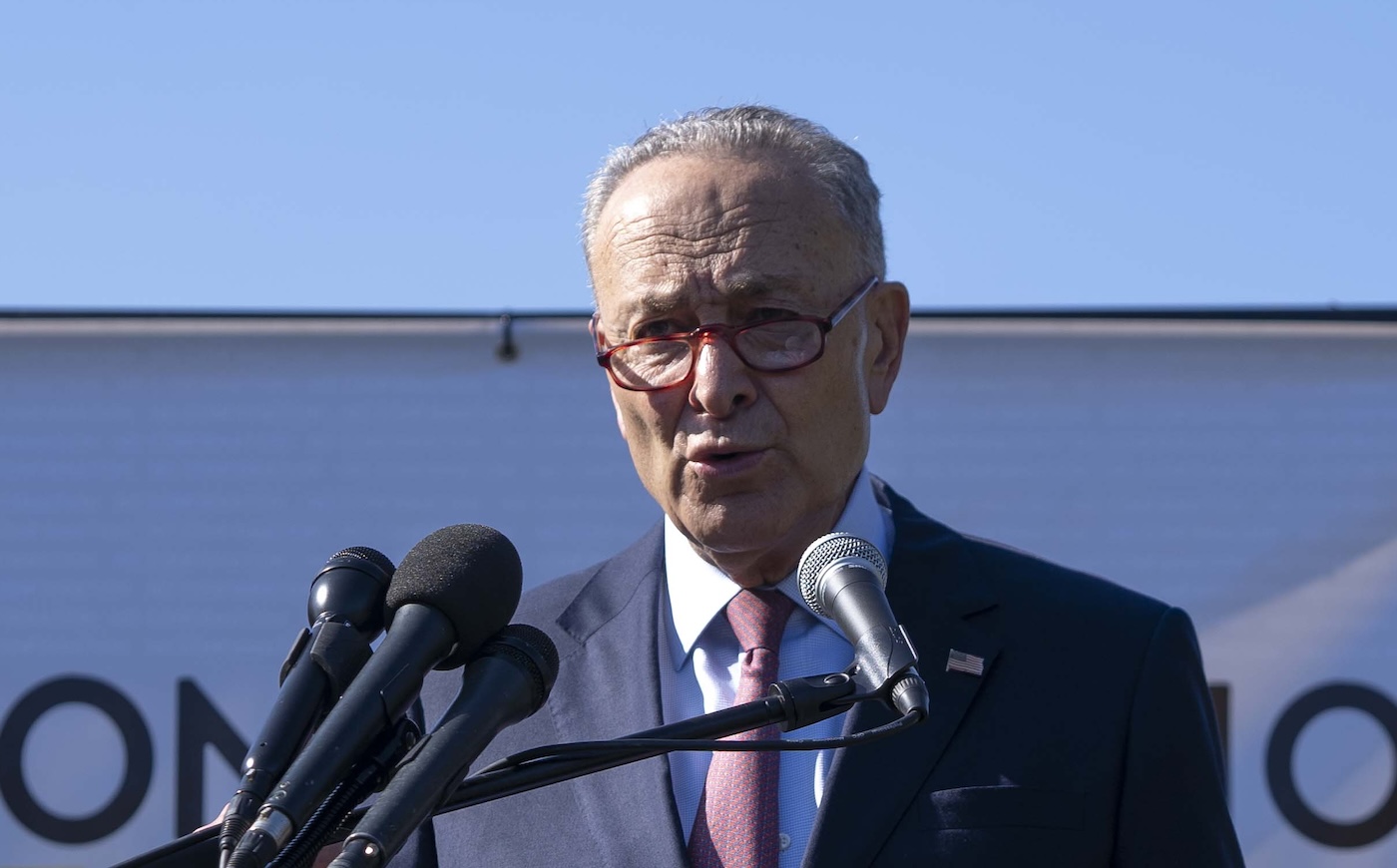
Schumer’s silence amidst the escalating controversy further complicates the narrative. While possessing the facts, he chose not to correct the misinformation, allowing the outrage to fester and the attacks on Trump to continue unabated. This inaction reveals the cynical calculus often at play in partisan politics, where even demonstrably false narratives can be exploited for political gain. This incident illustrates how misinformation, once injected into the public discourse, can take on a life of its own, shaping perceptions and fueling political divisions even after being debunked.
Beyond the CNN report, The New York Times also contributed to the politicization of the event, focusing on a perceived gender slight in Defense Secretary Pete Hegseth’s praise for the bomber pilots involved in the strike. The New York Times chose to highlight the fact that women also pilot B-2 bombers, seemingly prioritizing a point about inclusivity over the more substantive aspects of the military operation itself. This focus on a secondary detail, while potentially valid, diverted attention from the core issue and served to further politicize the event. This incident underscores the growing tendency of some media outlets to prioritize identity politics and social commentary over objective reporting, even in matters of national security.
These incidents exemplify a broader trend in media coverage, where established news organizations increasingly act as partisan actors, shaping narratives to favor one political side over another. This behavior erodes public trust in the media and contributes to a climate of skepticism and cynicism. The selective amplification of certain narratives while downplaying or ignoring others creates a distorted view of reality, making it difficult for citizens to make informed decisions about critical issues. In this instance, the focus on perceived procedural missteps and politically charged rhetoric overshadowed the substantive debate about the merits and risks of the strike itself. This kind of biased reporting ultimately serves to undermine democratic discourse and further polarize an already divided nation. The pursuit of narratives beneficial to one political party, at the expense of factual accuracy and objective reporting, ultimately harms the credibility of the press and contributes to the erosion of public trust in institutions. This dynamic creates a vicious cycle where misinformation thrives and rational discourse becomes increasingly difficult.