









Tibet Mudslide Disaster: Memorial Services Held as Death Toll Surpasses 1,000
China honors victims of catastrophic flooding while authorities crack down on misinformation and rescue teams continue desperate search for thousands still missing across the Nepal-China border region.
Mourning and Remembrance in the Himalayan Highlands
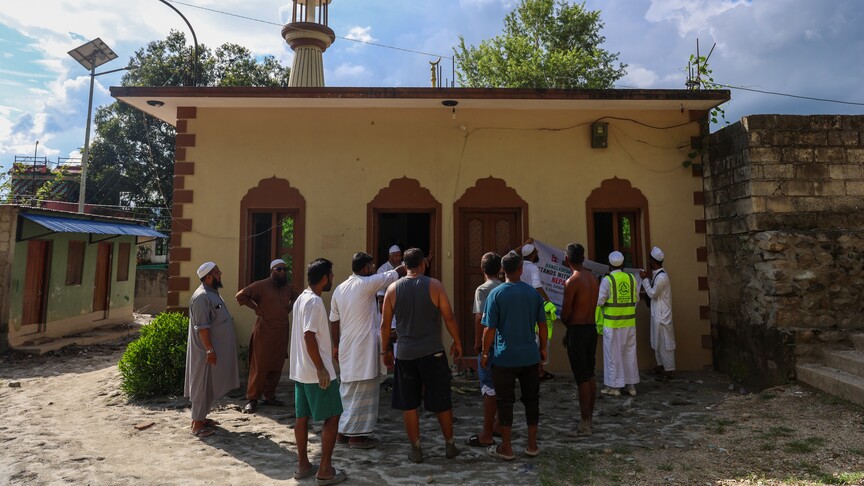
China held solemn memorial services on Tuesday morning in Gyirong County, located in southwest China’s Xizang Autonomous Region, also known as Tibet, to honor the memory of those who perished in the devastating flash floods and mudslides that struck the region on August 26. The ceremony, which took place against the backdrop of the towering Himalayas, brought together grieving families, local residents, and government officials in a collective expression of sorrow for the lives lost in what has become one of the deadliest natural disasters to hit the region in recent memory. According to the state-run Xinhua News Agency, the memorial service was a moment of quiet reflection and national mourning, as the community grappled with the scale of the tragedy that unfolded with terrifying suddenness just days earlier. The disaster has left an indelible mark on this remote mountainous region, where communities have long lived with the ever-present dangers posed by the volatile glacial environment. The ceremony in Gyirong County was particularly poignant given that this small border settlement has been at the epicenter of the catastrophe, its residents forced to confront the fragility of life in one of the world’s most geologically active and hazardous landscapes. As mourners gathered to pay their respects, the atmosphere was heavy with grief and disbelief, yet also marked by a determination to rebuild and recover from the overwhelming devastation that has fundamentally altered the character of this once-peaceful Himalayan community.
Massive Rescue and Recovery Operation Underway
In the aftermath of the disaster, Chinese authorities have marshaled substantial resources to address the ongoing crisis, with approximately 700 rescue and recovery personnel deployed to the affected areas. These teams have been working tirelessly to restore access to the Gyirong border crossing with Nepal, a vital economic artery that has been severely compromised by the mudslide’s destructive path. The operational focus has been intense and methodical, with rescue teams spending four consecutive days conducting systematic searches of a 0.7-square-kilometer area surrounding the border gate. Norbu Tsering, the deputy head of the emergency rescue headquarters and acting mayor of Xigaze City, provided detailed insight into the ongoing operations, emphasizing that road repairs continue even as search efforts remain the top priority. The use of sophisticated life detection equipment underscores the desperate hope that survivors may still be found amid the rubble and debris, even as the window of opportunity for rescue narrows with each passing hour. The border crossing itself holds strategic significance, serving as a crucial link between China and Nepal for trade, tourism, and cultural exchange, and its disruption has had immediate economic consequences for communities on both sides of the frontier. The scale of the deployment reflects the Chinese government’s commitment to doing everything possible to locate the missing and restore a semblance of normalcy to this shattered region, even as the enormous challenges of operating in such difficult terrain continue to test the limits of the rescue teams’ endurance and capabilities.
Authorities Crack Down on Misinformation
Amid the ongoing rescue and recovery efforts, Chinese authorities have taken decisive action to address a troubling secondary crisis: the proliferation of false information about the disaster on social media and online platforms. The cybersecurity police have disclosed 10 cases involving what authorities describe as online rumors related to the mudslide that devastated Gyirong Port, according to the state-run Global Times. Legal action has been initiated against individuals accused of fabricating information about the disaster, with particular attention focused on those who allegedly exaggerated casualty figures and misled the public about the true situation on the ground. The timing of these measures is significant, coming at a critical juncture when accurate information is essential for coordinating emergency response efforts and maintaining public order. Police officials have explicitly stated that the actions are intended to prevent false information from disrupting ongoing search, rescue, and relief operations, highlighting the serious concern that misinformation could hamper the effectiveness of the emergency response. The crackdown reflects broader concerns within Chinese governance about the role of social media in disaster situations, where rumors and unverified claims can spread rapidly, creating panic, confusion, and potentially dangerous misunderstandings among affected populations. The legal actions serve as a warning that authorities are prepared to take firm measures against those who would exploit tragedy for attention or engage in the reckless spread of unverified information, even as questions remain about the balance between maintaining public order and ensuring the free flow of information during crisis situations.
Understanding the Catastrophic Mechanism
The disaster that struck on August 26 has its origins in a dramatic geological event that occurred in one of the most remote and inaccessible corners of the Himalayas. A glacier on Nepal’s Mount Langtang Lirung fractured at an altitude of approximately 5,200 meters, or 17,060 feet, triggering an ice-rock avalanche of immense proportions. This initial collapse rapidly transformed into a massive debris flow that gathered momentum and material as it descended, sweeping through the narrow valleys along the Nepal-China border with devastating force. The mechanism of the disaster is characteristic of a class of hazards increasingly recognized as significant threats in high-mountain environments, where glacial instability can trigger cascading chains of events with catastrophic consequences. The fracture of the glacier likely resulted from a combination of factors, including the natural dynamics of glacial movement and potential contributions from the region’s ongoing geological activity. As the ice and rock debris thundered down the mountainside, it incorporated vast quantities of sediment, water, and vegetation, growing in volume and destructive power before inundating communities and infrastructure in its path. The debris flow demonstrated the terrifying power of these natural phenomena, capable of reshaping entire landscapes in a matter of minutes and leaving behind scenes of utter destruction that defy comprehension. The event has focused renewed attention on the vulnerability of Himalayan communities to glacial lake outburst floods and related hazards, particularly in the context of a changing climate that is altering the stability of these frozen reservoirs of water and rock.
The Human Toll and Ongoing Search Efforts
The human cost of the disaster has continued to mount as official data from both countries has been compiled and verified. Combined statistics released on Tuesday revealed the death toll had risen to 1,019, including 1,003 fatalities in Nepal and 16 in China, marking this as one of the deadliest natural disasters in the region’s recent history. Even more troubling is the staggering number of people who remain unaccounted for, with some 4,462 individuals still listed as missing across the border area, including 844 foreign nationals. This vast discrepancy between confirmed deaths and missing persons reflects the enormous challenges of accounting for all those who were in the affected areas at the time of the disaster, many of whom were likely swept away by the torrent of ice, rock, and mud or buried beneath the debris deposited by the flow. The international dimension of the catastrophe has added significant complexity to the response effort, with the presence of hundreds of foreign nationals among the missing necessitating coordination between Nepalese and Chinese authorities as well as diplomatic engagement with multiple countries whose citizens are unaccounted for. Rescue teams continue their patient and methodical searches, driven by the hope of finding survivors despite the increasingly daunting odds presented by the passage of time. The search operations are being conducted across terrain that remains hazardous and unstable, with the constant risk of further landslides and geological movement adding additional danger to the already perilous work of the rescue personnel. Every day brings new challenges, yet the commitment to continue searching for the missing remains unwavering, a testament to the enduring value placed on every human life even in the face of overwhelming tragedy.
Regional Vulnerability and the Path to Recovery
The disaster at Gyirong Port has cast a sharp spotlight on the broader vulnerability of the Himalayan region to catastrophic natural events, particularly those associated with the cryosphere and its response to changing environmental conditions. The glaciers of the Himalayas represent one of the largest stores of freshwater outside the polar regions, yet they are also among the most dynamic and potentially hazardous landscapes on Earth. Scientists and disaster management specialists have long warned that climate change is increasing the frequency and intensity of glacial-related hazards, as warming temperatures accelerate glacial retreat, destabilize ice formations, and contribute to the formation of dangerous glacial lakes that can breach with little warning. The events of August 26 serve as a sobering reminder that these are not abstract future risks but immediate and ongoing threats to the millions of people who live in the mountain valleys and downstream regions of Nepal, China, India, and Bhutan. In the immediate aftermath of the disaster, attention has naturally focused on the urgent tasks of search, rescue, and relief, yet the longer-term challenges of recovery and reconstruction loom large. The rebuilding of infrastructure, the restoration of livelihoods, and the psychological healing of traumatized communities will require sustained effort and investment over months and years. The disaster has also raised profound questions about development planning in hazard-prone regions, the adequacy of early warning systems, and the need for enhanced international cooperation in disaster risk reduction. As China and Nepal begin the long process of recovery, there is recognition that the lessons learned from this catastrophe must inform future approaches to managing the risks inherent in living in one of the most geologically active and environmentally volatile regions on Earth. The resilience of affected communities, supported by the commitment of governments and the international community, will be essential in navigating the difficult road ahead, even as the region remains permanently changed by the forces that were unleashed on that fateful August day.


