









New Delhi: Reports claiming that India is preparing to restrict social media access for everyone below the age of 18 have been dismissed as fake by government sources, ending days of speculation among parents, students and technology companies. The clarification, reported by ANI, came after a Supreme Court hearing in which the Centre was asked to examine whether existing requirements on social media platforms to follow laws protecting minors should be given a statutory form. Several news reports had interpreted the court’s observation as a sign that the government was about to impose a complete ban on social media for children under 18. Government sources rejected that interpretation, saying such reports have no basis. There is currently no confirmed decision to introduce a blanket restriction on social media access for all persons below 18 in India. The Supreme Court’s request was narrower: it asked the government to study whether child-protection safeguards in the Information Technology intermediary rules should be elevated from non-binding guidelines into a stronger legal framework. The distinction is not merely technical. A statutory obligation would make it easier to enforce rules and hold platforms accountable, while a sudden ban would raise issues around implementation, privacy, and access. The clarification has not ended the debate, but it has reset the terms of discussion: the question is not whether India has already decided to cut off under-18s, but whether the law needs to be strengthened to protect them online.
The legal context for the court’s intervention is significant. The Supreme Court was hearing a case filed by the Just Rights for Children Alliance, a group that sought safeguards for children using social media and other digital platforms. During the hearing, the bench pointed out that Indian law does not allow minors below 18 to independently enter into binding contracts. This creates a serious gap when children sign up for social media platforms, because they are effectively accepting terms of service and data-processing agreements that they are not legally capable of signing. Justice Joymalya Bagchi, one of the judges on the bench, observed that the requirement for platforms to follow legal protections for minors should not remain only a guideline. He asked Solicitor General Tushar Mehta to consider giving these protections a “statutory format” under the Information Technology intermediary rules. That request was the trigger for the false reports. But the court did not order a ban. It did not set an age limit. It did not ask the government to block all under-18s from creating accounts. It simply asked the government to examine whether current protections for minors should be legally binding rather than merely aspirational. The difference matters because guidelines are often ignored by platforms, whereas statutory obligations can be enforced through penalties, complaints, and judicial review.
The debate over children’s social media use has been intensifying because of growing concern about the kind of content young users can encounter online. Social media platforms can expose children to sexualised content, cyberbullying, harmful communities, and addictive design features that are engineered to keep users scrolling for as long as possible. Teenagers are especially vulnerable because their brains are still developing, and they are more likely to be influenced by social pressure, unrealistic images, and algorithmic recommendation systems. Parents have reported that children as young as 10 are spending hours on Instagram, watching videos late into the night, and being exposed to material that their families are unable to control. Public figures in India have also spoken out. In April, former Chief Justice of India D.Y. Chandrachud warned that legislation is needed to bring some control over what the internet can show. He said it was crucial to protect the young, to protect women against gender violence, and to protect the future of the nation. In Parliament, former Indian cricketer and BJP Rajya Sabha MP Harbhajan Singh raised similar concerns, saying that children’s futures are at risk because many kids are getting addicted to social media platforms like Instagram and are being exposed to sexualised or semi-pornographic content at a very young age. These statements reflect a broader unease that technology companies are not doing enough to keep minors safe.
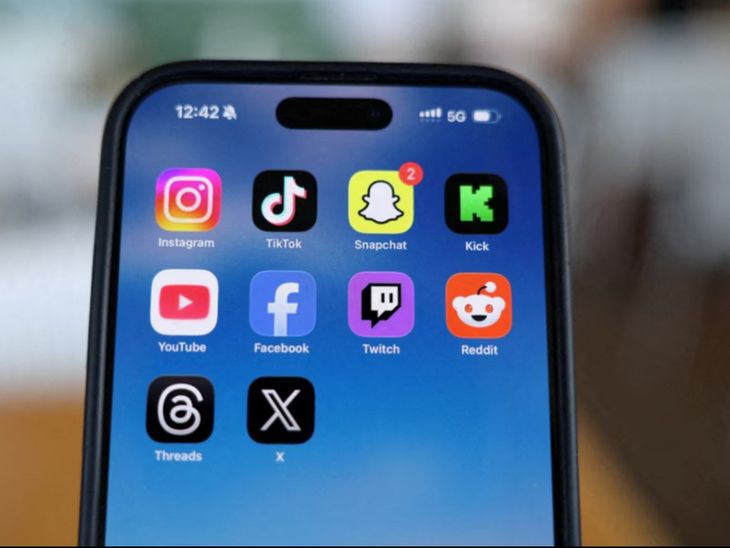
Other countries have already started moving in the direction of age-based restrictions, and their experiences are likely to influence the Indian debate. Australia has introduced one of the world’s strictest systems. Since December 10, 2025, age-restricted social media platforms in Australia have been required to take reasonable steps to prevent people under 16 from creating or keeping accounts. The rules cover major platforms including Facebook, Instagram, TikTok, Snapchat, YouTube, Reddit, X, and Threads. Children under 16 can still access some publicly available content without logging in, but they are barred from creating accounts and engaging with features that are designed to encourage excessive screen use. The Australian government has said the measure is intended to protect young people from harmful content and addictive platform design. Spain is also moving toward a 16-year age limit. The Spanish government has announced plans to prohibit social media access for under-16s and is working on legislation that would require platforms to introduce effective age-verification systems. Spain has cited concerns about addictive use, harmful content, online exploitation, and the misuse of children’s images. France is considering a threshold of 15. A French draft law notified to the European Commission seeks to restrict access to certain social-network services for minors under 15, with platforms deemed harmful to children subject to the strictest rules and other services potentially requiring parental authorisation. The European Commission has gone further with its proposed EU KIDS Act, announced in September 2026, which would create a gradual system: no social media access for children below 13; limited, parent-managed accounts for those aged 13 to under 15, with restricted features and screen time; and safer-by-design environments for 15- to 17-year-olds, who would be allowed to create their own accounts but would still receive additional protections.
Any move to restrict social media access for minors would bring both benefits and costs. On one hand, age restrictions could reduce the amount of time teenagers spend on these platforms, limit their exposure to harmful content, and reduce the influence of addictive design features such as endless scrolling, recommendation algorithms, likes, and notifications. Australia’s updated rules explicitly identify these features as potential risks, and the EU’s proposal would require platforms to design their services with children’s safety in mind from the start. On the other hand, restrictions can affect how teenagers communicate with friends, access online communities, discover information, and participate in digital spaces. For many young people, social media is not just entertainment; it is a primary means of socialising and staying connected. A blanket ban could leave them isolated, especially if their friends have moved to different platforms or if they rely on online communities for support. Age verification also raises serious privacy concerns. To enforce an age limit, platforms may need to collect sensitive personal information, such as identity documents, facial scans, or behavioural data, to estimate a user’s age. This creates new risks, including data breaches and surveillance. Australia’s privacy regulator has already issued guidance on how age-assurance systems should handle personal information, recognising that the way platforms verify age must not itself put children at greater risk. Different countries are therefore taking different approaches: some are imposing outright bans, while others are relying on parental controls, limited accounts, and platform-design requirements.
For India, the current situation remains one of uncertainty but not of imminent action. The government has made no decision to ban or restrict social media for all persons below 18. The Supreme Court’s request was to examine whether protections for minors on social media should be given a stronger statutory basis, not to impose an immediate nationwide restriction. ANI has separately confirmed through government sources that reports claiming otherwise are fake and have no basis. This does not mean the issue has gone away. The court has asked the Centre to consider the matter, and the government will have to respond. Any future policy will need to balance the protection of children with the realities of digital access, privacy, and free expression. It will also need to consider how to handle existing accounts, how to verify age without undermining privacy, and how to hold platforms accountable when they fail to comply. The Indian government may look at the Australian, European, and French models, but it will also have to adapt any solution to India’s unique circumstances, including the diversity of languages, income levels, and digital literacy. For now, the official position is clear: reports of an under-18 social media ban are fake. The debate, however, is only beginning. As more countries introduce age-based restrictions, and as concerns about children’s online safety continue to grow, the pressure on India to adopt a clearer legal framework will only increase. The court has set the process in motion, but the final shape of any rule, and whether it will protect minors without cutting them off from the digital world, remains to be seen.


