









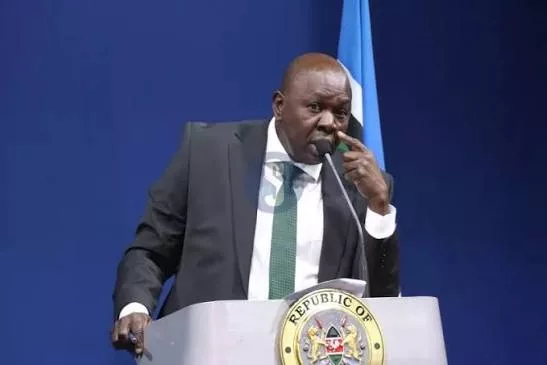
Government Spokesperson Urges Kenyans to Reject Political Propaganda and Verify Facts on Government Projects
Government Spokesperson Charles Owino has issued a strong appeal to Kenyans to remain vigilant against political propaganda surrounding government projects and programmes, urging citizens to seek accurate information from ministries, independent bodies, and relevant government agencies. Speaking during a radio interview on Bahari FM, Owino cautioned the public against falling prey to misinformation peddled by some politicians, particularly those aligned with the opposition, and insisted that the government remains ready to provide any information that citizens seek. He stressed that Kenyans should not accept fake news at face value but should counter-check claims through official government channels before forming opinions or making decisions. His comments come amid a charged political environment in which government initiatives have frequently been attacked by critics, sometimes with misleading narratives that obscure the substance and benefits of these projects. By urging citizens to demand transparency and verify facts, Owino emphasized that the government’s doors are open and that accountability is a shared responsibility between leaders and the public. He framed this appeal as essential to national progress, warning that distorted narratives could undermine development and derail public trust in institutions. His message was clear: Kenyans must be active consumers of information rather than passive recipients of politically motivated rhetoric.
Owino specifically addressed the affordable housing programme, which has been a focal point of political controversy and propaganda aimed at obscuring its true purpose and achievements. He asked Kenyans interested in the programme to disregard what politicians tell them and instead apply for housing units directly through the Boma Yangu platform, the official government portal. This direct engagement, he argued, ensures that citizens receive accurate information and are not manipulated by those seeking to profit from misconceptions. The spokesperson warned Kenyans not to be compromised by wealthy individuals who may seek to buy the units and later resell them to ordinary citizens at inflated prices. He cited a clear comparison: a three-bedroom unit under the affordable housing programme costs between Ksh3 million and Ksh4.8 million, whereas similar apartments in the private market go for as much as Ksh12 million. This price gap illustrates the tangible benefit of the programme for ordinary Kenyans, but also highlights the risk of exploitation by middlemen. Owino further revealed that between now and December, the government will make 45,000 housing units available to the market, a nationwide target that goes beyond policy rhetoric. This initiative is already driving construction, creating jobs, and stimulating economic activities across the country, thereby contributing to broader socioeconomic transformation.
On the issue of land ownership at the Coast region, Owino highlighted significant progress involving the issuance of title deeds, a matter of great historical and economic importance to coastal communities. He said the government has so far issued 381,000 title deeds since 2022, and these documents are currently benefiting coastal people in various ways, from securing family land rights to enabling access to credit and investment opportunities. The spokesperson urged families still involved in land disputes to resolve them quickly, as this would enable the government to process and issue more title deeds to rightful owners. Land has long been a sensitive issue in Kenya, particularly in the coastal region, where historical grievances and complex inheritance matters have often delayed development and caused conflict. By expediting the title deed issuance process, the government aims to address these long-standing challenges and provide certainty to landowners. Owino’s remarks reflect the administration’s broader effort to formalize land ownership and unlock the economic potential of land as an asset. He also emphasized that cooperation from the public is crucial; without the swift resolution of disputes, the processing of titles becomes more difficult, delaying the benefits that communities stand to gain.
Turning to the expected El Niño phenomenon and the nation’s preparedness, Owino said the government has intensified preparations ahead of the October–December rains through a crisis management committee that has already been established. According to him, the committee will soon engage members of the public in preparedness activities throughout the country to ensure everyone is on the same page and understands the risks and necessary precautions. This proactive approach is intended to mitigate the potentially devastating effects of heavy rains, which have in past years caused floods, displacement, and destruction of property and livelihoods. The spokesperson explained that Coast Guard personnel are already working hand-in-hand with fishermen and hotel operators along the coastline to create awareness about ocean conditions, including when it is safe or dangerous to venture into the sea. This collaboration is part of a broader strategy to protect lives and property, especially in vulnerable coastal areas. Owino’s update underscores the government’s commitment to disaster preparedness and its willingness to coordinate with local communities to ensure timely and effective responses. It also highlights the value of local knowledge and partnership in managing natural risks, particularly in regions where weather-related hazards are recurrent.
Owino also spoke about the Social Health Authority (SHA), which has seen a dramatic increase in enrollment since its rollout. He revealed that registration has grown from about seven million NHIF members prior to the SHA rollout to 31 million registered members under the new health authority. This surge represents a significant expansion in health coverage and demonstrates public confidence in the government’s healthcare reforms. The spokesperson highlighted several benefits of the new scheme, including the emergency, chronic and critical illness fund, as well as the hospital development fund (HDF), which together are designed to protect families from overwhelming medical expenses. He provided a concrete example: a person contributing sh6,000 annually could have a hospital bill of approximately sh400,000 covered under the scheme. This illustration is meant to reassure Kenyans that the health authority is not merely an administrative change, but a substantive improvement in social protection. Owino emphasized that such coverage can make the difference between financial ruin and stability for ordinary families faced with serious health crises. He framed the new health authority as a critical component of the government’s social safety net, ensuring that no Kenyan should have to choose between health and livelihood due to medical costs.
In conclusion, Owino’s radio address on Bahari FM encapsulated the government’s broader communication strategy: to counter misinformation, promote transparency, and engage citizens directly on key initiatives. From housing and land reforms to disaster preparedness and healthcare expansion, the spokesperson reaffirmed that the government is committed to delivering tangible benefits and ensuring citizens have access to accurate information. His call to action for Kenyans to seek facts from official sources is not merely a defensive response to critics, but a foundational principle for democratic accountability and participatory development. By directing the public to platforms such as Boma Yangu and official government agencies, Owino seeks to create an informed citizenry that can resist disinformation and participate meaningfully in national programs. He also warned against external attempts to exploit public ignorance, whether through inflated resale of housing units or similar schemes. Ultimately, his message was one of empowerment through knowledge, resilience through preparation, and trust through transparency. As Kenya continues to implement major development projects and prepare for environmental and social challenges, the role of accurate information and civic vigilance remains essential. Owino’s remarks serve as a reminder that sustainable progress relies on a shared commitment to truth, cooperation, and vigilance among all Kenyans.


