







UK Launches National Centre for Information Defence to Counter Disinformation and Deepfake Threats
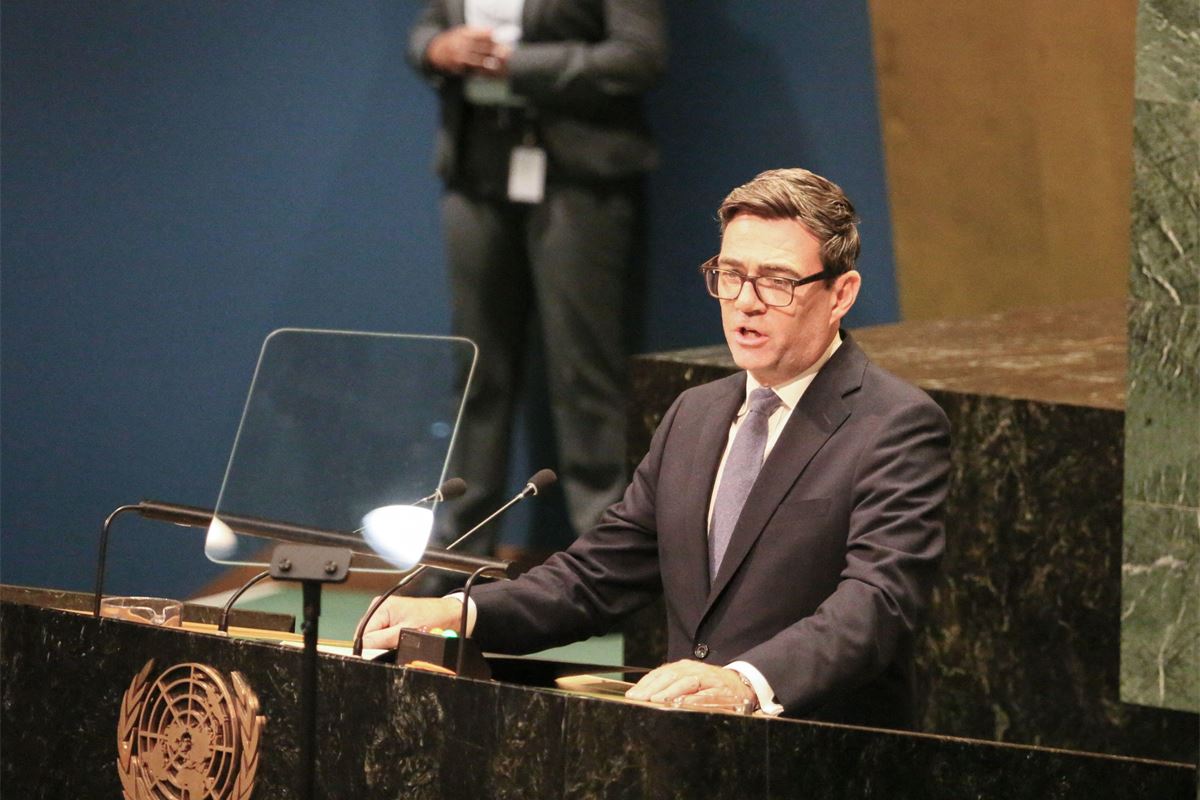
Prime Minister Andy Burnham has asked security chiefs to establish a new National Centre for Information Defence, a dedicated unit tasked with protecting British interests from disinformation, deepfakes and other hostile information operations. The announcement was made during his address to the United Nations General Assembly on 22 September, where he warned that the United Kingdom and its allies have been subjected to an “industrial-scale assault” on the information environment. In his speech, Burnham said the new centre will “detect, attribute and disrupt these kinds of hostile state information attacks.” He described Russia in particular as a persistent and aggressive actor, using every available tool to spread lies and manipulate public opinion. The creation of the centre represents a major step in the UK’s efforts to defend its democratic institutions and social cohesion against a threat that has grown sharper with advances in artificial intelligence and the proliferation of online platforms. The Prime Minister’s remarks were also notable for their directness, naming Russia as a principal source of the problem and framing disinformation as a national security challenge akin to espionage or cyber-attack.
During his UN speech, Burnham set out the scale and nature of the threat. He said that Russian agencies have used bots, fake websites and falsified newspaper articles to spread disinformation, and have even forged the branding of 28 British organisations, including universities and the BBC, to make their false content appear credible. They have also amplified far-right narratives, exploiting social and political divisions within the UK and other Western countries. The Prime Minister claimed that the Kremlin spends around £1.3 billion each year on manipulating information. He warned that this is not a peripheral or technical matter but an “insidious campaign” that reaches into people’s homes and warps their sense of country and community. The speech reflected growing official concern that hostile states are waging a continual information war against democratic societies, using deception and confusion as their primary weapons. This campaign is designed to erode trust in institutions, undermine elections, inflame social tensions and weaken the collective will to respond to external threats. According to Burnham, the new National Centre for Information Defence will play a central role in pushing back against these operations, by strengthening the UK’s ability to detect foreign interference and expose those responsible.
The Prime Minister also highlighted the role of emerging technology, particularly artificial intelligence, in magnifying the threat. He said that AI will multiply the danger posed by disinformation, allowing hostile actors to produce deepfakes and synthetic media at scale. Deepfakes—realistic but entirely fabricated videos, audio recordings and images—are already being used to impersonate political leaders, spread panic, and damage reputations. The rapid development of generative AI tools means that nearly anyone can now create convincing fake content with little effort or cost. For governments, this presents a daunting challenge: by the time false content has been identified and debunked, it may already have been viewed millions of times. The new centre is therefore expected to develop sophisticated detection capabilities, working with intelligence agencies, technology companies and academic experts to stay ahead of these threats. It will also focus on attribution—determining who is behind particular disinformation campaigns and holding them accountable. This is a crucial function, because ambiguity and anonymity currently allow hostile states to operate without consequences. By naming and shaming the perpetrators, the UK hopes to raise the cost of such operations and deter future attacks.
The institutional design of the National Centre for Information Defence appears to be based on a cross-government, multi-agency approach. According to the initial announcement, the centre will work alongside intelligence agencies, government departments, law enforcement and social media companies to draw together expertise and best practice. This reflects an understanding that no single actor can combat disinformation alone. Social media platforms, in particular, play a pivotal role, as they are the primary distribution channels for false narratives. The centre will also look at ways to strengthen the country’s ability to build resilience in communities, helping citizens to identify and combat disinformation themselves. This focus on community cohesion is seen as essential for preventing hostile actors from exploiting fractures in society. A distorted narrative about Britain—promoted by foreign enemies—can take hold if people are isolated, disaffected or distrustful of mainstream information sources. The centre will therefore support local efforts to promote media literacy and encourage cohesive democratic norms. Initial work on the project is being led out of the Office for the Prime Minister and Cabinet, a new government body established by Burnham in July as part of his reorganisation of the centre of government. This suggests that the Prime Minister regards the new unit as a priority, and that it will have direct access to the highest levels of government.
The Prime Minister’s announcement followed significant pressure from Members of Parliament for a more coordinated and institutionalised response to disinformation. MPs had previously called on ministers to create a “National Counter Disinformation Centre” to protect UK democracy from malign actors at home and abroad. In March, the Foreign Affairs Committee published a report warning that the information environment is “increasingly being weaponised by malign state actors such as Russia, China and Iran and non-state actors like Daesh to sow distrust, undermine cohesion, and erode confidence in democratic institutions and norms.” The committee recommended that any new centre should be placed on a statutory footing, be subject to parliamentary oversight, and be directed to understand, identify and combat foreign information manipulation and interference campaigns pitched against the UK. It also argued that the centre should model itself on successful examples from other European countries, including Sweden’s Psychological Defence Agency, Ukraine’s Center for Countering Disinformation, and France’s Vigilance and Protection against Foreign Digital Interference service. These comparisons are significant, because they demonstrate that the UK is not alone in facing this threat and that effective responses are possible. Sweden, for example, has long treated psychological defence as a core part of its national security strategy, while Ukraine has built a highly effective counter-disinformation operation in response to Russian aggression.
The decision to unveil the new centre at the United Nations underscores the international dimensions of the challenge. Disinformation is inherently cross-border, and no country can fully protect itself without cooperating with allies and partners. The Prime Minister’s remarks are likely to be followed by efforts to strengthen intelligence-sharing, joint attribution and coordinated responses with other democracies. He has also framed the issue as a global democratic challenge, arguing that the integrity of information is as important as the integrity of borders. The new National Centre for Information Defence will therefore not only defend the UK but also contribute to allied efforts to expose hostile information operations and build a more resilient information environment. The path ahead will not be easy. The same AI technologies that offer enormous benefits to society also provide powerful new tools for those who wish to deceive and destabilise. The centre will need clear powers, robust governance and a sustainable funding model, along with close engagement with civil society and independent media. If it is successful, it could become a model for other democracies struggling to respond to the rapidly evolving threat of disinformation. If it fails, the consequences for public trust and democratic resilience could be severe. The Prime Minister has made clear that the United Kingdom is now fully engaged in the fight for the information space; the world will be watching how that fight unfolds.


