









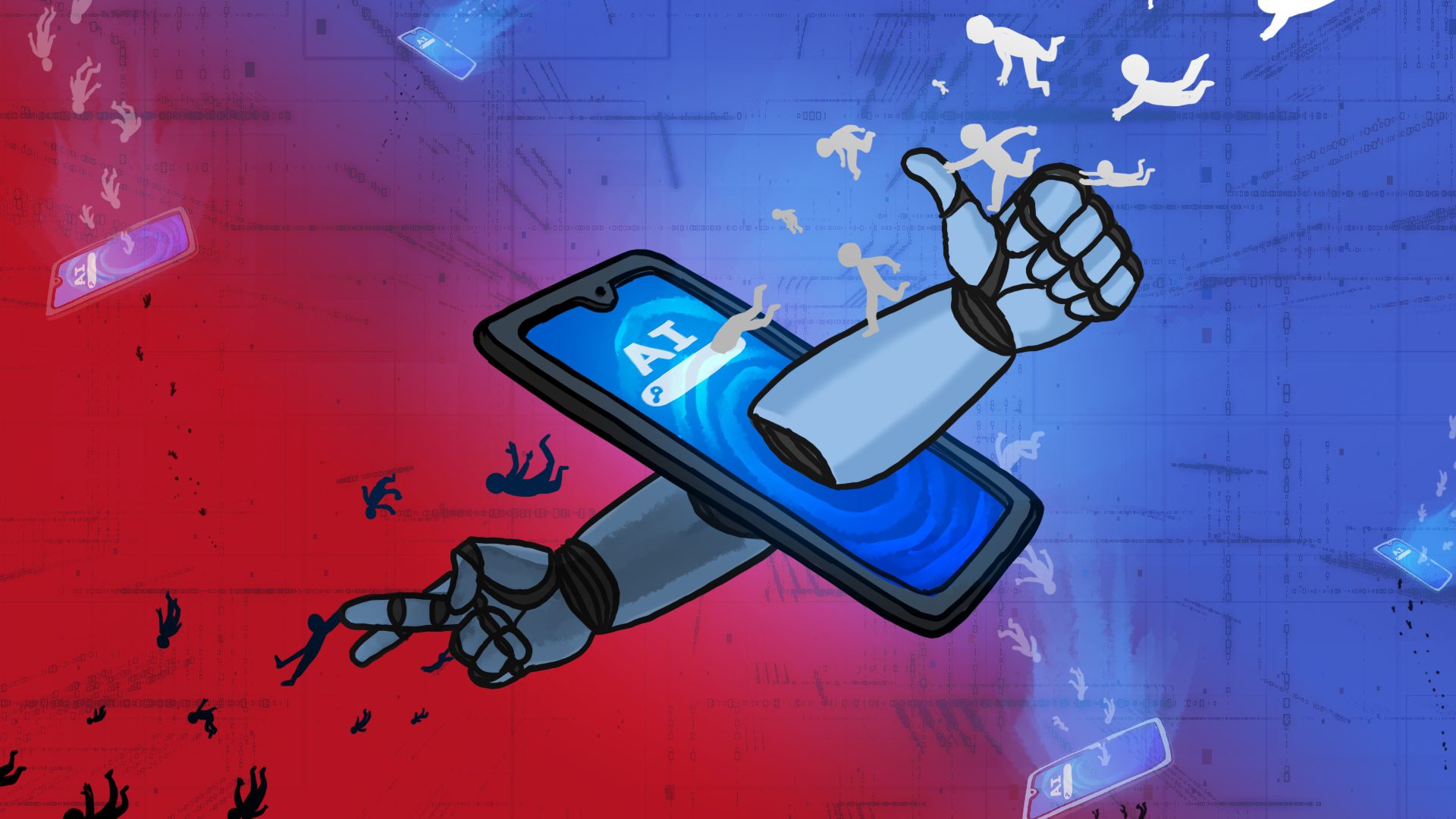
The Rise of AI and the Erosion of Truth
The rise of artificial intelligence has unexpectedly given humanity a conversation topic more engaging than football, captivating us from dinner tables to boardrooms with the magic of tools like ChatGPT, Claude, and Gemini. While casual chats marvel at these tools’ tricks, more pretentious forums ascend into heady discussions about geopolitics, labor restructuring, the energy challenge, and the radical mutation of warfare. Yet, despite this fascination, striking little reflection is devoted to AI’s immense implications for misinformation—arguably the most urgent and complex challenge of our era. That this issue is glossed over in popular discourse is an alarming symptom in itself, a disturbing paradox that directly feeds the mechanics of disinformation. We have become so habituated to the noise of fabricated realities that the notion of a shared, verifiable truth no longer seems to hold universal relevance, and the absence of collective outrage validates the premise of the manipulators. The World Economic Forum’s Global Risks Report starkly places AI-driven misinformation among the most severe short-term threats to global stability, yet this warning fails to cut through the general mystique surrounding the technology. The reason is plain: artificial intelligence facilitates the production of fake images, videos, audio, and text at a speed, cost, and scale unimaginable just a few years ago, and it personalizes this deception to exploit the psychological, emotional, and ideological profiles of targeted groups. While the average user marvels at a stunning deepfake or a fluent AI summary, they fail to grasp that the infrastructure is already in place to erase the line between reality and fabrication, making the current avalanche of falsehoods look like child’s play compared to what is imminent. The convenience of the tool masks a fundamental threat, and our failure to confront this paradox signifies a cultural surrender. This is not just a technological issue; it is a test of whether we can salvage the very concept of factual integrity before it becomes a historical artifact, where the silence is an acknowledgment that we have accepted the high-priced convenience of lies over the laborious demands of truth.
The Industrialization of Falsehood and Its Alarming Scale
The stark reality of this era is that misinformation has transitioned from artisanal craftsmanship to industrial manufacturing, and the evidence is impossible to ignore. The anecdote offered by Philippine Nobel Peace Laureate Maria Ressa is a profound illustration of this transformation. In a private conversation, she displayed to the author the relentless torrent of insults, humiliations, and sexual photomontages she receives—over 500,000 malicious messages documented by the International Center for Journalists. The staggering volume and cost of such an orchestrated attack were previously prohibitive; today, a malevolent actor with minimal resources can generate a similar avalanche within hours. What once required elite technical expertise and generous funding can now be accomplished by a single individual using a public generative model. Furthermore, personalization algorithms allow these campaigns to be tailored with surgical precision, targeting vulnerable demographics with bespoke narratives designed to stir specific emotional or ideological reactions. The consequences are already visible: fake images are broadcast as breaking news before verification, manipulated audio passes as authentic testimony, and content fabricated to inflame a particular political emotion circulates with viral velocity. The problem, therefore, is not merely the existence of lies; it is the profound asymmetry between the velocity of fabrication and the sluggish speed of societal verification routines. We are building an infinite highway for falsehood while maintaining a dirt path for fact-checking. This asymmetry ensures that by the time a debunker publishes a retraction, the fabricated narrative has already settled into the cognitive frameworks of millions. It undermines the bedrock assumptions of a liberal society—that outcomes can be measured, problems diagnosed, and communities united on a common ground of empirical reality. When algorithms maximize engagement over accuracy, they methodically dismantle the shared premise of reality that makes democratic deliberation possible. We are witnessing the birth of a post-verification world where the answer to “Is it true?” is perpetually deferred in favor of “Will it trend?”. The machinery of credible discourse is being replaced by an assembly line of tailored deception, and the few journalistic efforts trying to dismantle the machinery are fighting a rearguard action against an opponent that learns and iterates far faster than they can adapt.
The Algorithmic Architecture and Systemic Erosion of Public Reason
This new ecology of deception does not survive in a vacuum; it thrives within an architecture explicitly designed by multinational technology conglomerates to optimize for attention rather than truth. The core business model of these platforms is to maximize user engagement and dwell time, metrics that inherently reward content which is sensational, emotionally charged, simplified, and conflict-laden. Consequently, crucial news and nuanced analysis are routinely drowned out by viral snippets, out-of-context clips, and deliberately provocative content. The algorithms are not neutral dispensers of information; they are sophisticated curation engines that learn from our deepest biases and amplify the most efficient emotional triggers. In this arrangement, what is important competes in the same visual and cognitive space as what is merely trendy; explanation competes with reactive commentary, and professional criteria yield to data-driven preference. Over time, this commercial logic fosters a profoundly polarized public sphere. Populist movements, often spearheaded by figures who intuitively understand these algorithmic currents, rise not on the strength of their proposals but on the accuracy of their emotional calibration to the masses’ anxieties and grievances. The result is a political landscape defined not by thoughtful policy debate but by the algorithmic amplification of latent societal anger. Misinformation, consequently, has ceased to be an unintended malfunction—a software bug to be patched—and has evolved into the core operating system of the information economy. It constitutes a deliberate structural design aimed at influencing, confusing, and eroding the social fabric. Crucially, it rarely confronts the truth head-on; instead, it waters it down, drowning it in a sea of equally-weighted opinions and alternative facts. This dilution is infinitely more dangerous and effective than overt propaganda because it renders the search for truth futile and wearying. When everything is presented with equal confidence, the audience retreats into tribal confirmation, selecting the narratives that feel most comfortable. The external framework of reality collapses, and authority is replaced by algorithmic popularity. Until democracies recognize that their citizens are not consumers but subjects of a centralized, unaccountable digital authority, they will remain helpless against the slow poisoning of their public reason.
Journalism’s Existential Crisis and Moral Reckoning
For the journalistic profession, this transformation constitutes a moral reckoning that dwarfs all previous economic and technological upheavals. The author’s four years of deep conversations with 140 journalists, spanning wealthy nations to deadly conflict zones, major outlets to intrepid independent reporters, reveals a haunting consensus. The traditional mandate of journalism—to report what happens—has been superseded by the brutal challenge of making that reporting matter. In the past, the media served as the chokepoint of information, deciding what was relevant, providing context, cross-checking facts, and helping to construct a functional public conversation. That gatekeeping role has evaporated. Today, publishers are competitors against the entire digital universe for a sliver of flagging attention. The new rules of distribution have severed the tie between relevance and visibility; a meticulously researched investigative report can vanish into obscurity while a fabricated, emotive social post enjoys massive global reach. Journalists find themselves trapped in a lethal paradox: they require traffic to sustain their operations, yet to generate that traffic they must often chase the very sensationalism and immediacy that undermines their credibility. The distinction between a news organization and an aggregator blurs daily. This existential pressure prompts alarming trade-offs—publishing unverified rumors for speed, flattening complexity for digestibility, or granting undue prominence to provocateur voices merely for their engagement metrics. The interviews paint a portrait of a profession under siege, constantly second-guessing its integrity in an environment deliberately engineered to punish slowness and nuance. It is no longer sufficient to be accurate; content must be assertive, emotionally resonant, and instantly shareable, forcing journalists to dabble in the same psychological tactics as their deceivers. This is the moral test: can professional media maintain rigorous standards when the digital economy provides every financial incentive to lower them? Can they protect credibility when the algorithms voraciously consume anything that shocks or outrage? The answer will determine whether society retains any credible institutions left to mediate reality or cedes the field entirely to algorithmic chaos.
Harnessing AI for Quality and Restoring Core Journalistic Values
Despite the grim forecast, the intersection of AI and journalism is not necessarily a zero-sum battle for annihilation. If wielded with intentionality, technological innovation offers formidable tools that can elevate the craft to unprecedented heights. Across newsrooms globally, we already witness data extrapolation that deciphers complex government documents, compelling visual narratives generated from raw statistics, and automated transcription—or even initial sorting—that unburdens reporters from tedious labor. However, the fundamental economic and ethical distinction lies in how the profession deploys these engines: as a substitute for human judgment or as an extension of it. If media organizations deploy AI merely to multiply output, accelerate clickbait production, and automate tabloid sensationalism, they are digging their own grave. Yet, if they deploy them to augment investigative depth, enable deeper contextual analysis, and accelerate verification pipelines, they can reclaim a vital competitive edge. The core value proposition of journalism—original sourcing, tenacious investigation, editorial discretion, a named and accountable author—remains utterly irreplaceable by generative text. A machine cannot replicate the risk-taking or moral weight of a human investigator. The path forward is a resolute investment in these deeply human assets: the editorial judgment to know which data is important, the ethical backbone to resist falsified narratives, and the contextual wisdom to relate isolated events to larger historical currents. We must construct digital fortresses around these intangible strengths, training algorithms to serve the verification process rather than override it. Journalists must become cyber-literate analysts who know precisely how deepfakes are constructed to better debunk them. The industry must pivot sharply from obsessing over shrinking audience metrics to cultivating a resilient analytical trust, a brand of credibility highly resistant to algorithmic manipulation. This requires institutional support, investment in trained personnel, and a resounding rejection of the race to the bottom.
The Stakes for Democracy and the Urgent Call to Action
The stakes involved in this cognitive arms race could not possibly be higher. A democratic society, historically, has shown immense resilience, surviving economic depressions, armed conflicts, and public health cataclysms, as long as its members continue to share a baseline of accepted objective facts. However, the very foundation of that shared reference is disintegrating. When a significant portion of a population no longer agrees on the reality of a scientific consensus, an election result, or even a recorded video, the capacity for collective problem-solving dissipates into tribal monologues. We lose the ability to confront pandemics, plan infrastructure, or hold leaders accountable because our narratives diverge irreconcilably. The phenomenon demands an urgent, global, multi-stakeholder response. Tech platforms can no longer plead ignorance; they must be held accountable for design choices that favor divisiveness over accuracy, and regulatory frameworks must evolve to treat online manipulation as a virulent threat to public health. Educational institutions must prioritize critical media literacy as a core subject, equipping future generations with the cognitive reflexes to question what they see on a screen. The journalistic profession—as exemplified by organizations sharing for World News Day—is tasked with finally sounding the alarm that they have been whispering for years. The fight is not merely about catching a few fake posts; it is a historic battle to preserve the very architecture of informed democracy. If we allow algorithms to dictate what we see, what we believe, and ultimately, who we are, we forfeit more than the news. We forfeit the agency to identify shared problems, the capacity to deliberate over solutions, and the ability to govern ourselves autonomously. The choice is stark: we either reclaim the instruments of truth-building, investing heavily in independent verification, transparent user education, and algorithmic accountability, or we accept a future of sovereign numbness, where power flows to those who can most effectively master the machinery of manufactured consent. We must move from passive observation of the technological marvel to the decisive defense of the human right to know the truth.


