


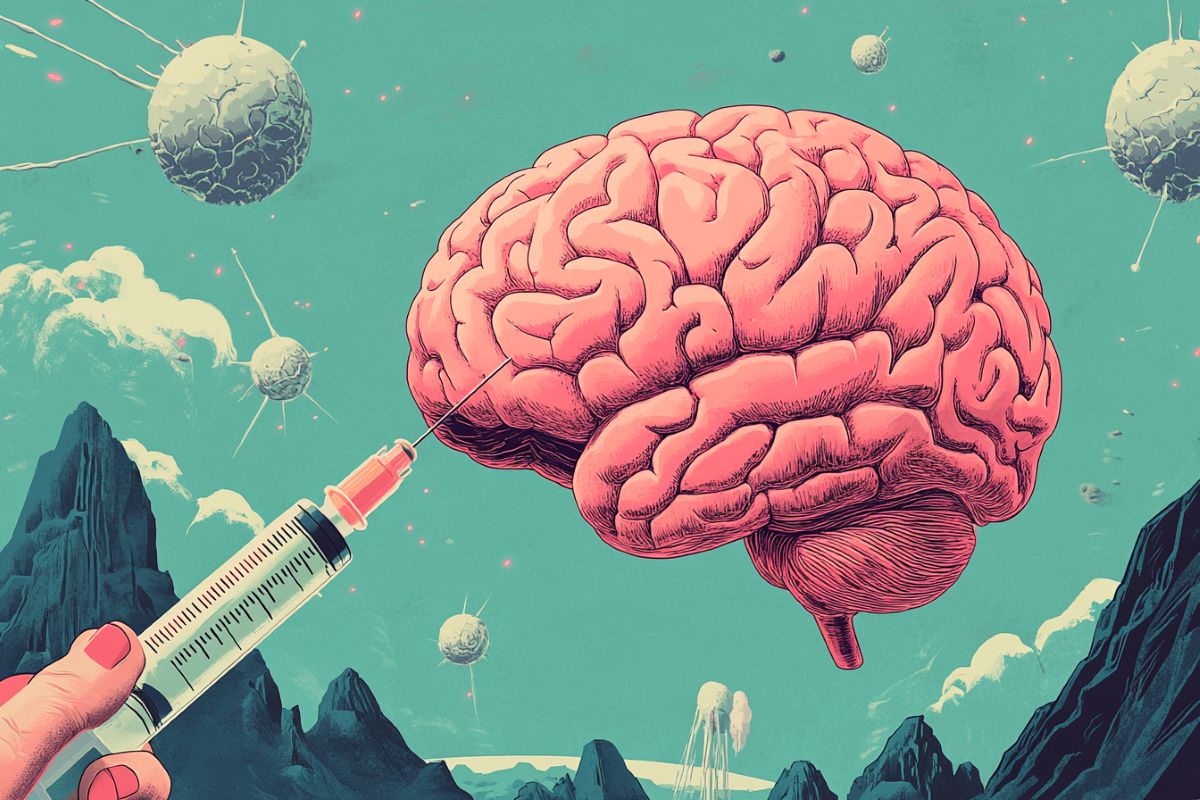
Boosting Resilience Against Misinformation: Psychological "Booster Shots" Offer Long-Term Protection
In an era saturated with information, the ability to discern truth from falsehood has become paramount. Misinformation, often spread rapidly through online platforms, poses a significant threat to informed decision-making in various spheres, from public health to political discourse. Fortunately, new research offers a promising solution: targeted psychological interventions that act as “booster shots” for the mind, enhancing long-term resistance to misleading information.
A groundbreaking study published in Nature Communications reveals that short, memory-focused interventions can significantly bolster individuals’ ability to identify and reject misinformation over extended periods. These interventions, akin to medical booster shots that reinforce immunity, strengthen the cognitive defenses against the insidious influence of false narratives. The research team, comprising experts from leading universities, conducted five large-scale experiments involving over 11,000 participants to evaluate the durability of these interventions and explore methods to amplify their effectiveness.
The study investigated three primary modes of misinformation prevention: text-based interventions, where participants engaged with preemptive messages outlining common misinformation tactics; video-based interventions, utilizing short educational clips to expose the manipulative techniques employed in misleading content; and gamified interventions, an interactive approach enabling individuals to practice spotting misinformation tactics by creating their own fictional fake news stories within a safe, controlled environment. While all three methods demonstrated initial efficacy, their impact waned over time, raising concerns about their long-term utility.
However, the introduction of memory-enhancing “booster” interventions proved instrumental in extending the protective effects. These boosters, consisting of follow-up reminders or reinforcement messages, significantly prolonged the duration of misinformation resistance. The research revealed a direct correlation between the longevity of resistance and participants’ ability to recall the initial intervention. Crucially, boosters that focused on memory enhancement were demonstrably more effective than those aimed at increasing motivation to resist misinformation, highlighting the central role of memory in combating falsehoods.
This research underscores the critical importance of memory in the fight against misinformation. The study’s findings suggest that by incorporating memory-boosting techniques into public education and digital literacy programs, we can equip individuals with long-lasting cognitive tools to navigate the complex information landscape effectively. The ability to retain these skills over time is essential for building a resilient society capable of resisting the persistent threat of misinformation.
The implications of this research are far-reaching, offering a practical and scalable approach to combating misinformation across various domains. The versatility of the interventions, effective across text, video, and gamified formats, underscores their potential for broad implementation. This adaptability allows for tailored interventions to suit diverse learning styles and information consumption habits. By integrating these insights into public information campaigns, policymakers and social media platforms can collaborate to foster a more informed and discerning public, better equipped to distinguish fact from fiction.
The Memory-Misinformation Connection: Why Recall Matters in Combating Falsehoods
The study’s findings illuminate the crucial link between memory and effective misinformation resistance. The ability to recall the core principles of identifying misleading information – such as recognizing logical fallacies, evaluating source credibility, and considering contextual factors – is fundamental to applying these skills in real-world situations. The memory-focused boosters, by reinforcing these principles, act as a cognitive refresh, ensuring that the learned skills remain readily accessible when encountering potentially false or misleading information.
This emphasis on memory aligns with established cognitive science principles. Memory plays a crucial role in learning and decision-making, and the ability to retain and retrieve relevant information is essential for effective reasoning and critical thinking. By strengthening memory retention of misinformation-resistance techniques, the booster interventions empower individuals to critically evaluate information encountered in their daily lives, making them less susceptible to manipulation and deception.
Scaling Up the Fight Against Misinformation: Practical Implications for Education and Policy
The study’s findings have significant practical implications for developing and implementing effective anti-misinformation strategies. The scalability of the interventions, demonstrated through their efficacy across various formats, opens doors for widespread implementation in educational settings, public awareness campaigns, and even integrated into social media platform designs.
In educational contexts, incorporating memory-enhancing techniques into media literacy curricula can equip students with the critical thinking skills necessary to navigate the complexities of the digital age. Public awareness campaigns, informed by these findings, can develop targeted interventions that address specific misinformation vulnerabilities within different communities. Social media platforms, playing a critical role in information dissemination, can integrate these strategies to promote responsible information sharing and empower users to identify and report potentially harmful misinformation.
Collaboration is Key: A Multi-Faceted Approach to Building a More Resilient Information Ecosystem
Addressing the pervasive challenge of misinformation requires a collaborative effort, engaging researchers, policymakers, educators, and technology platforms. By translating research findings into practical strategies, we can collectively build a more resilient information ecosystem.
Policymakers can play a vital role in supporting the development and implementation of evidence-based anti-misinformation programs. This includes funding research, promoting media literacy initiatives, and working with social media platforms to develop responsible information sharing practices. Educators can integrate these findings into curricula, empowering students with the critical thinking skills to discern truth from falsehood. Technology platforms, as key players in the information landscape, can leverage their reach and influence to promote responsible information consumption and combat the spread of misleading content.
By working together, we can create a more informed and discerning public, better equipped to navigate the complexities of the digital age and make informed decisions based on accurate and reliable information. The fight against misinformation is a collective responsibility, and the insights provided by this research offer a valuable roadmap towards building a more resilient and informed society.