


Israeli Operations in Southern Syria: A Narrative of Disputed Claims and Omissions
Tensions flared in southern Syria at the end of August 2025, as a series of reported Israeli operations triggered a flurry of accusations and counter-claims. The BBC’s coverage of these events, however, has been marred by inaccuracies, omissions, and a reliance on Syrian regime narratives, raising questions about the completeness and impartiality of the information presented to its audience.
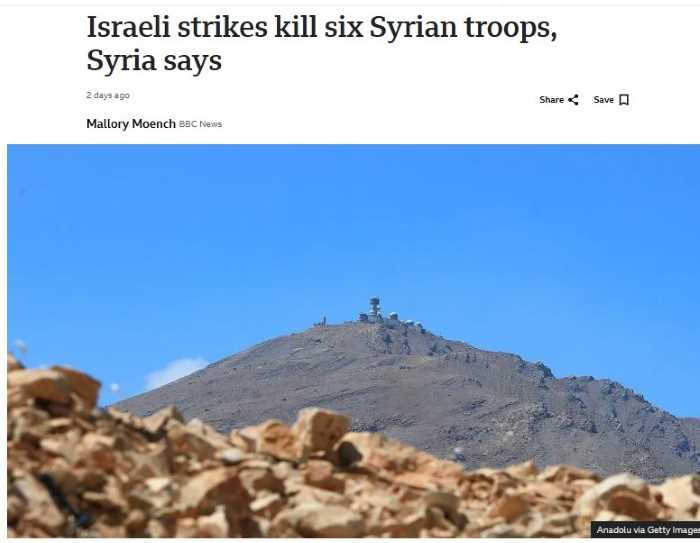
The initial BBC report, published on August 28th, cited Syrian government claims of Israeli drone strikes near Damascus that killed six Syrian soldiers. The report characterized these strikes as a violation of international law and a breach of Syrian sovereignty. Further reports emerged of subsequent Israeli airstrikes and an airborne landing at a former military site near Kiswah, south of Damascus. The accounts of the landing varied, with Syrian state media claiming the details were undetermined, while a Syrian military source told Al Jazeera that dozens of Israeli soldiers with search equipment remained at the site for over two hours.
The BBC’s portrayal of these events relied heavily on Syrian state-controlled media and other sources, without providing crucial context or alternative perspectives. Notably, the report failed to mention the prior use of the “former military site” near Kiswah by Iranian forces and Hezbollah, a critical piece of information that sheds light on potential Israeli motives. This omission, despite previous BBC reporting on the subject, deprived the audience of a complete understanding of the complex dynamics at play in the region.
Adding to the concerns about accuracy, the caption accompanying a photograph in the BBC report misidentified Mount Hermon as an Israeli army checkpoint in Damascus. This geographical error highlights a lack of fact-checking and editorial oversight, further undermining the credibility of the reporting.
Two days after the initial reports, the Israeli Defense Forces (IDF) confirmed their involvement in the operations, stating that they had arrested several individuals suspected of planning attacks against Israeli forces. The IDF clarified that the operations involved soldiers from the 226th Brigade and Unit 504, operating in multiple locations. This official confirmation from the Israeli side contradicted the initial Syrian narrative of unprovoked attacks and highlighted the importance of seeking multiple sources for verification.
The BBC’s coverage also included a brief account of a previous incident in July 2025, where Israel bombed Syrian government forces in the Suweida region. However, this account omitted crucial details about the massacres and abductions of Druze and Christian residents in the area and the involvement of Syrian regime forces. This omission significantly skewed the narrative and failed to provide the audience with a comprehensive understanding of the violence and sectarian tensions in that region.
The BBC’s reliance on Syrian government sources, the lack of corroboration from independent sources, and the omission of critical context raise serious concerns about the objectivity and accuracy of its reporting on the events in southern Syria. By presenting a narrative heavily influenced by one side of the conflict, the BBC risks misleading its audience and perpetuating a skewed understanding of the complex realities on the ground.
The lack of updates to the initial BBC report, even after the IDF confirmation, further compounds the issue. The absence of Israeli perspectives and the failure to incorporate crucial contextual information contribute to an incomplete and potentially misleading account of the events. Journalistic integrity demands a commitment to accuracy, balance, and a comprehensive presentation of all relevant facts. In this case, the BBC’s reporting fell short of these standards, leaving the audience with a partial and potentially distorted understanding of the complex dynamics in southern Syria. This underscores the importance of critical media literacy and the need for audiences to seek diverse sources of information to form informed opinions on complex geopolitical issues. The omission of the Iranian and Hezbollah presence at the former military site, in particular, raises concerns about the potential for the BBC’s reporting to perpetuate a narrative that favors the Syrian regime’s perspective.
The inaccuracies in the BBC’s reporting, such as the misidentification of Mount Hermon as a checkpoint in Damascus, further erode trust in the organization’s commitment to factual accuracy. While mistakes can happen, the failure to correct such errors promptly raises questions about the BBC’s internal fact-checking processes and its dedication to upholding journalistic standards.
The BBC’s reporting also omitted key details about the events in Suweida in July 2025, where Israeli strikes targeted Syrian government forces. The failure to mention the massacres and abductions of Druze and Christian residents and the involvement of Syrian regime forces creates a skewed narrative that obscures the full context of the violence in the region. This selective reporting raises concerns about the BBC’s impartiality and its potential to inadvertently promote a specific narrative.
The lack of balance in the BBC’s reporting is particularly concerning given the complex and sensitive nature of the Syrian conflict. By prioritizing the Syrian government’s perspective and omitting crucial information about the involvement of other actors, the BBC risks contributing to misinformation and hindering public understanding of the multifaceted dynamics at play.
The ongoing conflict in Syria demands rigorous and impartial reporting that provides a comprehensive and nuanced understanding of the events unfolding on the ground. The BBC, as a prominent news organization, has a responsibility to uphold the highest journalistic standards and to provide its audience with accurate, balanced, and context-rich reporting. The documented issues in its coverage of the recent Israeli operations in southern Syria raise serious questions about the organization’s fulfillment of this responsibility and underscore the need for greater scrutiny and accountability in its reporting on complex geopolitical issues. The audience deserves a more complete and nuanced understanding of the situation, one that acknowledges the complexities of the conflict and avoids perpetuating narratives that favor one side over another. The BBC’s reporting on the Israeli operations in Syria serves as a reminder of the importance of critical media literacy and the need for consumers of news to engage with information from multiple sources and perspectives. Only then can a more informed and balanced understanding of complex global events be achieved.