








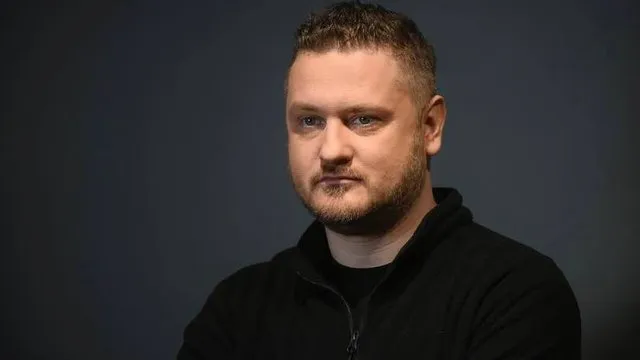
Andriy Kovalenko Steps Down as Head of Ukraine’s Center for Countering Disinformation, Vows to Continue Fight Against Russian Cognitive Warfare
In a significant development for Ukraine’s information defense apparatus, Andriy Kovalenko has officially stepped down as head of the Center for Countering Disinformation (CPD), a key body operating under the National Security and Defense Council of Ukraine. Kovalenko made the announcement on September 28, confirming that Ukrainian President Volodymyr Zelenskyy had already accepted his resignation and that the time had come for him to move on to new challenges. The departure marks the end of a crucial three-year tenure during which the CPD evolved from a nascent institutional initiative into a formidable bulwark against Russian propaganda and information manipulation. Kovalenko’s leadership spanned some of the most turbulent periods in Ukraine’s modern history, including the full-scale Russian invasion that began in February 2022. During his time at the helm, the Center became one of the most visible and active governmental bodies engaged in the daily battle against disinformation, operating at the intersection of national security, media analysis, and strategic communications. His resignation comes at a critical juncture in the ongoing war, where information operations have proven to be as vital to the conflict’s outcome as battlefield maneuvers, and it raises important questions about the future direction of Ukraine’s anti-disinformation efforts.
Summing up his three years at the Center, Kovalenko expressed heartfelt gratitude to the head of state for the opportunity to serve the country, while also highlighting the significant achievements of the team he led. According to his statement, the institution succeeded in building a robust and resilient system for identifying, analyzing, and countering disinformation threats aimed at Ukraine. Under his stewardship, the CPD significantly expanded its media products, developing a wide array of informational tools and platforms designed to debunk Russian narratives, expose manipulation, and provide the Ukrainian public with accurate, verified information. These efforts were instrumental in shaping the Ukrainian national agenda, ensuring that the country’s information space remained resilient in the face of relentless external interference. Furthermore, Kovalenko emphasized that the Center substantially strengthened cooperation with international partners, building bridges with foreign governments, think tanks, media organizations, and civil society actors across Europe and beyond. This international dimension proved essential in amplifying Ukraine’s voice on the global stage, countering Russian disinformation narratives that frequently found echo in foreign media ecosystems, and fostering a broader understanding of the information warfare dynamics at play in the conflict.
Kovalenko’s tenure was marked by an aggressive and proactive approach to cognitive warfare against Russia, and he made clear that his departure from the CPD does not signal the end of his involvement in these efforts. In his announcement, he emphasized that despite leaving his official position, he will continue to be actively engaged in initiatives aimed at ensuring national security and participating in cognitive warfare against the Russian state. This declaration underscores the deeply personal commitment Kovalenko has maintained throughout his career, viewing the struggle against Russian disinformation not merely as a professional responsibility but as a patriotic mission. His continued involvement, even in a non-official capacity, suggests that he will remain a significant figure in Ukraine’s information defense community, potentially contributing through advisory roles, analytical work, or civil society initiatives. The concept of cognitive warfare, which he explicitly referenced, reflects the evolving understanding within Ukrainian security circles that the conflict with Russia extends far beyond the physical battlefield. It encompasses the battle for hearts and minds, the contest over historical narratives, and the ongoing struggle to maintain social cohesion and national identity. Kovalenko has repeatedly argued that Russia’s approach to warfare fundamentally incorporates information operations as a core component, and his post-CPD activities are likely to continue focusing on these dimensions.
In one of his final acts as head of the CPD, Kovalenko addressed the recurring reports circulating in Russia about the possible imposition of martial law in the country. These reports, which have emerged periodically throughout the course of the war, have generated significant speculation and commentary in both domestic and international media. Kovalenko offered his assessment that such statements are likely being used by the Russian leadership as a tool to gauge the mood of the Russian population. By floating the possibility of martial law through various channels, Russian authorities can observe and measure public reactions, helping them better calibrate their information strategies and understand the level of social tolerance for further escalation or domestic restrictions. Kovalenko further suggested that these reports serve a dual purpose, also being directed at influencing audiences in Ukraine and Europe. The aim is to create anxiety and uncertainty, to suggest that Russia retains the capacity for escalation, and to complicate the decision-making processes of Ukraine’s allies. By keeping the specter of martial law alive in public discourse, Russian information operatives seek to shape perceptions of the war’s trajectory and to undermine confidence in the effectiveness of Western support for Ukraine.
Beyond the martial law discussions, Kovalenko also used his final days in office to address the broader informational dimensions of Russia’s military strategy, specifically focusing on Moscow’s strikes against border checkpoints and border infrastructure. The Center for Countering Disinformation, under his leadership, has consistently maintained that these strikes serve not only direct military purposes but also carry significant informational weight. These attacks on border crossings, customs points, and related infrastructure are carefully selected and executed to maximize their psychological impact. They are designed to disrupt the normal functioning of civilian life, to create a sense of vulnerability among populations living in border regions, and to generate media coverage that amplifies the perceived threat. The CPD’s analysis highlights how Russia integrates these military operations with complementary information campaigns, using footage of strikes, official statements, and coordinated social media activity to multiply the effect of the physical attacks. This integrated approach, which Kovalenko has long described as characteristic of Russian warfare doctrine, aims to achieve strategic effects that extend far beyond the immediate tactical damage. It seeks to undermine confidence in Ukraine’s ability to protect its borders, to complicate international logistics and humanitarian flows, and to create psychological pressure that could influence policy decisions both within Ukraine and among its international partners.
The transition in leadership at the Center for Countering Disinformation comes at a moment when the information battlefield remains as contested as ever. Ukraine continues to face sophisticated disinformation campaigns targeting its population, its military, and its international allies, ranging from fake news about military losses to divisive narratives designed to exploit social and political fault lines. The CPD, established in 2021 in response to the growing threat of hybrid warfare, has evolved into a critical institution in Ukraine’s defense architecture, coordinating with security agencies, media regulators, and international partners. Kovalenko’s departure opens a new chapter for the organization, and it remains to be seen who will take the helm and what strategic adjustments may follow. However, the institutional foundations he helped build appear solid, with established procedures, trained personnel, and extensive partnerships that should ensure continuity. For his part, Kovalenko has signaled a smooth transition, thanking his team and expressing confidence in the system they have built together. His continued commitment to the fight against Russian cognitive warfare suggests that, regardless of his official title, he will remain a relevant and active voice in Ukraine’s information defense community. As the war continues and information operations remain a central arena of contestation, Kovalenko’s legacy at the CPD will likely endure as a reference point for how Ukraine has sought to defend its informational sovereignty against one of the most sophisticated disinformation machines in the modern world. His successor will inherit both the substantial achievements of these three years and the ongoing challenges of an evolving threat landscape, in which Ukraine’s resilience continues to depend on its capacity to shape narratives as effectively as it defends its territory.


