









Summary: Andhra Minister Defends Vizag Data Centres Amid Misinformation, Outlines Vision for Sovereign AI Infrastructure
Paragraph 1: Introduction and Lokesh’s Strong Rebuttal of Misinformation
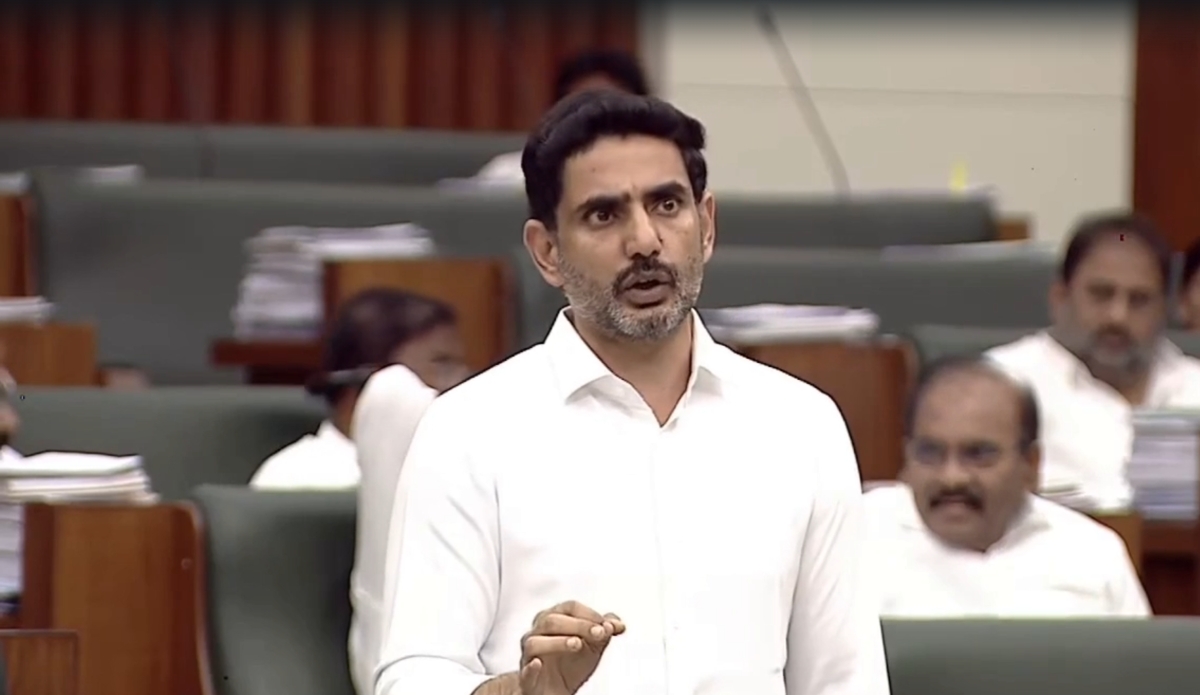
In a robust and comprehensive address to the Andhra Pradesh Legislative Assembly on Tuesday, 18 August 2026, State Education, IT & Electronics Minister Nara Lokesh delivered a strong rebuttal to the rising tide of misinformation and political criticism surrounding the development of data centres in Visakhapatnam. Responding to a question from Nellimarla MLA Lokam Madhavi, Lokesh asserted that the projects are being developed with an unwavering focus on sustainability, water security, and comprehensive environmental safeguards. He accused specific groups of deliberately fabricating fear and misconceptions for political gain, urging the citizens of Visakhapatnam to dismiss “fake videos or misinformation” that have been circulating. The minister framed the issue as a critical juncture for the region, stating that data centres are no longer a luxury but an essential component of the AI infrastructure that India will require in the coming years. “We cannot allow misinformation to hold back an opportunity that can transform Visakhapatnam into a major technology hub,” he passionately declared, drawing a historical parallel to the early days of computerisation and IT promotion in the 1990s, a period marked by similar public apprehension and opposition. Lokesh credited the foresight of Chief Minister N. Chandrababu Naidu during that earlier era, noting that had they retreated from promoting technology, Hyderabad would never have reached its current status as a major tech hub. He explicitly stated that the present misconceptions about data centres are no different from those past fears and are a deliberate attempt to stall the region’s progress. His remarks came against the backdrop of a report by Human Rights Forum (HRF) demanding withdrawal of green nod for the project, which criticises the project as an “ecological recklessness”, highlighting the heat of the controversy.
Paragraph 2: The Urgent Need for Sovereign AI Infrastructure
Lokesh used the platform to articulate a larger, nationally relevant vision, stressing that the meteoric and rapid expansion of Artificial Intelligence makes the creation of India’s own sovereign digital and AI infrastructure non-negotiable. The minister detailed the contemporary technological landscape, a world marked by the proliferation of AI-enabled smartphones, complex devices, and increasingly sophisticated applications. These technologies collectively generate huge volumes of data every single day, and Lokesh emphasised that the infrastructure required to store and process such immense amounts of data must be located within the country’s borders to ensure sovereignty, security, and data privacy. The recent decision by Google, a global tech behemoth, to establish a major data centre presence in Visakhapatnam has proven to be a catalyst for investment, with Lokesh revealing that this decision has thereby triggered a wave of interest from other global technology companies, many of which are now actively seeking land within the city. He elaborated that the government’s objective does not begin and end with establishing solitary data centres but rather aims to build a complete, integrated, and self-sustaining AI ecosystem around them. This ambitious ecosystem encompasses the development and manufacturing of advanced chips, components for power electronics, high-speed fibre optic cable connectivity, sophisticated cooling systems, and a broad range of ancillary supporting industries, essentially creating a hub of technological activity that would foster innovation and industry arrival in the region.
Paragraph 3: Addressing Water Security, Sustainability, and Resource Concerns
A significant portion of Lokesh’s address was dedicated to allaying very specific public concerns about the environmental impact, especially with the potentially catastrophic effect of data centres on the city’s water supply, a concern has featured prominently in public discourse and work from environmental groups. The Minister gave an unequivocal, ironclad assurance that residential water supplies in Visakhapatnam are, with no doubt, absolutely safe and will be entirely unaffected by the operation of the data centres that are being set up. He clarified the data requirements on which the water used for the data centres will draw from a dedicated, new source – the incremental supply of water from the Polavaram project is a separate allocation earmarked for industrial use. Lokesh was clear that bringing additional water from Polavaram be provided through dedicated pipelines, and that no water will be diverted from the city’s existing, and finite, water infrastructure. He shed light on key figures to substantiate his arguments where he estimated that nearly 3,000 TMC of water from the Godavari river currently flows unutilised, into the Bay of Bengal – a numerical backdrop which makes his case for the project all the more straightforward. He explained that his calculations show that roughly 3 TMC of that water per/m is what is needed for the entire proposed capacity of 6.5 GW of data centres, while drinking water for Visakhapatnam is being planned to be supplied separately via gravity in a system that is projected to be operational in the next 18 months. On the issue of cooling, he encouraged that the newly emerging technology is also dramatically reducing water consumption in cooling, citing his own site visit to an Intel data centre in Silicon Valley’s Palo Alto where he observed a state-of-the-art use of air-cooling technology as an alternative to traditional water cooling.
Paragraph 4: Unpacking the Misconceptions Around Power Consumption
The Andhra Pradesh minister picked a very interesting counterpoint to the idea that data centres are uniquely resource-intensive and therefore harmful, by pointing out the staggering difference in demands of these facilities when compared to other industrial projects, especially power generation. He pointed that it is notable that thermal power tanks make a massive withdrawal from water resources, and pointed out that a 1 GW thermal power project consumes nearly ten times more water than a data centre of a comparable capacity for its operations. Intentionally posing this question of why none of the same concerns and social opposition are raised in the face of creating a similar footprint and the resource intensity of thermal power. Lokesh also clarified that data centres will also not lead to an uptick in domestic electricity tariffs for the population. Instead, he highlighted that the new NDA government in the state has already lowered electricity charges by a considerable 13 paise this year, a step underlining their stance. In addition, a significant 100 million litres per day (MLD) desalination plant is being established by a private company to bring in entirely new sources of fresh water, in addition to the water brought in from Polavaram, further boosting the overall water security for the entire ecosystem and also the city.
Paragraph 5: The Economic, Job and Broader Investment Ecosystem in Rayalaseema and Vizag
Lokesh elaborated on the substantial impacts on employment and investments, pointing out that the true effect that investments will have will come not from the data centres themselves but from the enormous ecosystem of jobs that they will generate. The arrival of AI data centres will be a huge opportunities for related advanced businesses, like, the companies that develop advanced chips to firms creating cutting-edge AI solutions, manufacturers of cooling technology for computing, power electronics manufacturers, and a host of other related industries which will be drawn to Visakhapatnam and fall across the state. He underscored with the cooling infrastructure alone will be a major source of jobs since the air-cooling systems are not a one-time installation and will be required to be upgraded on a rotational basis, with the growing manufacturing ecosystem in the Rayalaseema region alone expected to generate around 20,000 jobs in this one sector alone. The scope goes beyond, Lokesh further pointed out that this will boost up the demand for other critical components such as the production of transformers, cables, fibre optics, power electronics, and even logistical support and warehousing. This economic cycle will lead to a spillover of growth into traditional sectors such as transportation, and the local hospitality, retail, maintenance, service, commercial and residential real estate sectors that will see a new equilibrium of demand from a new, larger and well paying workforce. He also shared concrete commitments from corporations, revealing that a logistics company had signed a contract with Google that is slated to make a significant ₹1,000 crore investment in Andhra Pradesh, a massive jobs boost that can be directly tied to the data centre arrival.
Paragraph 6: Sustainability Mandates and Visakhapatnam’s Future as a Global Hub
Concluding his ministerial statement, Nara Lokesh outlined the robust and multifaceted operational strategy for creating a new technology hub that balances industrial development and environmental safeguards, and emphasized that Vizag is fast becoming a key global player in the AI arena. He emphasized the cornerstone aspect based on the environmental commitments that the state has now mandated that data centres need to operate and produce a minimum of 70% of the power they use from renewable sources, with a strong push for power to come from solar photovoltaic and wind power and more. The Minster pointed to the system “One Nation-One Grid” enabling the transmission of renewable generated in the Rayalaseema district out to various parts of the country, an opportunity for a sustainable data centre operation that can rely on clean energy. The government has already taken policy measures, including the distribution of licenses, to create dedicated power arrangements for data centres. The groundwork for the future is more visibly being laid with 3 cable landing stations in the thick of construction, which will link Visakhapatnam directly to the global internet grid, acting as a launchpad for IT companies, GCCs, and downstream industries. He even revealed the interest of an American university that wishes to establish a new, high-profile arena in Visakhapatnam, a development that is still under confidentiality agreements. Lokesh in closing reiterated and made his most concentrated commitment to the progress and to all the stakeholders in the state by saying another powerful pedigree quote, that “Visakhapatnam has our 100% commitment. We are bringing investments with a clear focus on sustainability, jobs and long-term economic growth,” tying back and securing the vision that the region is now not just building a facility but all cleary is on the verge of becoming a global leader in AI – as a true Patnam in AI, and using it to create opportunities and economic development for generations to come in Andhra Pradesh.


