









Paragraph 1: The Core Rebuttal and Context of the Accusation
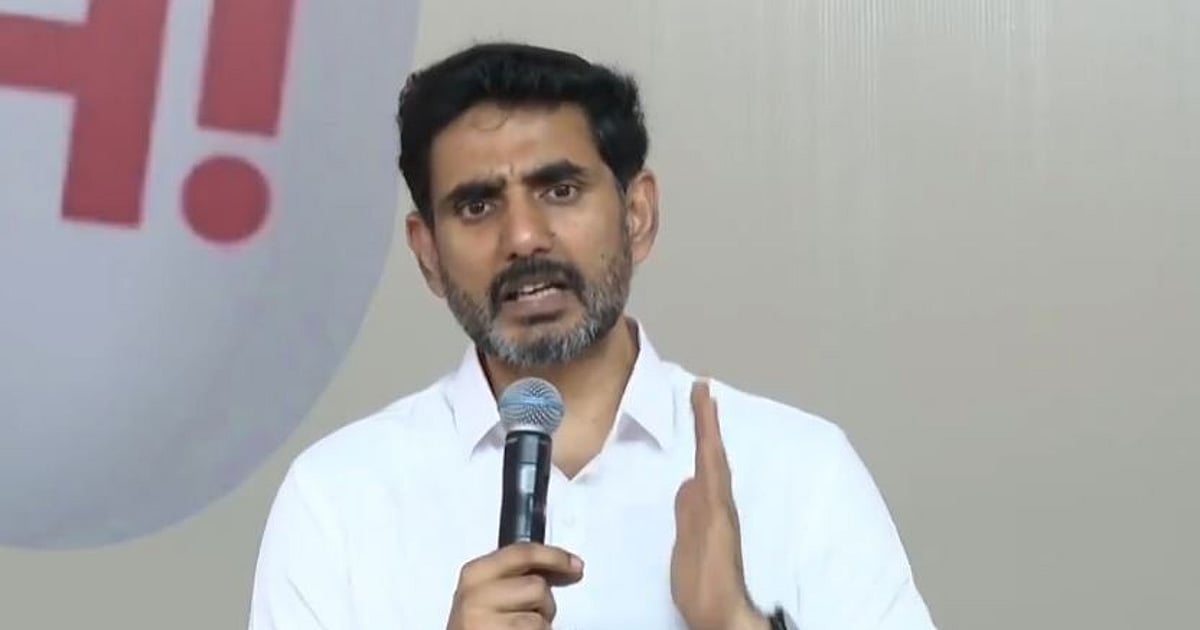
In a robust and unequivocal defense of Andhra Pradesh’s ambitious digital infrastructure roadmap, Minister for Information Technology and Industries, Nara Lokesh, has categorically dismissed what he terms “deliberate misinformation” regarding the environmental and water requirements of the proposed data centres in Visakhapatnam (Vizag). Addressing a press conference in the wake of escalating social media chatter and political opposition, Lokesh asserted that vested interests are orchestrating a malicious campaign to derail the state’s transition into a premier technology hub. The allegations, which have gained traction in certain circles, claim that the massive data centre projects—expected to host hyperscale cloud providers and artificial intelligence computing facilities—will consume astronomical volumes of potable water and leave a catastrophic carbon footprint, thereby transforming the coastal city into an ecological disaster zone. Lokesh, however, minced no words in labeling these claims as baseless fabrications designed to stoke public fear and undermine investor confidence. He emphasized that the state government, under the leadership of Chief Minister N. Chandrababu Naidu, has always prioritized sustainable development, and the data centre policy has been meticulously crafted to align with global environmental standards. The Minister challenged the critics to produce a single technical document or feasibility study that substantiates their alarming claims, stating that the government’s own environmental impact assessments (EIAs) and water audits paint a completely different, far more responsible picture. He framed the misinformation campaign as a direct attack on the economic future of the state, warning that if such falsehoods are allowed to fester, they will not only scare away global tech giants but also deprive the youth of Andhra Pradesh of thousands of high-value employment opportunities. The timing of this rebuttal is critical, as the state is on the cusp of signing several multi-billion-dollar memoranda of understanding (MoUs) with global technology conglomerates, and any negative perception could jeopardize these negotiations.
Paragraph 2: Deconstructing the Water Consumption Myth
Addressing the most contentious point of the controversy—water usage—Nara Lokesh provided a detailed technical breakdown to debunk the “water-guzzler” narrative. He explained that modern data centres, particularly those being planned for Vizag, do not operate on the outdated, water-intensive cooling technologies of the past. Instead, they will employ state-of-the-art closed-loop cooling systems, which recirculate the same water repeatedly, minimizing evaporation and wastage to negligible levels. Crucially, the Minister clarified that these facilities will not use a single drop of potable drinking water. The primary source of water for cooling will be treated sewage water (STP water) and recycled industrial effluent, which would otherwise be discharged into the sea. The state government has mandated a zero-liquid discharge policy for all IT and data centre parks, meaning that even the minimal wastewater generated will be treated and reused on-site for landscaping or further cooling cycles. Lokesh provided comparative figures to contextualize the actual demand: the proposed data centre cluster is projected to require approximately 5 to 10 million litres of treated water per day at full capacity. While this sounds substantial in isolation, it constitutes less than 0.5% of the water allocated to agricultural irrigation in the Godavari and Krishna delta regions. He pointed out that a single thermal power plant or a large steel manufacturing unit consumes several times more fresh water than the entire projected data centre ecosystem. Furthermore, the Minister highlighted that the government has mandated rainwater harvesting infrastructure across all facilities, with large catchment areas on rooftops and campus grounds designed to recharge 100% of the monsoon rainfall. He accused the opposition of deliberately confusing “water withdrawal” with “water consumption,” noting that the closed-loop systems ensure that over 95% of the water is retained and recycled, with only minor losses due to humidity control. He challenged the rumour-mongers to visit the existing data centres in Hyderabad or Chennai to see the actual water management systems” rather than relying on speculative calculations from outdated textbooks.
Paragraph 3: The Environmental Impact and the Green Energy Commitment
On the environmental front, Nara Lokesh systematically dismantled the claims that the Vizag data centres will be a major source of carbon emissions and ecological degradation. He acknowledged that data centres are energy-intensive, but he pivoted to the source of that energy. The Minister announced that all new data centre projects in Andhra Pradesh will be mandated to operate on 100% renewable energy sources, primarily solar and wind, through long-term Power Purchase Agreements (PPAs) with the state’s green energy producers. The state is currently ramping up its solar capacity in Anantapur and wind capacity in Kadapa, and a dedicated green energy corridor is being established to supply clean power directly to the Vizag tech hub. Lokesh argued that the carbon footprint of these facilities will be effectively net-zero, a claim that is verifiable through the state’s commitment to the International Renewable Energy Agency (IRENA) standards. He also highlighted the use of advanced AI-driven energy management systems that will optimize Power Usage Effectiveness (PUE) to below 1.2, meaning that for every unit of power used for computing, only 0.2 units are used for cooling and overheads—a benchmark that surpasses the global average. The Minister further pointed out that the environmental impact assessment (EIA) for the projects has been cleared by the Andhra Pradesh Pollution Control Board (APPCB) after rigorous scrutiny, and the clearance includes strict conditions regarding air quality, noise pollution, and waste management. He accused the opposition of cherry-picking data from a 2010 report on traditional data centres to judge the 2024 technology landscape. Moreover, Lokesh emphasized the positive environmental externalities of the project: the data centres will enable smart city infrastructure, reduce the need for physical travel through telepresence and remote work, and support the digitization of agriculture and logistics, which collectively will lead to a net reduction in the state’s overall carbon emissions. He concluded this segment by stating that the government is not just building data centres; it is building a sustainable digital ecosystem that will serve as a model for the rest of India.
Paragraph 4: The Political Conspiracy and the Desperation of the Opposition
Nara Lokesh did not shy away from identifying the alleged masterminds behind the misinformation campaign, directly pointing fingers at the opposition YSR Congress Party (YSRCP) and certain “anti-development” elements. He asserted that the previous YSRCP government, which was in power for five years, failed to attract a single major data centre investment to the state, despite claiming to be tech-friendly. Now that the TDP-led NDA government has successfully brought global hyperscalers like Google, Microsoft, and domestic giants like CtrlS and AdaniConneX to the table, the opposition is resorting to fear-mongering and sabotage. Lokesh described the misinformation as a “desperate attempt” to tarnish the state’s image just weeks before the Global Investors Summit, where the government expects to sign over ₹1 lakh crore in investment MoUs. He noted that the false narratives are being propagated through a network of fake news portals, anonymous social media handles, and paid trolls, which is a clear indication of a coordinated 0rganized campaign rather than genuine public concern. The Minister challenged the opposition leaders to a public, televised debate on the technical specifications of the data centre projects, offering to bring in the project engineers and environmental scientists to present the facts. He accused the YSRCP of being “anti-youth” and “anti-employment,” stating that their only agenda is to stall progress for petty political gains. Lokesh also warned that such misinformation could have severe legal consequences, stating that the state government is prepared to file defamation suits against individuals and media outlets that knowingly spread false information. He appealed to the citizens of Vizag to trust the transparent policies of the state government, which has published all project details, including environmental clearances, on the official state portal. He reiterated that the opposition’s narrative is not just wrong; it is a dangerous threat to the democratic process, as it seeks to replace factual discourse with emotional manipulation.
Paragraph 5: The Economic Stakes and Vizag’s Strategic Importance
Beyond the technical rebuttals, Nara Lokesh underscored the immense economic significance of the Vizag data centre ecosystem, which is the primary reason why the misinformation campaign is so dangerous. He explained that Vizag is strategically positioned as the landing point for multiple submarine cable systems, including the Chennai-Singapore cable extensions, which provide high-speed, low-latency connectivity to global markets. This makes the city an ideal location for data centres that serve not only domestic clients but also international enterprises looking for a safe, geographically stable data residency. The projected investment in the data centre sector alone is estimated at over ₹20,000 crore (approximately $2.4 billion), which will create a ripple effect across the economy. Lokesh detailed that for every direct job created in a data centre, there are at least five indirect jobs in construction, security, logistics, and maintenance. The total employment potential is estimated at 50,000 direct and indirect jobs, a significant boon for the state’s educated youth. He also highlighted the multiplier effect on ancillary industries, including the manufacturing of cooling systems, backup generators, and server racks, which could lead to the establishment of a new electronics manufacturing cluster in the region. The Minister warned that if the misinformation campaign succeeds in scaring off investors, the state will lose out to competing hubs like Hyderabad, Chennai, and Pune, which are aggressively courting the same global players. He emphasized that the data centre is the backbone of the digital economy, enabling everything from UPI payments and telemedicine to AI-driven agriculture and smart governance. Without these facilities, the state’s dream of becoming a $2 trillion economy by 2047 will remain a distant fantasy. Lokesh appealed to the business community and industry bodies like NASSCOM to actively counter the false 0narratives and support the state government’s efforts to create a conducive investment climate. He assured investors that the state government has signed strict compliance clauses in the MoUs, ensuring that any deviation from environmental or water usage norms will result in severe penalties, including the revocation of licenses.
Paragraph 6: A Call for Fact-Based Discourse and a Vision for the Future
In his concluding remarks, Nara Lokesh issued a powerful call for a return to fact-based discourse, urging the media, the public, and the political class to prioritize verified information over sensationalism. He announced the launch of a dedicated public transparency portal, where citizens can access the complete environmental impact assessments, water usage audits, and energy consumption plans for all upcoming data centre projects in the state. This initiative, he said, is a testament to the government’s commitment to open governance and its confidence in the sustainability of its projects. The Minister reiterated that the state government is fully aligned with the United Nations Sustainable Development Goals (SDGs), particularly Goal 6 (Clean Water) and Goal 13 (Climate Action), and will not compromise on these principles for the sake of rapid industrialization. He concluded with a strong message to the opposition: “You cannot stop the future. The youth of Andhra Pradesh want jobs, they want progress, and they want a digital revolution. Your attempts to spread lies will only make you irrelevant.” Lokesh’s final appeal was to the citizens of Visakhapatnam, asking them to see the data centres not as environmental threats, but as symbols of a new era of prosperity, innovation, and global connectivity. He painted a vivid picture of Vizag as a future “Cyberabad of the East,” a city that will host the world’s most advanced computing infrastructure while maintaining its pristine beaches and green hills. The Minister’s strong rebuttal serves as a clear signal to global investors that the state government stands firmly behind its projects and will not be swayed by baseless allegations. As the dust settles on this controversy, the onus is now on the opposition to provide concrete evidence for their claims or retract their statements. For now, the state government has drawn a clear line in the sand, declaring that the march towards a digital, sustainable, and prosperous Andhra Pradesh will continue unabated, regardless of the obstacles placed in its path.


