


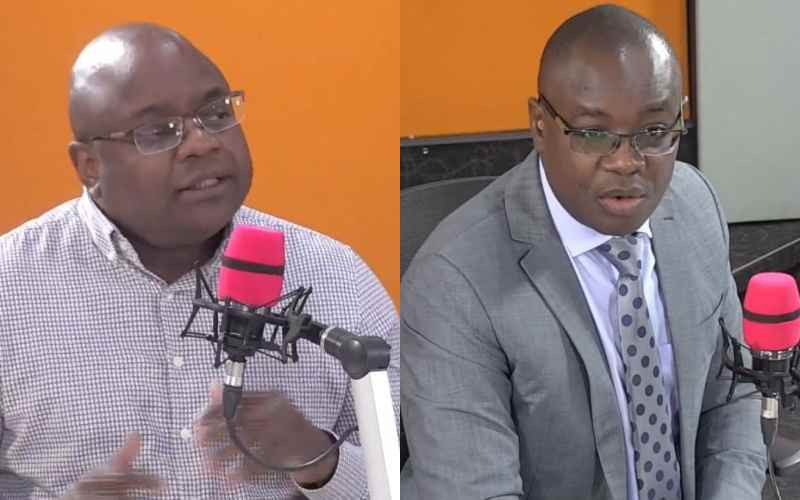
**Political analysts have issued a stark warning that the prevalence of misinformation and disinformation poses a significant threat to the integrity of Kenya’s 2027 General Election, arguing that unless decisive action is taken, citizens risk electing leaders based on manipulated emotions rather than factual policy considerations. Speaking during an interview on Spice FM, political risk analyst Dismas Mokua expressed deep concern over the current trajectory of political discourse, cautioning that if these challenges are not confronted, the electoral process would be fundamentally compromised. “If we do not fight misinformation and disinformation, then we are going to compromise next year’s election. We are not going to elect leaders based on material facts but because of emotion,” Mokua stated emphatically. His remarks underscore a growing anxiety among governance experts about the weaponization of digital platforms to spread false narratives, which could ultimately erode public confidence in democratic institutions and delegitimize the electoral outcome before, during, and after the voting process.
Elaborating further on the subject, Mokua broadened his critique to encompass the delivery of public services, arguing that there is a pressing need for accountability measures that would compel policymakers to directly experience the consequences of their decisions. In a bid to ensure that public facilities operate at full capacity, he proposed a controversial yet thought-provoking measure: that state officers should be restricted from seeking medical care in private facilities, instead being required to utilize the same public services they are tasked with overseeing. “To make sure public facilities work 100 per cent, then state officers should have a limitation not to use private facilities so that the policies you are talking about apply to them too,” Mokua proposed. He asserted that this approach would not only foster empathy but also act as a compelling incentive for the government to improve the quality of public services across the board, as those responsible for implementation would be directly affected by their efficiency or lack thereof.
The discussion took a deeper turn as political analyst Javas Bigambo framed the current political climate within the context of a global shift away from objective reality in public discourse. Bigambo described the present moment as a “period of truth decay,” a term that captures the dangerous erosion of shared facts in civic life. He specifically pointed to the political discourse surrounding former Deputy President Rigathi Gachagua as a case in point. “Rigathi has led us to realisations that we are living in a period of truth decay, a time of post-truth where alternatives are being sought and pursued for political reasons, and reality being discarded or ignored,” observed Bigambo. He was referring to Gachagua’s critical assessment of the Kenya Kwanza administration’s performance, which provided a lens into the competing narratives and diverging realities being constructed by different political factions. In a surprising twist that underscored his point about nuance, Bigambo noted that if his opinion were solicited, he would rate the implementation of President William Ruto’s Bottom-Up Economic Transformation Agenda quite favorably. “If my opinion were sought to rate the implementation of the Bottom-Up Economic Transformation Agenda by William Ruto, I would place it at 71 per cent with facts and data to back this up,” he revealed, suggesting that while the government has a compelling story to tell, it is being drowned out by more sensational and often false narratives.
Focusing on the executive arm of government, Mokua turned his attention to the internal dynamics of the ruling administration, suggesting that a significant portion of the president’s challenges stem from within his own inner circle. He argued that some of the officials appointed by President Ruto to spearhead his policies have either failed through incompetence or deliberate sabotage, thereby undermining the delivery of the presidential agenda. “Either by acts of omission or commission, the people that he has given the responsibility have let him down,” Mokua asserted. He added that the President retains the constitutional authority and administrative power to remove any officials who fail to meet the expectations of their offices, encouraging a reevaluation of the team tasked with executing the administration’s vision. This internal friction, he suggested, is a major vulnerability that must be addressed with urgency to ensure the government regains its footing as the election cycle intensifies.
Despite these challenges, Mokua concluded his analysis on a measured note, reminding Kenyans of the critical benchmarks against which a president’s legacy is built. He outlined that the primary obligations of the head of state are the maintenance of political stability, economic stability, and security stability. While acknowledging the numerous difficulties and the prevailing economic hardships, the political analyst credited President Ruto with making significant strides in ensuring these areas remain stable, particularly when compared to the volatile situations currently facing several other African countries. This observation implicitly suggests that while the government has faced legitimate criticism and frequent protests, the pervasive problems of a deteriorating security situation or a complete breakdown in political structures have been largely averted under the current administration, offering a rare glimmer of credit in an otherwise tense political landscape.