








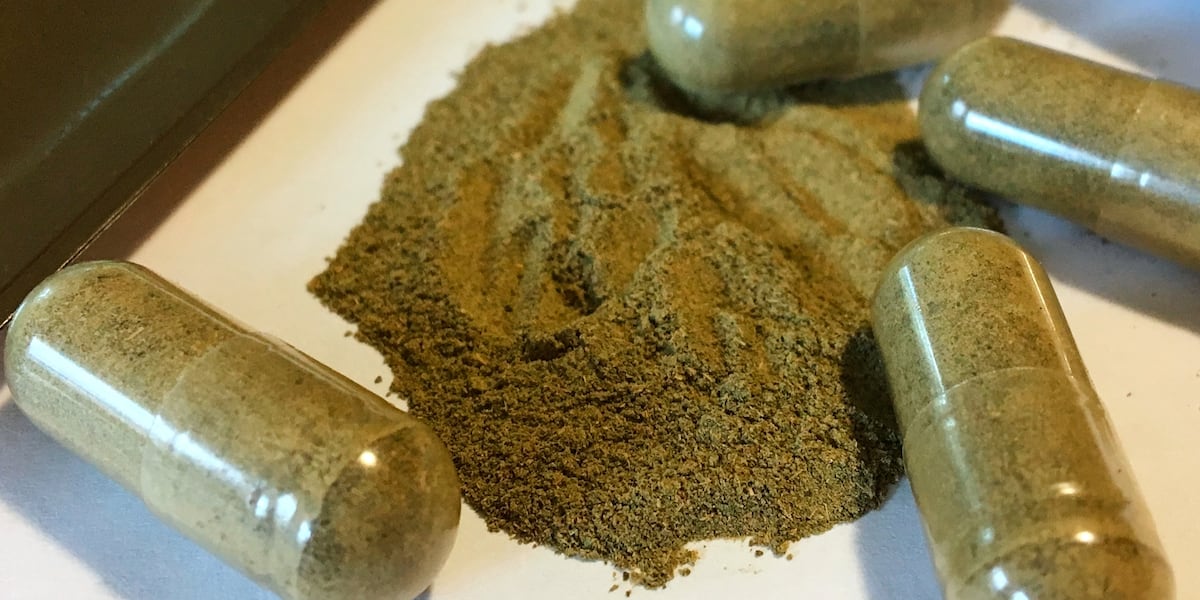
OXFORD, Miss. — The American Kratom Association held a press conference in Oxford on Wednesday morning to push back against the escalating enforcement crackdown on kratom-like products in the Mid-South, arguing that recent law enforcement raids have wrongly conflated natural kratom with synthetic and adulterated substances. The conference came days after law enforcement executed a search warrant at Puffs Vape, Tobacco and Beer Store on Heritage Drive in Oxford, where two men were arrested on charges of distributing a Schedule I controlled substance. Court affidavits tie that raid to the suspected overdose deaths of two University of Mississippi students, Aidan Hamilton and Robert Strang, both of whom reportedly purchased “Smax” Pseudo-DHM tablets before their deaths. The packaged pills were initially described in law enforcement records as suspected kratom or synthetic kratom. But during Wednesday’s briefing, association leaders and natural kratom consumers vigorously challenged that characterization, insisting that products like “Smax” are not natural kratom at all and should not be treated as such by investigators, prosecutors, or the public. Speakers repeated over and over that natural kratom comes from the leaves of the Mitragyna speciosa tree and has been used for centuries, while synthetic alternatives—particularly those with opioid-like effects—belong to an entirely different category with far greater risks. The press conference was timed to address the confusion taking root in communities across Mississippi and Tennessee as authorities intensify enforcement and as toxicology reports remain pending for the two deceased students.
The Lafayette County raid was a dramatic escalation in an ongoing investigation that has cast a shadow over Oxford’s vape and smoke shop industry. According to court affidavits, the search warrant at Puffs was executed after investigators traced purchases of “Smax” Pseudo-DHM tablets to Hamilton and Strang, both of whom died under circumstances that led authorities to suspect drug overdose. The two men arrested now face charges related to distribution of a Schedule I controlled substance, a serious felony category that includes heroin, LSD, and other drugs with high abuse potential and no currently accepted medical use. Law enforcement records described the seized pills as suspected kratom or synthetic kratom, and that initial description ignited a firestorm among kratom advocates who say it is a fundamental misidentification. The deaths themselves remain under investigation, and official causes of death have not been released because toxicology results are still pending. At the press conference, advocates argued that until those toxicology reports are completed, the public and media should not assume that natural kratom was responsible for the tragedy. They noted with frustration that “Smax” is not simply a branded form of kratom but a synthetic or semi-synthetic compound—one that may exhibit opioid-like properties and carry dangers that do not exist in natural kratom products. The association’s message was unequivocal: a product sold under a name like “Smax” with high-potency synthetic alkaloids should not be used as a justification to ban, raid, or vilify a traditional botanical that many consumers rely on.
The central argument from the American Kratom Association is that the term “kratom” has been stretched far too broadly. Natural kratom, as speakers explained, is a botanical substance derived from the leaves of Mitragyna speciosa, a tropical tree native to Southeast Asia. Its active compounds, primarily mitragynine and 7-hydroxymitragynine, interact with opioid receptors in the body but in a complex way that many users describe as distinct from classical opioids. Synthetic kratom-like substances, by contrast, are engineered in laboratories and are often much more potent and dangerous. “Smax” Pseudo-DHM tablets, according to advocates, fall into this synthetic category. Pseudo-DHM appears to reference a synthetic or semi-synthetic analog related to mitragynine pseudoindoxyl or dihydroxymitragynine, compounds that can have significantly stronger receptor binding and greater risk of respiratory depression, addiction, and overdose. These are not the gentle, raw leaves sold in bags labeled “kratom powder” in many stores, advocates insisted. They are laboratory products with a pharmacological profile closer to a synthetic opioid, and they should be regulated, scheduled, and policed as such—not confused with a natural plant. The association stressed that responsible kratom vendors advocate for consumer safety, testing, labeling, and age restrictions, and they support action against products that are synthetic, contaminated, or falsely marketed. What they oppose is the unsafe and scientifically inaccurate conflation of natural kratom with highly concentrated synthetic drugs that have emerged in gas stations, vape shops, and convenience stores across the country.
Several natural kratom consumers were invited to speak during the briefing, and their testimony offered a human dimension to an issue that is often framed only in terms of overdose statistics and legal classification. These consumers described kratom as a plant they have used to manage chronic pain, anxiety, and depression, or to transition away from prescription opioids. They described themselves as ordinary people—professionals, veterans, parents, and retirees—who carefully measure their doses and rely on natural kratom as an alternative to pharmaceuticals that they found more harmful or addictive. They recounted years of use without any adverse health crises, and many said that if natural kratom were banned or aggressively prosecuted, they would be left without a viable option for their conditions. The speakers acknowledged that any substance can be misused and that no plant is completely without risk, but they argued that the current wave of raids based on synthetic product identification creates collateral damage for lawful consumers and responsible businesses. They cautioned that law enforcement, driven by panic and political pressure, may begin targeting stores that carry natural kratom simply because the product is sold alongside synthetic items. The association also warned that the media’s tendency to write headlines using “kratom” for any product found at a vape shop only deepens public misunderstanding and makes it easier for regulators to classify all kratom products as dangerous street drugs. The emotional tenor of the press conference reflected a broader anxiety: that the deaths of two young men, while tragic, could become the catalyst for a prohibition campaign that punishes a plant rather than protecting people.
The enforcement situation has not been limited to Lafayette County. In neighboring Tipton County, Tennessee, sheriff’s deputies seized more than 4,700 suspected kratom pills across five separate businesses this week, an operation triggered by an unresponsive-person call. That seizure suggests that authorities in the Mid-South are actively sweeping stores in search of kratom-related products, and the American Kratom Association fears the same misidentification problem is playing out there. Whether the pills seized in Tipton County are natural kratom, synthetic kratom, or some other substance is not yet known, but the fact that they are being labeled “suspected kratom” in official notices is exactly what advocates say is wrong. They point out that a pill containing synthetic pseudoindoxyl compounds is not kratom; it is an unregulated synthetic drug masquerading under a botanical-sounding name. They argue that law enforcement should perform chemical analysis to distinguish the compounds before publicizing a claim that hundreds of pills were seized as contraband kratom. At the same time, they acknowledge that some products labeled as kratom in stores may be tainted or adulterated, and they support removing those products from shelves. The concern, however, is that sweeping enforcement actions do not make those distinctions, and innocent vendors who sell natural kratom may be caught in the same net as those who sell dangerous synthetic pills. The Tipton County raid underscored the urgency of education at every level—law enforcement, prosecutors, judges, journalists, and consumers—so that future operations can accurately target dangerous substances without creating misleading records and legal precedent that will haunt the natural kratom industry for years.
As the investigation continues, all eyes are on the toxicology results for Hamilton and Strang. Those results will determine what substances actually contributed to their tragic deaths and whether “Smax” Pseudo-DHM tablets, natural kratom, or other drugs were primarily responsible. Until those results are released, the American Kratom Association is calling for restraint in both language and law. The association is urging investigators to stop using the word “kratom” to describe synthetic products, to rely on certified laboratory analyses when executing warrants and filing charges, and to avoid penalizing products that do not contain scheduled substances. Meanwhile, the families of the two students and the public continue to wait for more complete answers about what happened. The case has already ignited a regional debate over kratom regulation, synthetic opioid analogs, and the responsibilities of smoke shops and vape vendors. It has also shown how quickly a single tragedy can lead to policy responses, especially in states where concerns about the opioid epidemic are already acute. The American Kratom Association says it does not want to stand in the way of public safety or accountability; rather, it wants to ensure that any action is based on science, not fear. As the press conference ended, the speakers returned to a simple but insistent theme: natural kratom is not the enemy, and synthetic drugs like “Smax” should not be allowed to steal the plant’s name in the public imagination or the legal code. For now, the shelves of Mid-South stores are being emptied of pills under probable cause, the men arrested in Lafayette County await legal proceedings, and a community remains caught between a dangerous product that looks like a supplement and a traditional plant that many still trust. The outcome of the toxicology tests may provide clarity, but the broader question—how to regulate synthetic products that imitate botanicals—will likely persist long after this case is resolved.


