


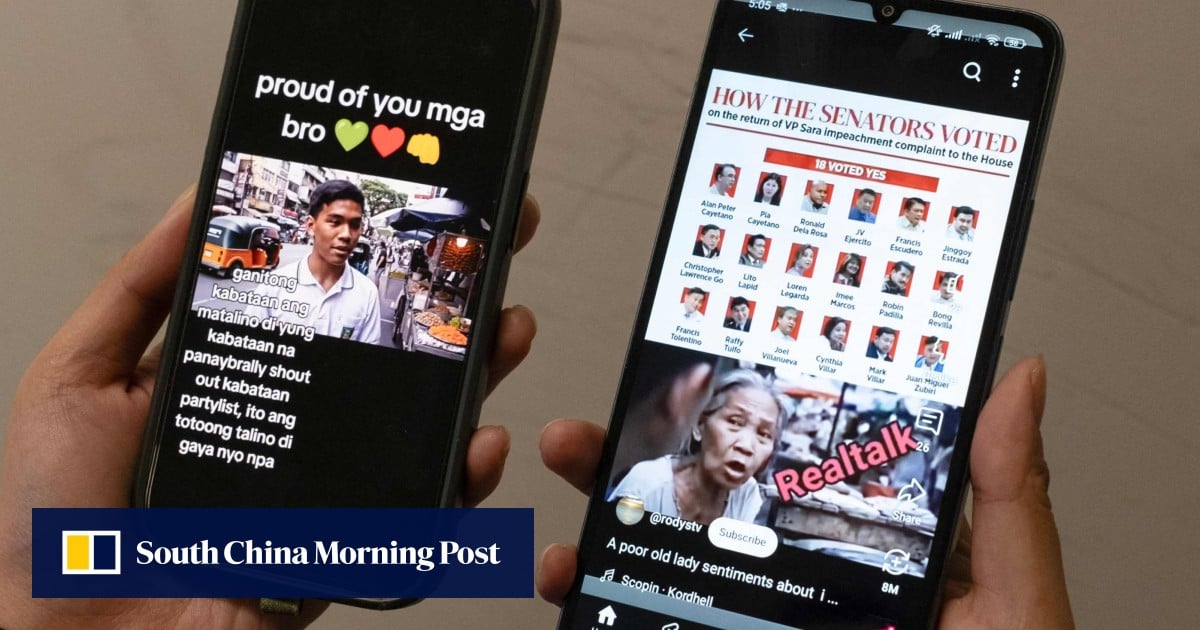
Disinformation Deluge: AI-Powered Deepfakes and Doctored Posts Fuel Political Divide in the Philippines
The Philippine political landscape is facing a new wave of manipulation as sophisticated AI-generated deepfakes and doctored posts proliferate across social media platforms. This surge of disinformation, amplified by advanced technology and well-worn manipulation tactics, is exploiting the country’s existing political fault lines and exacerbating the tensions between the camps of President Ferdinand Marcos Jr. and his predecessor, Rodrigo Duterte. Experts warn that this influx of false narratives thrives in a digital environment where engagement often trumps accuracy, posing a significant threat to the integrity of information and democratic processes.
The confluence of several factors has created a fertile ground for the spread of disinformation in the Philippines. The country’s highly polarized political climate, coupled with relatively low digital literacy among its citizens and declining trust in institutions, forms a “perfect storm” for the rapid dissemination of fabricated content. Paco Pangalangan, a regional expert on disinformation and tech policy, points to this dangerous combination as particularly conducive to the spread of AI-generated deepfakes, which are becoming increasingly difficult to distinguish from authentic content. He highlights the excessive time Filipinos spend on social media, surpassed by few other nations, as a key vulnerability. This extensive online presence, combined with a lack of critical evaluation skills and a growing skepticism towards established sources of information, leaves the population susceptible to manipulation.
The recent fabrication of a Beverly Hills police report exemplifies the potency and reach of these disinformation campaigns. This falsified document falsely implicated First Lady Liza Araneta-Marcos in the death of Filipino businessman Paolo Tantoco, claiming she was summoned for questioning regarding Tantoco’s alleged drug overdose. The report rapidly spread across social media, fueling speculation and further polarizing public opinion. The incident underscores the ease with which manipulated content can bypass traditional fact-checking mechanisms and gain traction in a hyper-connected online environment.
Presidential Communications Undersecretary Claire Castro swiftly denounced the report as a forgery, confirming that the Philippine consulate in Los Angeles had verified its fraudulent nature with US authorities. The incident, however, highlights the damage already inflicted by the spread of the false narrative. The rapid dissemination and widespread belief in the fabricated report, even for a short period, demonstrate the power of disinformation to influence public perception and potentially incite unrest.
The case of the fabricated police report is not an isolated incident. It represents a broader trend of disinformation campaigns leveraging sophisticated technology to manipulate public discourse and exacerbate existing political divisions. The rise of easily accessible AI tools has significantly lowered the barrier to creating convincing deepfakes and doctored content, empowering individuals and groups with limited technical expertise to participate in disinformation campaigns. This democratization of disinformation production poses a substantial challenge to efforts aimed at combating the spread of false narratives.
The escalating disinformation crisis in the Philippines demands a multifaceted approach to address its root causes and mitigate its harmful effects. Improving digital literacy among the population is crucial to equip individuals with the critical thinking skills necessary to identify and evaluate online content effectively. Strengthening institutional trust is equally vital to ensure that citizens have access to reliable sources of information and can differentiate credible sources from purveyors of disinformation. Simultaneously, social media platforms must assume greater responsibility for the content shared on their platforms and implement more robust mechanisms to identify and remove manipulated media and false narratives. A collaborative effort involving government agencies, civil society organizations, educational institutions, and tech companies is essential to combat this growing threat to democratic discourse and social stability in the Philippines. The stakes are high, and the time to act is now.